Furnace blowing cold air in Rogers, AR

Send the request today and stop worrying about who to call.

Hand it off

A furnace blowing cold air usually means it hasn't started burning gas yet, or has shut off from a problem mid-cycle. If air comes out cold right when the system kicks on, that's normal. The blower starts before the burners light, and warm air takes a minute to reach the vents. If it blows cold the whole time, the burners aren't lighting at all, or they lit and then cut out. That points to a dirty flame sensor, a failed igniter, or a clogged filter choking airflow until the furnace overheats and shuts the burners down as a safety measure. With Benton County winters turning cold for months at a stretch, a furnace stuck on cold air is more than an inconvenience. It needs a look from someone who can tell which of these it is and fix the actual part, not just reset the system.

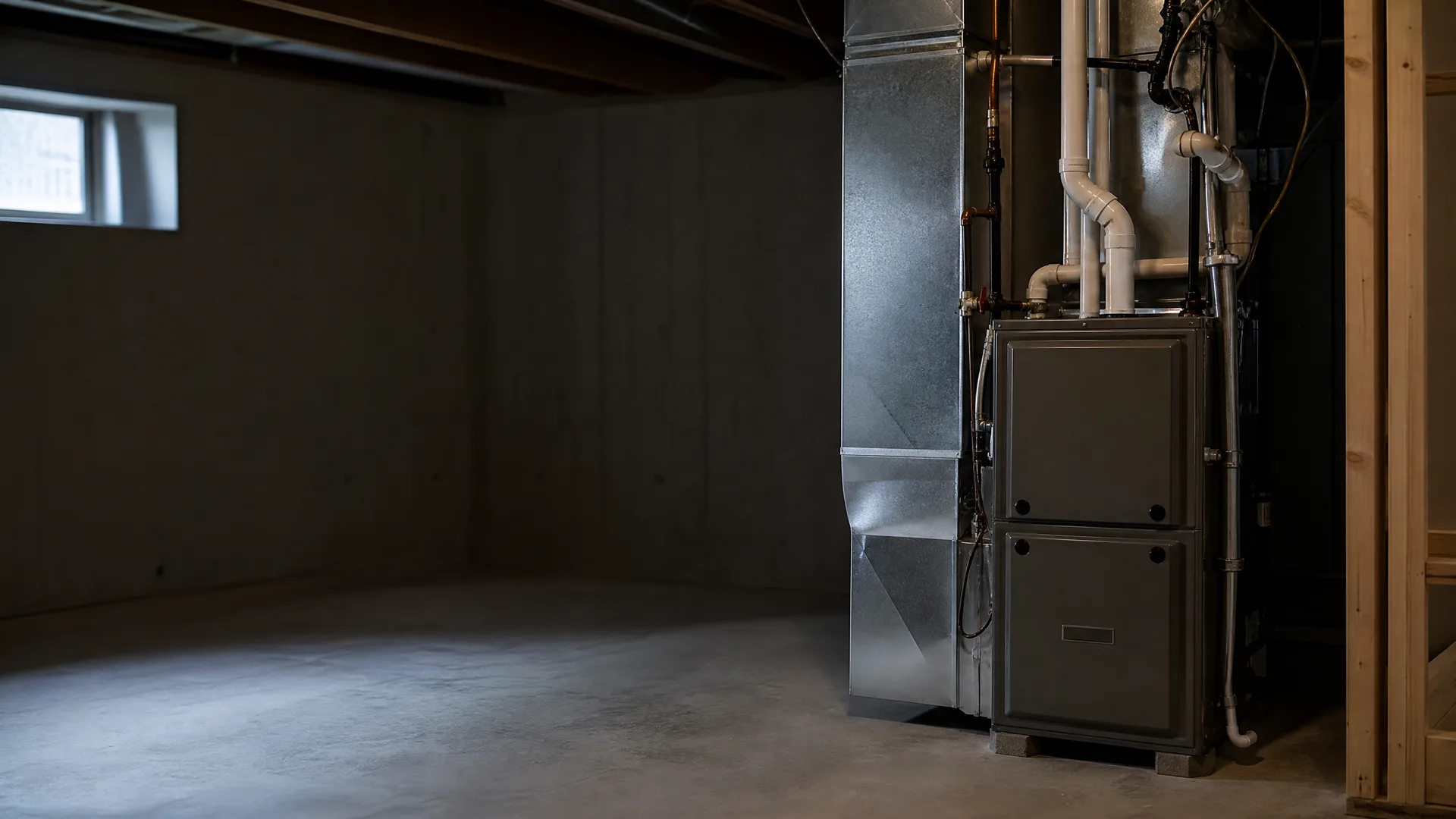
A furnace with sheet-metal ductwork and copper piping stands against a concrete block wall in a dim basement with a bare concrete floor.

You're down in the basement around seven, checking on the furnace because the house has been cooling off since dinner. The air coming off the vents feels the same as the air in the room. The furnace sits there dark, no burner glow through the door seam, just the blower running and pushing air that never got warm. Outside it's already into the 30s, the kind of November night Benton County gets more of as the week goes on. You crouch down by the cabinet and catch a thin haze of dust hanging in the air near the access panel, stirred up by the blower. Nothing lights. The thermostat still reads the set temperature, climbing the wrong direction.
Furnace Running or Dead: What's Happening

Cold air, furnace running

  • The blower is moving air but the burners aren't lighting it, so what comes out feels like the room air, not warmer.
  • A dirty flame sensor is a common cause. It can't confirm the flame is lit, so the gas valve shuts back off a few seconds in.
  • A clogged filter can starve the burners of airflow and trip a safety switch before the furnace ever gets warm.
  • If the pilot or hot surface igniter is weak or failing, the gas may never catch at all even though the blower keeps running.
  • A thermostat set to "on" instead of "auto" runs the blower constantly, including between heat cycles, which feels like cold air blowing nonstop.

Cold air, furnace off

  • No burner glow and no warm air at all usually points to an ignition failure rather than a blower problem.
  • A furnace that won't fire can be out of gas, or have a closed gas valve, worth checking before anything else.
  • A tripped circuit breaker or blown fuse cuts power to the control board, leaving the whole system dead.
  • A cracked heat exchanger can force a furnace to shut itself down as a safety measure, with no flame and no heat.
  • Repeated lockouts after a few short cycles often mean the control board is seeing a safety fault it won't override.
A gray high-efficiency furnace stands on a concrete basement floor beside sheet-metal ductwork, with white PVC vent pipes and a black flexible line running up to exposed wood floor joists, next to a wood-framed post against a concrete wall.

Furnace running right

This is what a working furnace looks like down there. Ductwork tight to the plenum, flue and condensate lines running clean to the PVC outside, gas line fittings snug and showing no rust at the joints. Warm air reaches every room within a few minutes of the blower starting.

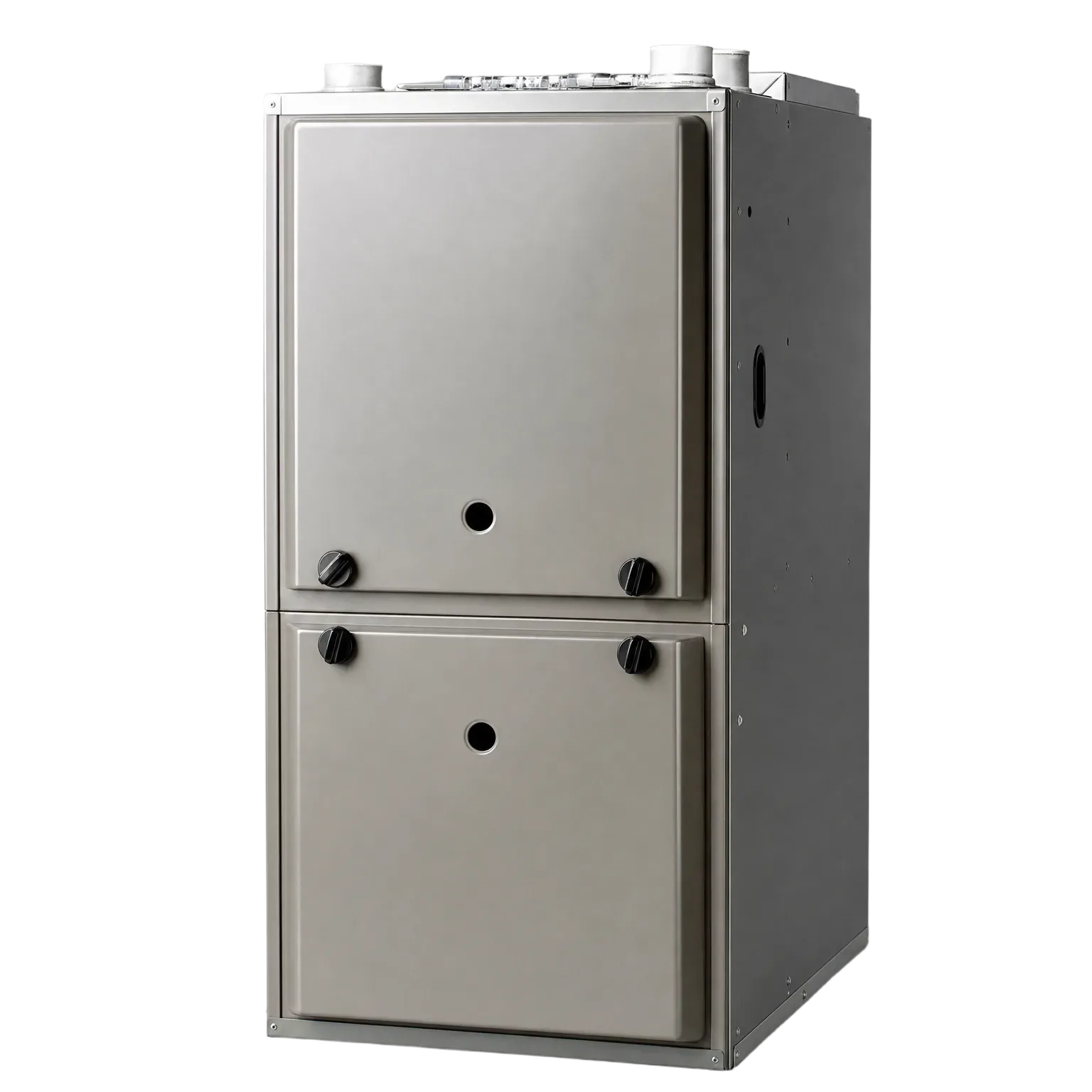
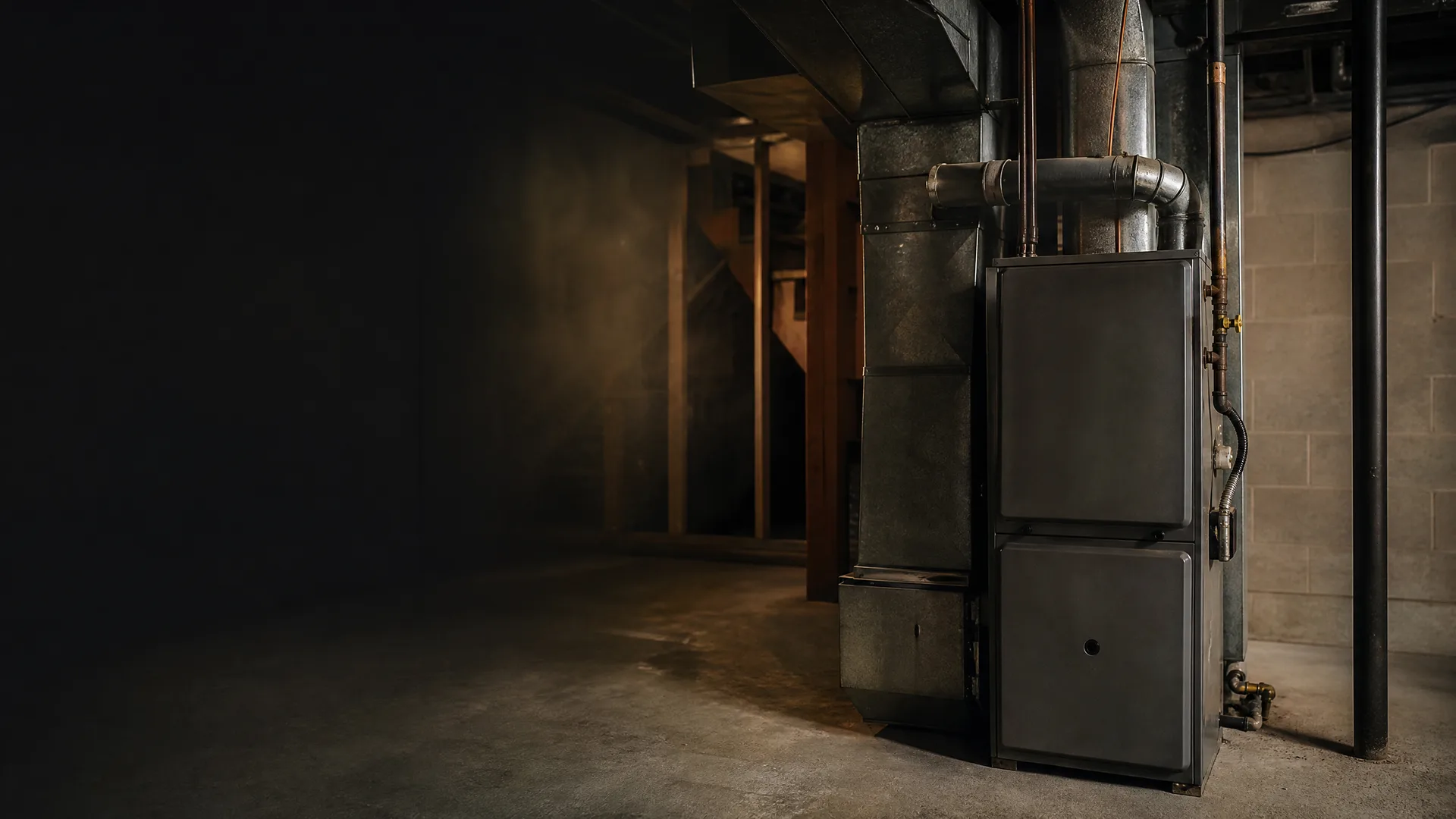
A beige metal furnace with a louvered front panel stands on a concrete floor against a concrete wall, connected to galvanized sheet-metal ductwork and a metal pipe.

Furnace in trouble

An older unit like this one is more likely to stall mid-cycle once a part starts to wear, whether that's an igniter that won't glow hot enough or a flame sensor too dirty to prove a flame. The black iron gas line and flue pipe still do their job. The furnace just won't stay lit long enough to heat your house.

Why is my house getting colder with the furnace running?

You turn the thermostat up and the furnace runs, but the house keeps losing ground. You'll notice it room by room first, the one farthest from the furnace going cold before the others. Put your hand at a vent and the air feels like the room, not warm. Some furnaces run longer and longer trying to catch up, cycling on and off more than usual. Others shut off mid-run and stay off. If this keeps up overnight with the temperature outside well below freezing, pipes on outside walls are the ones at risk, along with anyone in the house who depends on steady heat.

A smiling bearded man in a dark blue henley shirt sits leaning back on a light grey sofa in a living room, with a bowl of popcorn on a wooden coffee table and a large window behind him.
A bearded man in a dark quarter-zip sweater sits smiling on a brown sofa in a dimly lit living room, with a bowl of popcorn and a mug on a table in the foreground and a potted plant near a window behind him.
A smiling man with graying dark hair and a beard, wearing an olive sweater, sits on a sofa in a living room beside a bowl of popcorn on a wooden table.
A smiling man in a dark green henley shirt sits on a gray sofa in a living room with a lit table lamp, wooden shelving unit, and a bowl of popcorn in the foreground.

Hand off the search today

Explain the furnace problem once instead of to every shop in Benton County.

There's no charge for the request.

A gas furnace has to prove ignition before the gas valve stays open. If the flame sensor doesn't detect a flame within a few seconds, the valve closes and the blower keeps running on whatever heat is left in the heat exchanger.

That's why cold air keeps coming even after the burners shut off. The blower doesn't know the fire went out, it just keeps moving air until the thermostat tells it to stop.

An older beige furnace with louvered front panels stands on a concrete basement floor beside galvanized ductwork, metal and plastic pipes, exposed wood framing, and a cylindrical water heater at right.
Before you get your furnace repair
A gray high-efficiency furnace in a basement with PVC vent pipes, sheet-metal ductwork, copper and insulated pipes, a water heater at left, and an unfinished wood-stud wall at right.
After you get your furnace repair

A furnace lights in order. The igniter or pilot comes on, the flame sensor checks that it caught, and only then does the gas valve stay open and the blower push warm air. Each part has to pass its step before the next one happens. The flame sensor is a thin metal rod sitting right in the burner flame, and it works by passing a small current through that flame back to the control board. A film of residue on it is enough to break that signal. The board reads no flame, shuts the gas valve, and leaves the blower running on whatever heat is still in the heat exchanger. That heat is gone within a minute or two, so the vents end up pushing plain room air. The furnace will often try again, sometimes several times, before it locks out for good. If the igniter itself is cracked or burned through rather than just the sensor being dirty, there's no spark to light the burners from at all, and every attempt fails the same way.

How ignition failure plays out

  • The sequence runs igniter or pilot first, then flame sensor confirms it, then the gas valve stays open and the blower pushes warm air.
  • A flame sensor coated with a thin layer of residue can't pass enough current to tell the control board a flame is present.
  • When the sensor fails to confirm flame, the board cuts gas to the burners but often leaves the blower running on leftover heat.
  • That leftover heat fades fast, so within a minute or two the vents are pushing plain room air instead of warm air.
  • A furnace can go through this same failed start several times in a row before it locks out and stops trying.
  • The igniter itself can also crack or wear out, in which case the burners never get a spark to light from at all.
A woman in a dark knit turtleneck sweater reclines on a couch under a cream knit blanket, looking down at an open book, with a lit table lamp and framed pictures behind her.
A smiling middle-aged man in a dark green sweater sits at a candlelit table with wine glasses and a plate of greens in a dimly lit interior.

Winter nights average 28°F

At 28 below freezing most winter nights, your furnace is running long stretches to hold the house steady. That's a lot of cycles asking the igniter and flame sensor to do their job right, every time, and not much room for one of them to fail quietly before you notice the air isn't warming up.

NOAA nClimDiv 1991-2020

Cold air, traced back to one part

  • Cold air from a running furnace almost always traces back to a failed ignition proof, most often a dirty flame sensor.
  • A furnace that blows cold for the first minute after startup is working the way it's built to, not failing.
  • Benton County winters push a furnace through long, frequent cycles, and each one depends on the flame sensor reading correctly.
  • Checking the sensor, igniter and gas valve calls for shutting down the system and opening the cabinet safely.
  • A licensed contractor can confirm which part failed instead of you guessing from the symptoms alone.
  • Finding that contractor, explaining the problem, and comparing quotes is the part you can hand off.

Cold air from a furnace that's running almost always comes down to the same thing: the burners never lit, or they lit and then shut back off before the flame sensor would confirm it. A dirty flame sensor causes most of these calls. It's a small part, coated over time with residue from normal combustion, and once it can't pass enough current the control board reads no flame and closes the gas valve, even when there was one. The igniter and gas valve can fail the same way, and from upstairs they all look identical: blower running, air cold, furnace quiet where the burners should be. That first cold minute after startup isn't part of this. That's the blower moving before the heat exchanger has warmed up, and it clears on its own. In Benton County, winter nights cold enough to keep a furnace cycling for hours put that flame sensor to work over and over, and it only takes one bad read to stop a cycle cold. Opening the cabinet to check the sensor, igniter or gas valve means shutting the system down first, which isn't a reasonable weeknight project for most people. A licensed contractor can look at the sequence directly and say which part failed instead of you working backward from symptoms. Sending the form means you're done hunting down who's available, explaining the same problem twice, and sorting through quotes that don't tell you much anyway.

An unfinished basement with bare concrete walls and floor, a small window at upper left, exposed joists overhead, and a furnace with sheet-metal ductwork and pipes along the right side.

Stop chasing a furnace pro

Skip calling shops to ask who repairs furnaces in Benton County.

Step 1 of 3: Equipment