Tell us about the job
Takes about a minute. No obligation.
Sizing a furnace for this county starts with what the burner and heat exchanger are actually asked to carry. Homes in St. Francis County, AR run heat about five months a year, from November through March. A system that leaves November undersized or with duct connections that bleed conditioned air will run longer cycles each call, and the ignition system, the heat exchanger, and the blower motor all carry that extra load every time. An installer who skips a proper load calculation before equipment selection is setting up a burner that fires harder and more often than the equipment was rated for, and the damage accumulates through a season before the homeowner notices anything wrong.
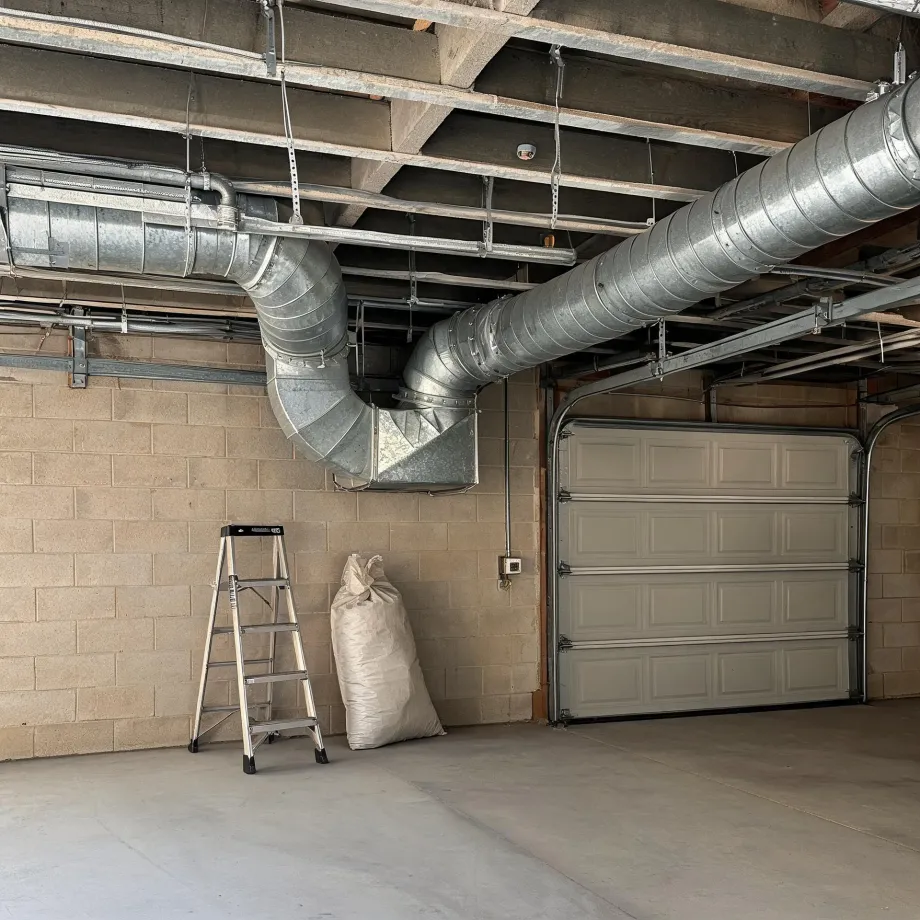
Ductwork sized and routed for whatever system originally ran in these houses is what a contractor has to assess before a furnace installation can be scoped or priced. Half the homes in St. Francis County, Arkansas were built in 1980 or earlier (2020-2024 ACS 5-year). That gap between what was built into the house and what a new furnace requires is where the installation either stays straightforward or gets complicated. If the existing ducts cannot move the volume a new unit pushes, the contractor has to address that first. The electrical service faces the same question.
What a Furnace Installation Covers
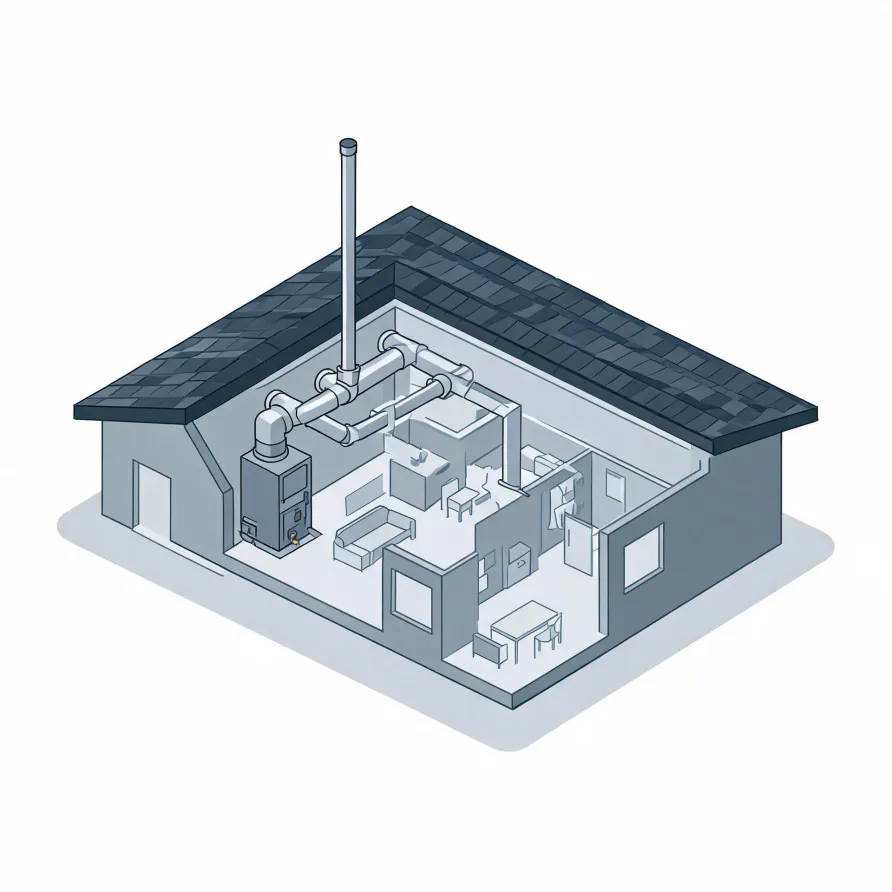
The furnace itself sits inside the house, most often in a basement, utility room, or closet. It is the unit that generates heat and pushes conditioned air into the living space. The air handler, which may be built into the furnace or stand beside it, moves that air through the house.
The thermostat mounts on an interior wall and is the control point the homeowner sees and uses every day. A flue or venting pipe runs from the furnace to an outside wall or through the roof, carrying combustion gases out of the house. Refrigerant lines and a condensate drain also connect to the system depending on the furnace type.
The drawing shows a general layout of these components, and a licensed contractor determines exactly what applies to this house.
Find a contractor in St. Francis CountySt. Francis County, Arkansas, by the numbers
39 severe weather events were recorded in St. Francis County, Arkansas between 2015 and 2024.
NOAA National Centers for Environmental Information, Storm Events Database, bulk CSV export, events 2015-01-01 through 2024-12-31.Half the homes in St. Francis County, Arkansas were built in 1980 or earlier (2020-2024 ACS 5-year).
U.S. Census Bureau, 2020-2024 American Community Survey 5-Year EstimatesSt. Francis County, Arkansas holds 9,570 housing units (2020-2024 ACS 5-year).
U.S. Census Bureau, 2020-2024 American Community Survey 5-Year EstimatesOwners occupy 55.5% of the occupied homes in St. Francis County, Arkansas (2020-2024 ACS 5-year).
U.S. Census Bureau, 2020-2024 American Community Survey 5-Year EstimatesFurnace Installation Rules on the Books for St. Francis County, Arkansas6 codes, standards, and licensing rules
What happens on installation day
Non-weatherized gas furnaces manufactured on or after November 19, 2015 must reach 80.0 percent AFUE.
Non-weatherized oil-fired furnaces manufactured on or after November 19, 2015 must reach 83.0 percent AFUE.
Mobile home gas furnaces manufactured on or after November 19, 2015 must reach 80.0 percent AFUE.
Non-weatherized gas furnaces manufactured on or after December 18, 2028 must reach 95.0 percent AFUE, up from the 80.0 percent minimum that applies to units manufactured before that date.
Licensing and Legal Requirements in St. Francis County, Arkansas
An Arkansas HVACR licence is good across the state: no city or county may require its own licence to do HVACR work, though local permits and inspections still apply.
Arkansas requires an HVACR licence or registration: it is unlawful to do HVACR work without the appropriate one unless the chapter exempts you.
Severe Weather Events in St. Francis County
St. Francis County's climate puts real demand on heating equipment, and that demand is not evenly distributed across years. A furnace sized and installed for local conditions holds up where a generic setup falls short.
39 severe weather events, 2015–2024. Source: NOAA National Centers for Environmental Information, Storm Events Database.