Tell us about the job
Takes about a minute. No obligation.
Furnace sizing in Sebastian County is a decision that the heating season will test thoroughly. Homes in Sebastian County, AR run heat about six months a year, from November through April. A burner and heat exchanger that cycle through that run accumulate wear on ignition components, the heat exchanger itself, and any duct connections that were not sealed correctly at install. An undersized system runs longer per cycle; an oversized one short-cycles and stresses the heat exchanger with repeated thermal expansion. A contractor sizing a replacement here has to calculate the actual load the house puts on equipment, because the season is long enough to expose a miscalculation in the first winter.
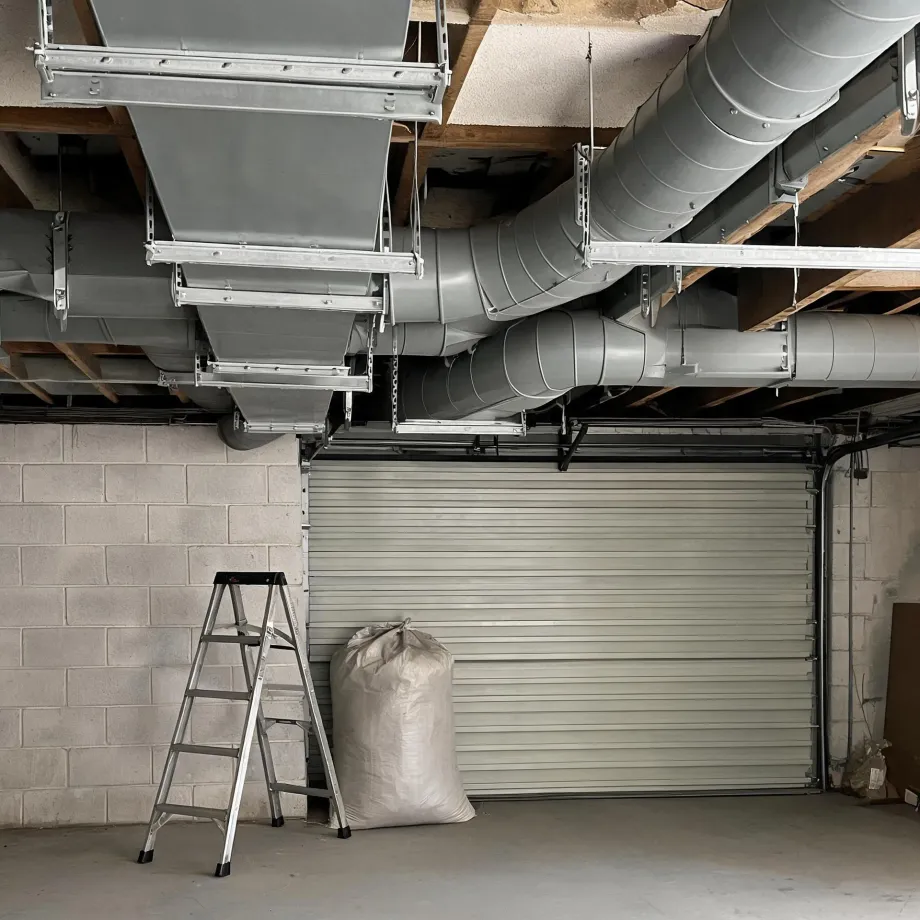
Ductwork is where a furnace installation in Sebastian County either holds together or gets complicated. Half the homes in Sebastian County, Arkansas were built in 1981 or earlier (2020-2024 ACS 5-year). A house built then was ducted for the equipment common at the time, and the furnace running in it now is a later arrival. When a contractor quotes a replacement, the duct layout and the service panel are what get measured, because a modern unit pulls differently than what those runs were sized around. If the existing trunk lines cannot carry the new airflow, that work comes before the furnace itself.
What a Furnace Installation Covers
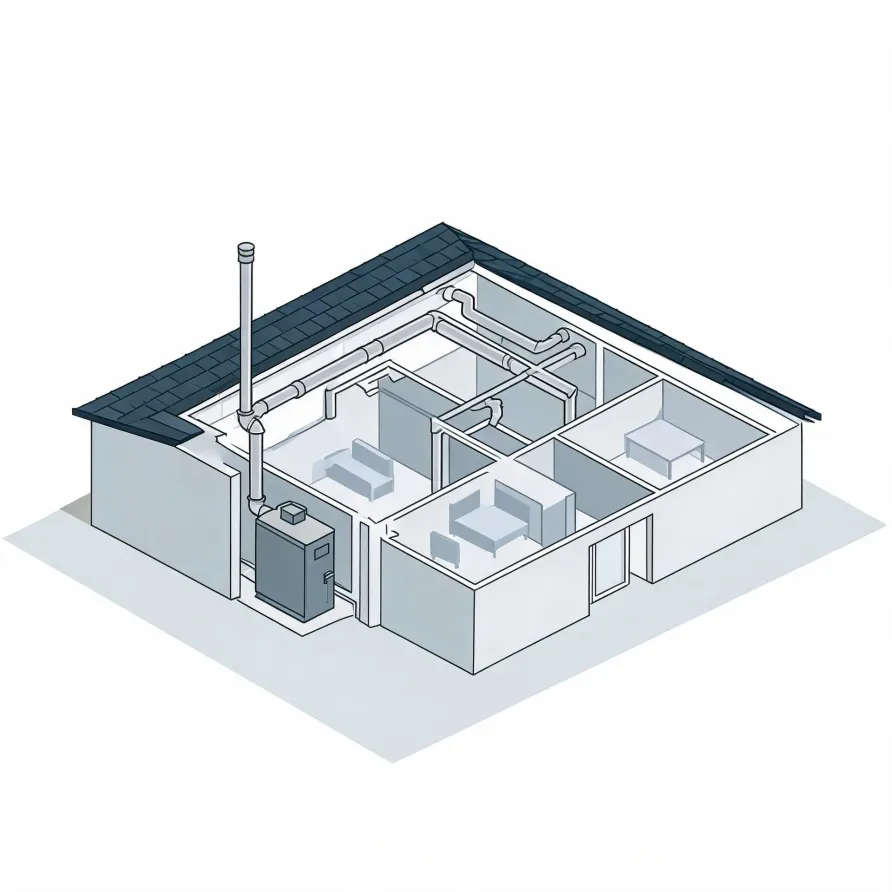
The furnace itself sits inside the house, most often in a basement, utility closet, or crawl space. It is the central unit that heats air and pushes it outward. A new installation also includes the flue or venting pipe that runs from the furnace to an exterior wall or roofline, carrying combustion gases out of the living space.
The air handler components built into the furnace cabinet, including the blower and heat exchanger, come as part of the unit. A new thermostat mounts on an interior wall and gives the homeowner control over when the furnace runs. The contractor also addresses the supply and return connections where the furnace ties into the home's existing ductwork.
The drawing shows a representative layout, and a licensed contractor determines exactly what applies to this house.
Find a contractor in Sebastian CountySebastian County, by the numbers
206 severe weather events were recorded in Sebastian County, Arkansas between 2015 and 2024.
NOAA National Centers for Environmental Information, Storm Events Database, bulk CSV export, events 2015-01-01 through 2024-12-31.Half the homes in Sebastian County, Arkansas were built in 1981 or earlier (2020-2024 ACS 5-year).
U.S. Census Bureau, 2020-2024 American Community Survey 5-Year EstimatesSebastian County, Arkansas holds 57,470 housing units (2020-2024 ACS 5-year).
U.S. Census Bureau, 2020-2024 American Community Survey 5-Year EstimatesOwners occupy 61.4% of the occupied homes in Sebastian County, Arkansas (2020-2024 ACS 5-year).
U.S. Census Bureau, 2020-2024 American Community Survey 5-Year EstimatesFurnace Installation Rules for Sebastian County, Arkansas6 codes, standards, and laws
What the installation looks like
Non-weatherized gas furnaces manufactured on or after November 19, 2015 must reach 80.0 percent AFUE.
Non-weatherized oil-fired furnaces manufactured on or after November 19, 2015 must reach 83.0 percent AFUE.
Mobile home gas furnaces manufactured on or after November 19, 2015 must reach 80.0 percent AFUE.
Non-weatherized gas furnaces manufactured on or after December 18, 2028 must reach 95.0 percent AFUE, up from the 80.0 percent minimum that applies to units manufactured before that date.
What Sebastian County and Arkansas Require for HVAC Work
An Arkansas HVACR licence is good across the state: no city or county may require its own licence to do HVACR work, though local permits and inspections still apply.
Arkansas requires an HVACR licence or registration: it is unlawful to do HVACR work without the appropriate one unless the chapter exempts you.
Severe Weather Events in Sebastian County
Local weather patterns put real demands on heating equipment, from sustained cold snaps that run a furnace hard to abrupt swings that accelerate wear on components. A furnace sized and installed for Sebastian County's conditions holds up differently than one spec'd for somewhere else.
206 severe weather events, 2015–2024. Source: NOAA National Centers for Environmental Information, Storm Events Database.