Tell us about the job
Takes about a minute. No obligation.
Sizing a furnace for Izard County starts with how hard the burner and heat exchanger are asked to work each year. Homes in Izard County, AR run heat about seven months a year, from October through April. That means the ignition system is firing repeatedly across most of the calendar, and the heat exchanger is expanding and contracting through hundreds of cycles before it gets any real rest. A contractor quoting a replacement here has to match output to actual load, because an undersized unit runs longer per call and compounds wear on every component that cycles with it.
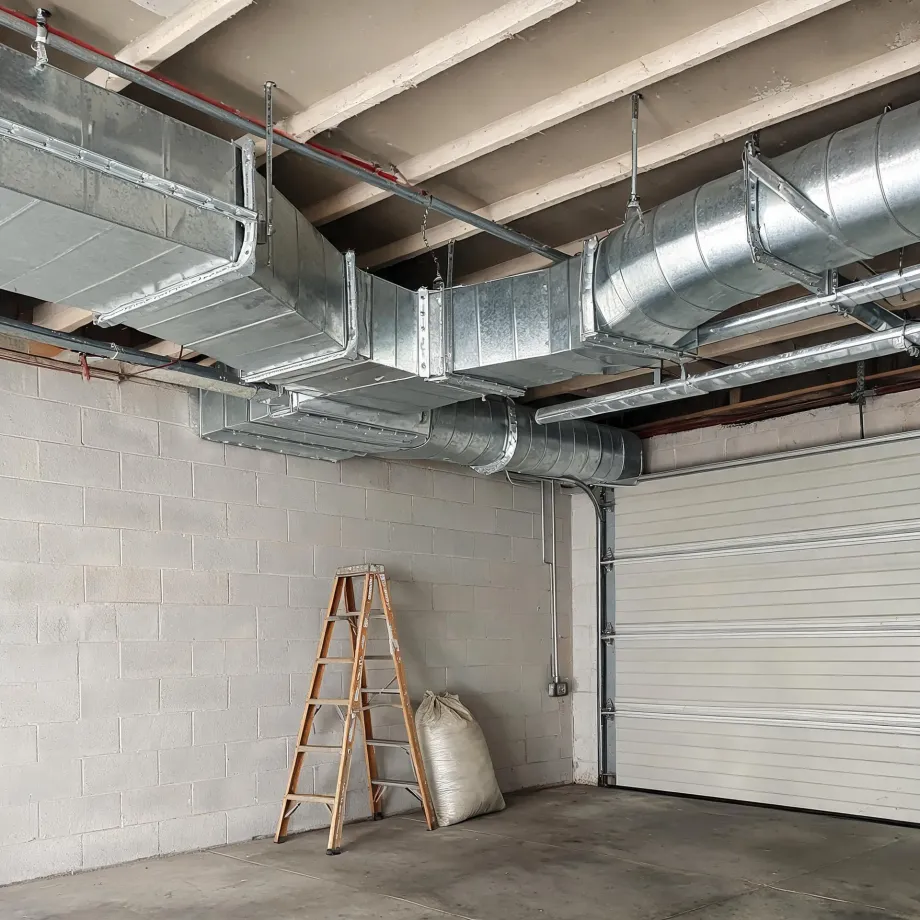
Ductwork laid out for a furnace that is no longer in the house sets the terms of any installation job here. Half the homes in Izard County, Arkansas were built in 1984 or earlier (2020-2024 ACS 5-year). That generation of residential construction sized its duct runs for equipment with different airflow demands than what a contractor is putting in today, and a duct system that was adequate then can restrict a new unit's output or create pressure problems across the home. The electrical is a separate check. Before the equipment gets priced, a contractor measures what is already in the walls.
What a Furnace Installation Covers
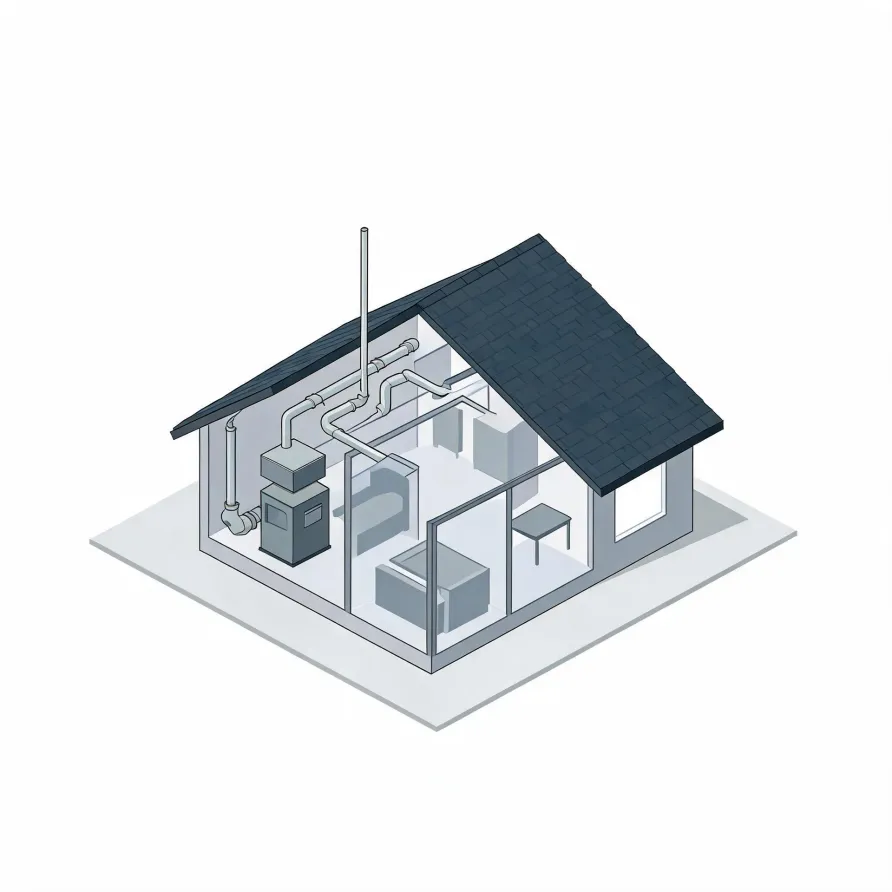
The furnace itself sits inside the house, most often in a basement, utility room, or closet, and it is the unit that generates the heat your home runs on. Alongside it, the air handler moves conditioned air through the house, and both units are set in place before any connections are made.
The thermostat goes on an interior wall where it reads the air temperature and tells the system when to run. A flue or exhaust vent runs from the furnace to the outside, and the condensate drain carries moisture away from the unit. Each of these has to be in place and connected before the system operates.
The drawing shows a typical layout, and a licensed contractor determines exactly what applies to your house.
Find a contractor in Izard CountyIzard County, by the numbers
48 severe weather events were recorded in Izard County, Arkansas between 2015 and 2024.
NOAA National Centers for Environmental Information, Storm Events Database, bulk CSV export, events 2015-01-01 through 2024-12-31.Half the homes in Izard County, Arkansas were built in 1984 or earlier (2020-2024 ACS 5-year).
U.S. Census Bureau, 2020-2024 American Community Survey 5-Year EstimatesIzard County, Arkansas holds 6,739 housing units (2020-2024 ACS 5-year).
U.S. Census Bureau, 2020-2024 American Community Survey 5-Year EstimatesOwners occupy 75.4% of the occupied homes in Izard County, Arkansas (2020-2024 ACS 5-year).
U.S. Census Bureau, 2020-2024 American Community Survey 5-Year EstimatesFurnace Installation Rules on the Books for Izard County, Arkansas6 sourced codes and standards
What the installation looks like
Non-weatherized gas furnaces manufactured on or after November 19, 2015 must reach 80.0 percent AFUE.
Non-weatherized oil-fired furnaces manufactured on or after November 19, 2015 must reach 83.0 percent AFUE.
Mobile home gas furnaces manufactured on or after November 19, 2015 must reach 80.0 percent AFUE.
Non-weatherized gas furnaces manufactured on or after December 18, 2028 must reach 95.0 percent AFUE, up from the 80.0 percent minimum that applies to units manufactured before that date.
Licensing and Legal Requirements in Izard County, Arkansas
An Arkansas HVACR licence is good across the state: no city or county may require its own licence to do HVACR work, though local permits and inspections still apply.
Arkansas requires an HVACR licence or registration: it is unlawful to do HVACR work without the appropriate one unless the chapter exempts you.
Severe Weather Events in Izard County
Weather in this part of Arkansas puts real demands on heating equipment, from hard freezes that push furnaces to their limits to summer heat that strains the whole system. What happens outside shapes what a furnace needs to handle, and that makes local conditions a real factor in how equipment gets sized and installed here.
48 severe weather events, 2015–2024. Source: NOAA National Centers for Environmental Information, Storm Events Database.