
Tell us about the job
Takes about a minute. No obligation.
Sizing a furnace for a Polk County home is a local question before it is a product question. Homes in Polk County, AR run heat about seven months a year, from October through April. The burner, heat exchanger, and ignition system carry that load straight through to spring, and a unit that is even modestly undersized cycles harder than it should across every one of those months. A contractor running a proper load calculation here is not performing a formality. The result decides which equipment fits the house, and a furnace that fits correctly distributes wear evenly across its components rather than concentrating it on the parts that compensate for the shortfall.
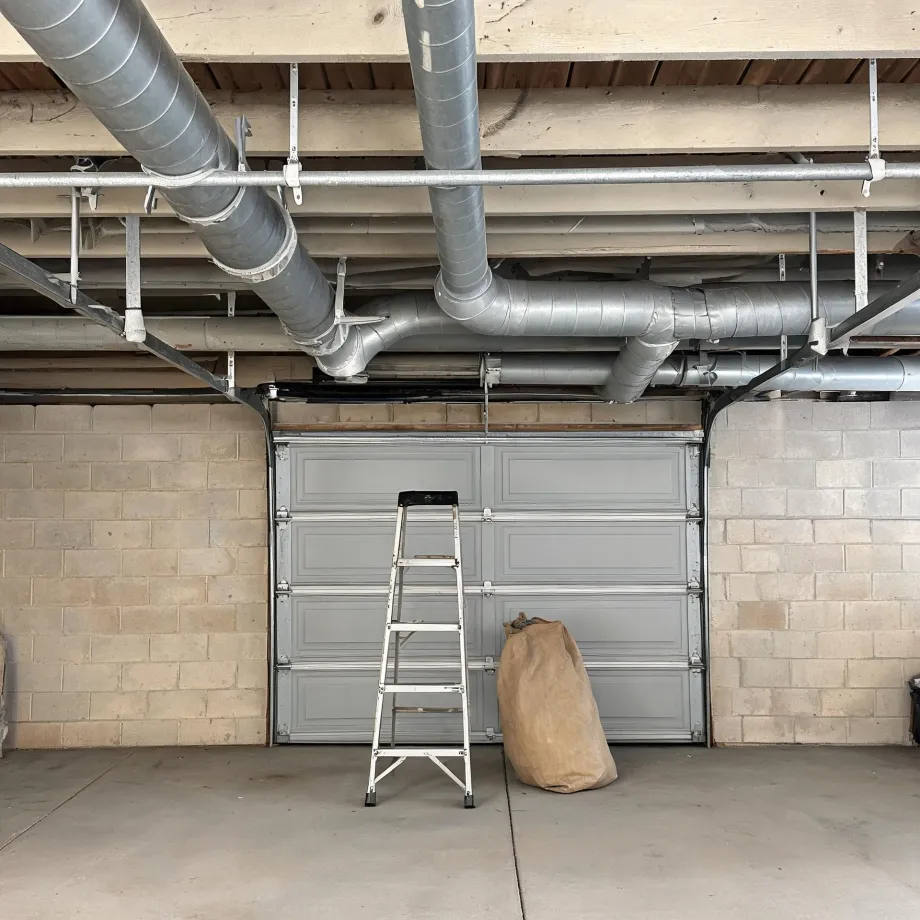
Ductwork sized for a previous generation of equipment does not automatically carry what a new furnace needs. Half the homes in Polk County, Arkansas were built in 1986 or earlier (2020-2024 ACS 5-year). That gap between what the ducts expect and what a current unit delivers is where a furnace installation in Polk County gets decided. A contractor has to measure what the existing runs will actually move before a new system can be matched to the house. The electrical picture matters too, though duct capacity tends to surface first and resolve last.
What a Furnace Installation Covers
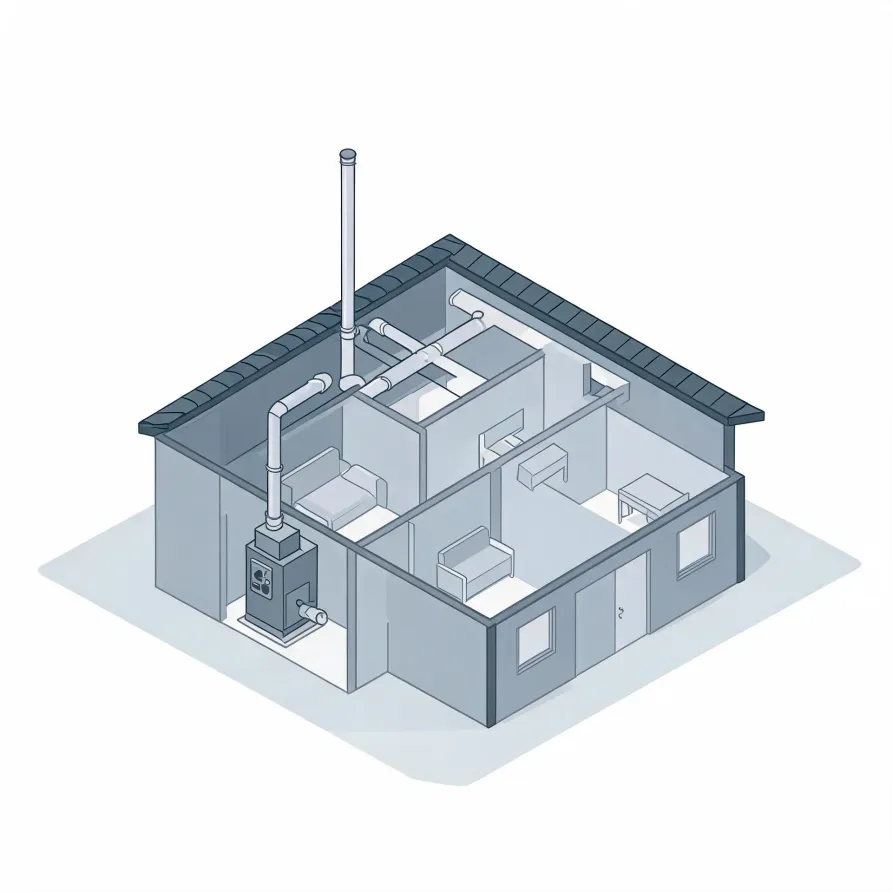
The furnace itself sits inside the house, most often in a basement, utility room, or closet. It holds the burner assembly, the heat exchanger, and the blower that moves conditioned air into the supply side of your home. A flue pipe runs from the unit to an exterior wall or up through the roof to carry combustion gases out.
The thermostat mounts on an interior wall where it reads the temperature of the living space and signals the furnace to run. Alongside the furnace, a contractor installs the filter housing and any shut-off components the local code and the equipment manufacturer require.
The drawing shows a typical layout, and a licensed contractor determines what applies to your specific house.
Find a contractor in Polk CountyPolk County by the Numbers
70 severe weather events were recorded in Polk County, Arkansas between 2015 and 2024.
NOAA National Centers for Environmental Information, Storm Events Database, bulk CSV export, events 2015-01-01 through 2024-12-31.Half the homes in Polk County, Arkansas were built in 1986 or earlier (2020-2024 ACS 5-year).
U.S. Census Bureau, 2020-2024 American Community Survey 5-Year EstimatesPolk County, Arkansas holds 9,643 housing units (2020-2024 ACS 5-year).
U.S. Census Bureau, 2020-2024 American Community Survey 5-Year EstimatesOwners occupy 78.9% of the occupied homes in Polk County, Arkansas (2020-2024 ACS 5-year).
U.S. Census Bureau, 2020-2024 American Community Survey 5-Year EstimatesCodes & Standards Behind Furnace Installation in Polk County, Arkansas6 sourced rules and standards
What the installation actually looks like
Non-weatherized gas furnaces manufactured on or after November 19, 2015 must reach 80.0 percent AFUE.
Non-weatherized oil-fired furnaces manufactured on or after November 19, 2015 must reach 83.0 percent AFUE.
Mobile home gas furnaces manufactured on or after November 19, 2015 must reach 80.0 percent AFUE.
Non-weatherized gas furnaces manufactured on or after December 18, 2028 must reach 95.0 percent AFUE, up from the 80.0 percent minimum that applies to units manufactured before that date.
Licensing and Legal Requirements in Polk County, Arkansas
An Arkansas HVACR licence is good across the state: no city or county may require its own licence to do HVACR work, though local permits and inspections still apply.
Arkansas requires an HVACR licence or registration: it is unlawful to do HVACR work without the appropriate one unless the chapter exempts you.
Severe Weather History in Polk County
Polk County's weather puts real demands on heating equipment, and those demands vary by how hard the climate actually swings from year to year. A furnace sized and installed for local conditions holds up better than one spec'd for somewhere else.
70 severe weather events, 2015–2024. Source: NOAA National Centers for Environmental Information, Storm Events Database.