Tell us about the job
Takes about a minute. No obligation.
Getting the size right before any furnace goes in the ground matters more here than a contractor working a mild climate might account for. Homes in Randolph County, AR run heat about seven months a year, from October through April. The burner and heat exchanger cycle hard across those months, and a unit running slightly undersized has nowhere to recover. Poor installation seals that in from day one. A contractor quoting a new furnace in Randolph County has to work out actual heat loss for the house before settling on equipment, because the ignition system and heat exchanger will carry whatever that decision produces.
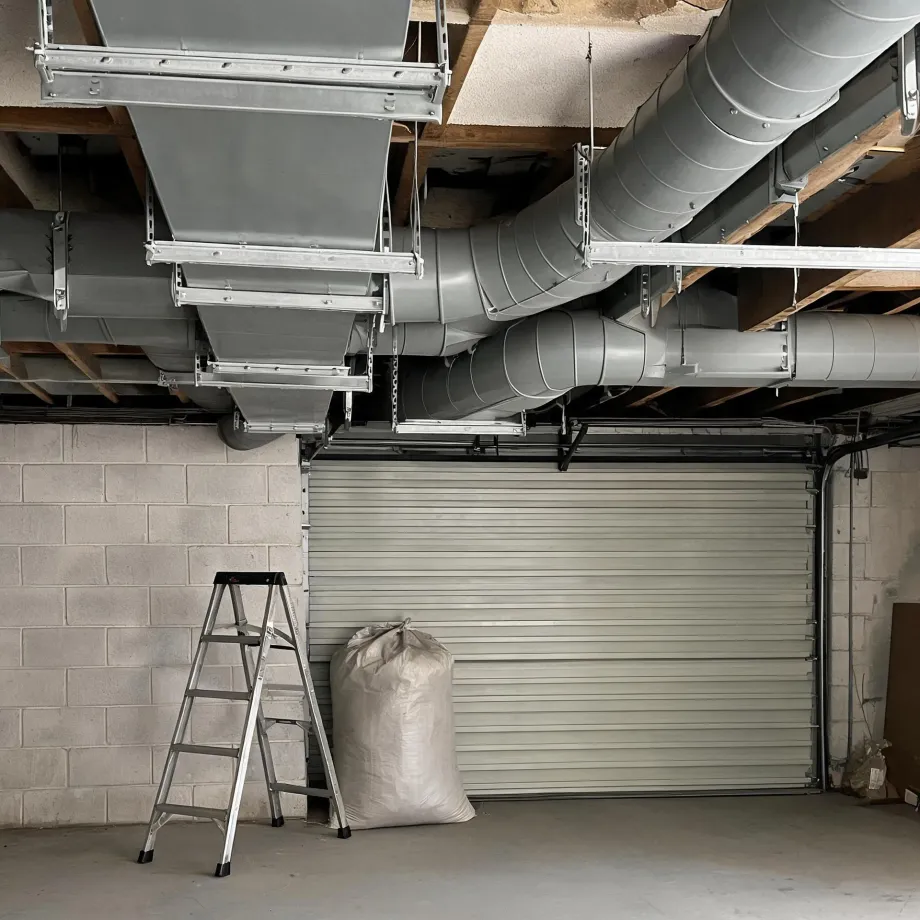
Ductwork laid out for a previous generation of heating equipment is often the first thing a contractor has to price, not the furnace itself. Half the homes in Randolph County, Arkansas were built in 1979 or earlier (2020-2024 ACS 5-year). That span between the house and what runs in it now lands squarely on the duct system: trunk lines sized for a different unit, returns that were never generous, connections that have shifted over decades of use. A contractor quoting a furnace installation here measures the existing ductwork and the electrical service before the new equipment ever comes up, because those two things decide whether the job is a swap or a rebuild.
What a Furnace Installation Covers
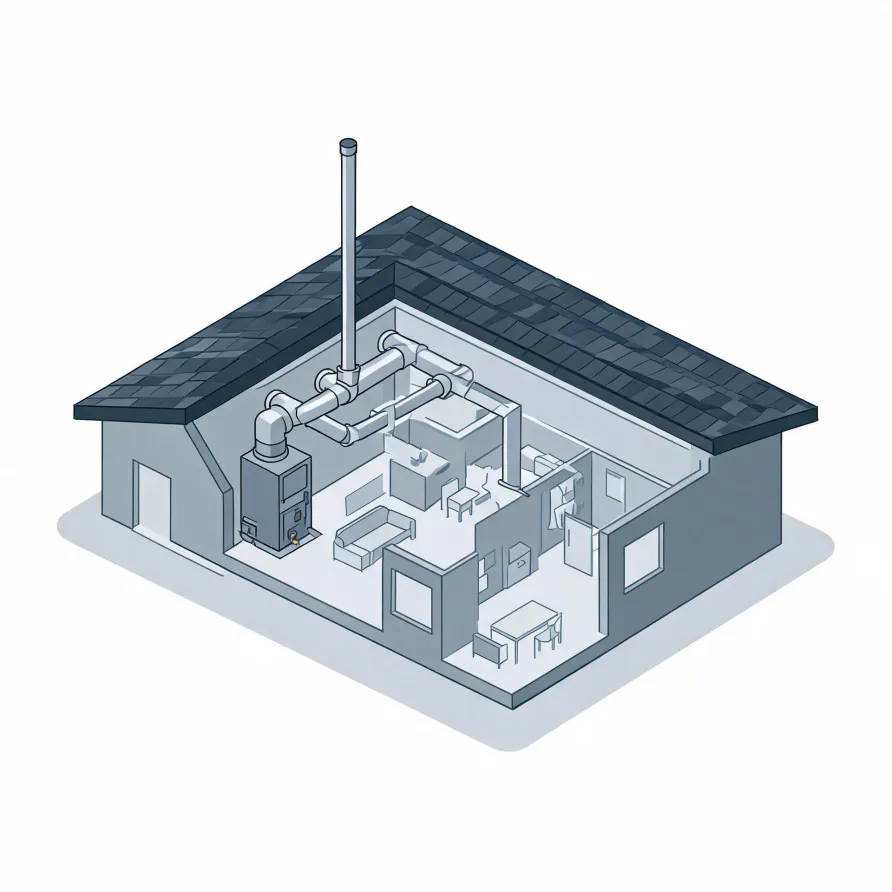
The furnace itself sits inside the house, most often in a basement, utility room, or closet. It is the central unit that generates heat and pushes conditioned air into the home. Alongside it, the air handler or blower moves that air through the system.
The flue or venting pipe runs from the furnace to an exterior wall or roof, carrying combustion gases out of the house. The thermostat mounts on an interior wall and serves as the control point, telling the furnace when to run and at what target temperature.
The drawing shows a general layout of these components, and a licensed contractor determines exactly what the work involves in your specific home.
Find a contractor in Randolph CountyRandolph County, Arkansas, by the numbers
58 severe weather events were recorded in Randolph County, Arkansas between 2015 and 2024.
NOAA National Centers for Environmental Information, Storm Events Database, bulk CSV export, events 2015-01-01 through 2024-12-31.Half the homes in Randolph County, Arkansas were built in 1979 or earlier (2020-2024 ACS 5-year).
U.S. Census Bureau, 2020-2024 American Community Survey 5-Year EstimatesRandolph County, Arkansas holds 8,656 housing units (2020-2024 ACS 5-year).
U.S. Census Bureau, 2020-2024 American Community Survey 5-Year EstimatesOwners occupy 73.5% of the occupied homes in Randolph County, Arkansas (2020-2024 ACS 5-year).
U.S. Census Bureau, 2020-2024 American Community Survey 5-Year EstimatesFurnace Installation Rules for Randolph County, Arkansas6 codes, standards & laws
What the Installation Actually Looks Like
Non-weatherized gas furnaces manufactured on or after November 19, 2015 must reach 80.0 percent AFUE.
Non-weatherized oil-fired furnaces manufactured on or after November 19, 2015 must reach 83.0 percent AFUE.
Mobile home gas furnaces manufactured on or after November 19, 2015 must reach 80.0 percent AFUE.
Non-weatherized gas furnaces manufactured on or after December 18, 2028 must reach 95.0 percent AFUE, up from the 80.0 percent minimum that applies to units manufactured before that date.
Licensing and Legal Requirements in Randolph County, Arkansas
An Arkansas HVACR licence is good across the state: no city or county may require its own licence to do HVACR work, though local permits and inspections still apply.
Arkansas requires an HVACR licence or registration: it is unlawful to do HVACR work without the appropriate one unless the chapter exempts you.
Severe Weather Events in Randolph County
Weather puts a load on heating equipment that no spec sheet accounts for on its own. How hard a furnace works over its life is a local question, and what happens in Randolph County shapes the answer.
58 severe weather events, 2015–2024. Source: NOAA National Centers for Environmental Information, Storm Events Database.