Tell us about the job
Takes about a minute. No obligation.
Sizing a furnace for a Benton County home means accounting for a burner and heat exchanger that will cycle repeatedly across a long cold stretch. Homes in Benton County, AR run heat about seven months a year, from October through April. A burner running through those months accumulates ignition cycles, thermal expansion and contraction, and stress on the heat exchanger in ways that a loose or undersized installation accelerates. A contractor doing this work has to run a load calculation against the actual house, not pull a unit size from the existing equipment, because an undersized system runs longer cycles and wears its components faster than a correctly matched one.
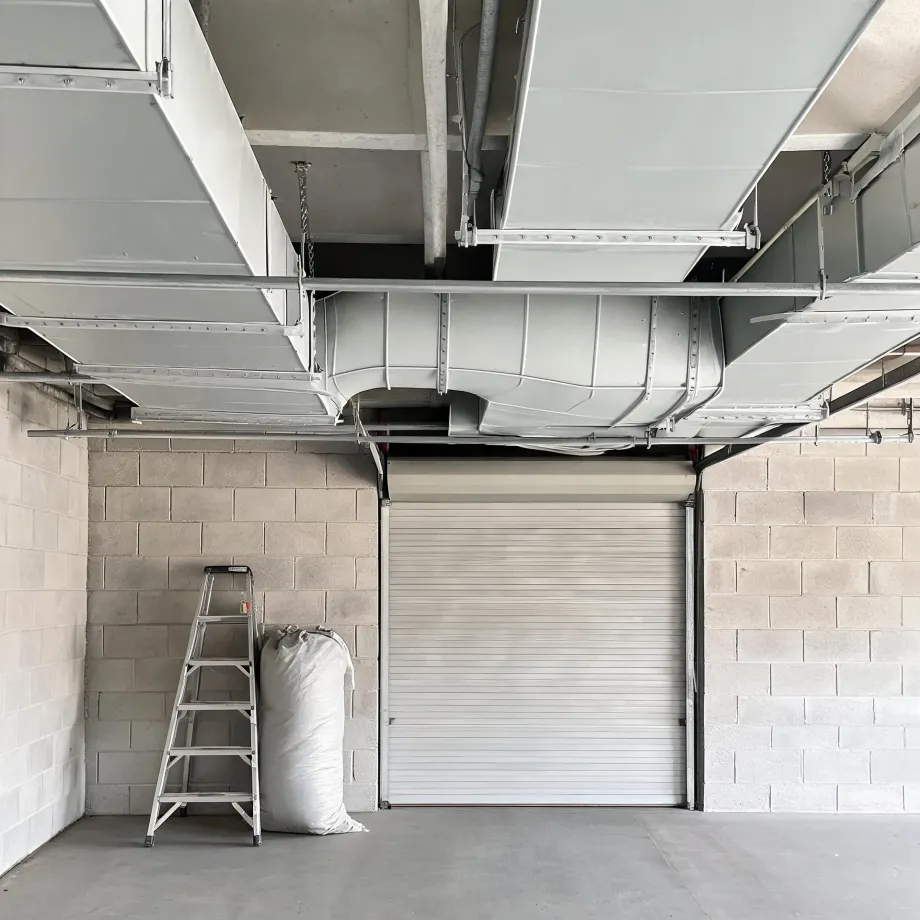
Ductwork laid in a house from the recent past was designed around load calculations and equipment that still have something in common with what a contractor brings to the job today. Half the homes in Benton County, Arkansas were built in 2001 or earlier (2020-2024 ACS 5-year). That matters for a furnace installation because it shifts the real question away from whether the ducts can carry modern airflow at all, and toward whether what is already there is in good enough condition to carry it well. A contractor will open registers, check the trunk lines, and look at how the existing layout was run before the new unit ever enters the picture.
What a Furnace Installation Puts in Your Home
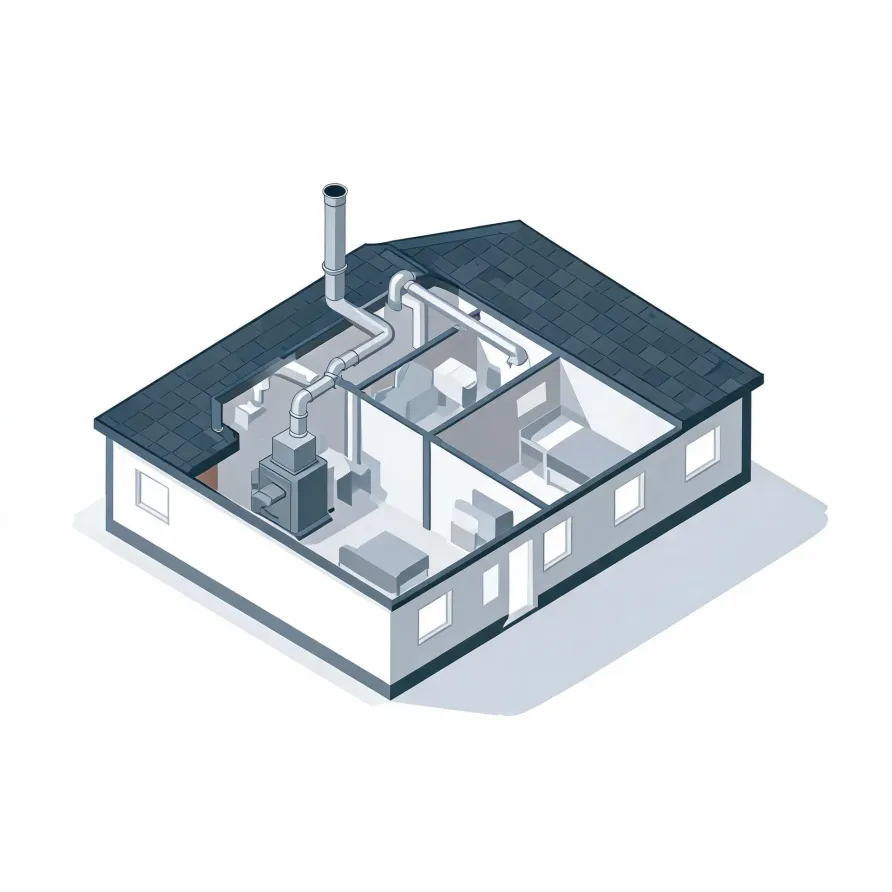
The furnace itself sits inside the house, almost always in a basement, utility closet, or mechanical room. It holds the burner assembly, the heat exchanger, and the blower, which pulls air through the unit and pushes it out into the supply side of the system. The thermostat mounts on an interior wall and tells the furnace when to fire.
The flue pipe runs from the furnace up and out of the house, carrying combustion gases away. Alongside it, a contractor installs the filter housing where it meets the return air path, and the condensate drain line if the unit is a high-efficiency model that produces moisture during operation.
The drawing shows a typical layout, and a licensed contractor determines exactly what applies to your house and its existing setup.
Find a contractor in Benton CountyBenton County, by the numbers
320 severe weather events were recorded in Benton County, Arkansas between 2015 and 2024.
NOAA National Centers for Environmental Information, Storm Events Database, bulk CSV export, events 2015-01-01 through 2024-12-31.Half the homes in Benton County, Arkansas were built in 2001 or earlier (2020-2024 ACS 5-year).
U.S. Census Bureau, 2020-2024 American Community Survey 5-Year EstimatesBenton County, Arkansas holds 122,703 housing units (2020-2024 ACS 5-year).
U.S. Census Bureau, 2020-2024 American Community Survey 5-Year EstimatesOwners occupy 67.0% of the occupied homes in Benton County, Arkansas (2020-2024 ACS 5-year).
U.S. Census Bureau, 2020-2024 American Community Survey 5-Year EstimatesFurnace & HVAC Installation Rules on Record for Benton County, Arkansas6 sourced standards & codes
What the Installation Actually Looks Like
Non-weatherized gas furnaces manufactured on or after November 19, 2015 must reach 80.0 percent AFUE.
Non-weatherized oil-fired furnaces manufactured on or after November 19, 2015 must reach 83.0 percent AFUE.
Mobile home gas furnaces manufactured on or after November 19, 2015 must reach 80.0 percent AFUE.
Non-weatherized gas furnaces manufactured on or after December 18, 2028 must reach 95.0 percent AFUE, up from the 80.0 percent minimum that applies to units manufactured before that date.
Licensing and Legal Requirements in Benton County, Arkansas
An Arkansas HVACR licence is good across the state: no city or county may require its own licence to do HVACR work, though local permits and inspections still apply.
Arkansas requires an HVACR licence or registration: it is unlawful to do HVACR work without the appropriate one unless the chapter exempts you.
Severe Weather Events in Benton County
Benton County's weather places real demands on heating equipment, and those demands shape what a furnace here needs to handle over its life. The chart below tracks recorded severe weather events by year, so you can see the conditions local equipment is built to hold up against.
320 severe weather events, 2015–2024. Source: NOAA National Centers for Environmental Information, Storm Events Database.