Tell us about the job
Takes about a minute. No obligation.
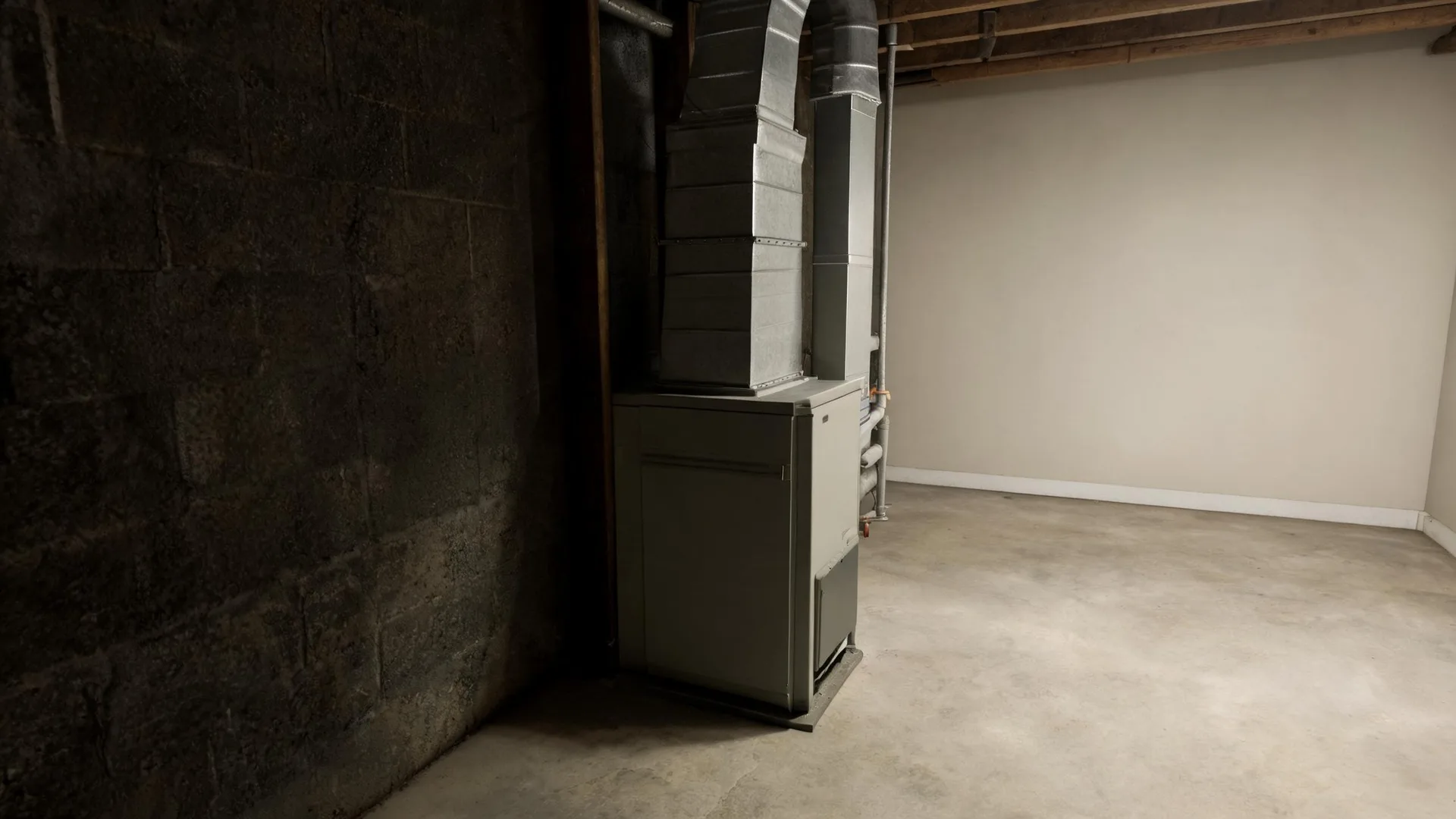
A furnace repair here starts with what the burner and heat exchanger have already been through. Homes in Mississippi County, AR run heat about seven months a year, from October through April. Across that run, the ignition system cycles repeatedly, and the heat exchanger flexes with every firing. A contractor checking a furnace in this county goes straight to those parts first, because fatigue cracks and igniter wear show up there before the controls or the blower do. A system that has been short-cycling or running dirty accumulates that damage faster, and the opened cabinet usually tells the story.
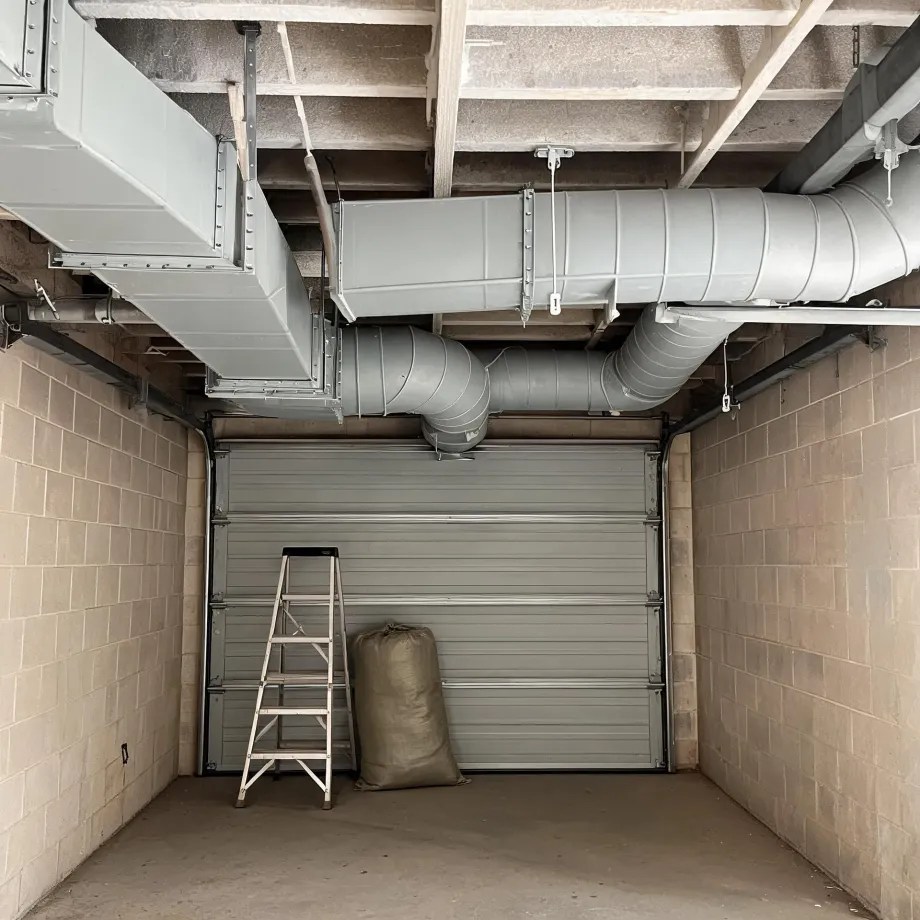
Furnaces in houses this old have typically cycled through at least one full replacement already, and what runs in them now is not what the house was built to hold. Half the homes in Mississippi County, Arkansas were built in 1977 or earlier (2020-2024 ACS 5-year). When a unit opens, the question that shapes the job is whether the parts that specific furnace takes are still in production. A heat exchanger showing fatigue, a cracked burner assembly, a control board on a discontinued platform: each one lands differently depending on what a supplier can still ship. The age of the house sets a context, but the repair bill is decided by what the opened furnace actually contains.
The Parts of a Furnace a Contractor Checks First
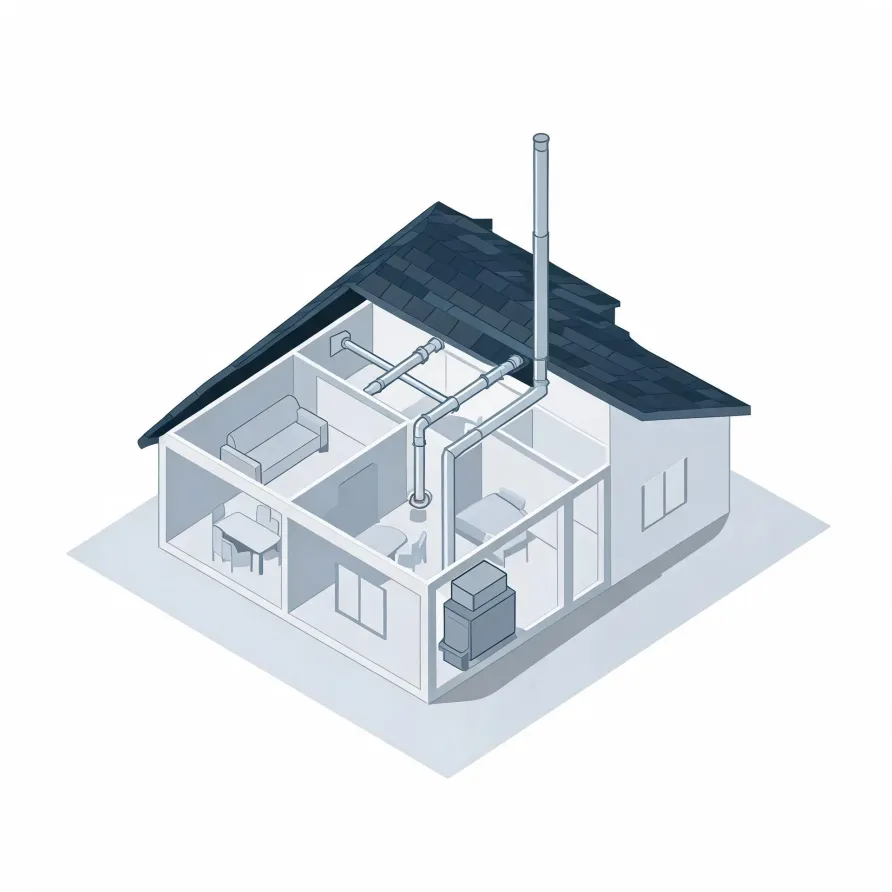
The furnace cabinet sits in a basement, utility room, or closet and is the heart of the system. Inside it, the heat exchanger is the piece a contractor reaches first when something is wrong. Cracks or corrosion there affect both heating output and safety, which is why it draws early attention.
The burner assembly and ignitor sit inside the cabinet alongside the blower motor, which pushes conditioned air into the supply side of the house. The flue pipe runs from the cabinet to an exterior wall or chimney, carrying combustion gases out. Each of these connects directly to the cabinet and each has its own failure patterns a contractor reads before anything else.
The drawing shows a typical furnace layout, and a licensed contractor determines which components apply to your specific setup.
Find a contractor in Mississippi CountyMississippi County, Arkansas, by the numbers
126 severe weather events were recorded in Mississippi County, Arkansas between 2015 and 2024.
NOAA National Centers for Environmental Information, Storm Events Database, bulk CSV export, events 2015-01-01 through 2024-12-31.Half the homes in Mississippi County, Arkansas were built in 1977 or earlier (2020-2024 ACS 5-year).
U.S. Census Bureau, 2020-2024 American Community Survey 5-Year EstimatesMississippi County, Arkansas holds 19,133 housing units (2020-2024 ACS 5-year).
U.S. Census Bureau, 2020-2024 American Community Survey 5-Year EstimatesOwners occupy 60.0% of the occupied homes in Mississippi County, Arkansas (2020-2024 ACS 5-year).
U.S. Census Bureau, 2020-2024 American Community Survey 5-Year EstimatesCodes & Standards Covering Furnace Repair in Mississippi County, Arkansas6 sourced rules and standards
What the Repair Visit Looks Like
Non-weatherized gas furnaces manufactured on or after November 19, 2015 must reach 80.0 percent AFUE.
Non-weatherized oil-fired furnaces manufactured on or after November 19, 2015 must reach 83.0 percent AFUE.
Mobile home gas furnaces manufactured on or after November 19, 2015 must reach 80.0 percent AFUE.
Non-weatherized gas furnaces manufactured on or after December 18, 2028 must reach 95.0 percent AFUE, up from the 80.0 percent minimum that applies to units manufactured before that date.
Licensing and Legal Requirements in Mississippi County, Arkansas
An Arkansas HVACR licence is good across the state: no city or county may require its own licence to do HVACR work, though local permits and inspections still apply.
Arkansas requires an HVACR licence or registration: it is unlawful to do HVACR work without the appropriate one unless the chapter exempts you.
Severe Weather Events in Mississippi County
Extreme weather puts real stress on furnace systems, and how hard equipment works over its life is shaped by local conditions. Repair needs in Mississippi County reflect that pressure, which is why the weather record here is part of understanding the service.
126 severe weather events, 2015–2024. Source: NOAA National Centers for Environmental Information, Storm Events Database.