Tell us about the job
Takes about a minute. No obligation.
A contractor diagnosing a furnace repair in Washington County starts with the burner assembly and heat exchanger, not because they are the cheapest fix, but because they are what the season loads hardest. Homes in Washington County, AR run heat about seven months a year, from October through April. That much cycling stresses the ignition system and fatigues the heat exchanger along its seams, which is where cracks and carbon buildup show up first. A furnace that ran without complaint last April may surface a cracked exchanger on the first cold morning in October, when it has had months of idle and the fault was sitting there waiting.
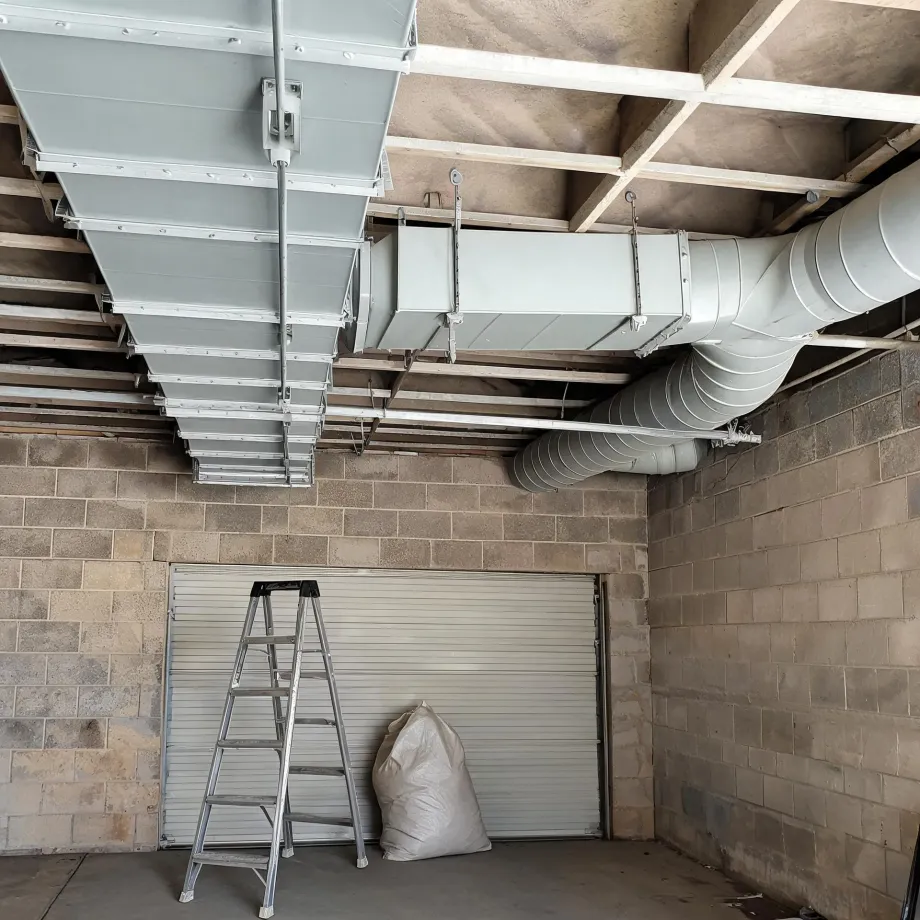
Furnace age and housing age pull in different directions here, and a contractor opening a unit in an older Washington County home is solving for both at once. Half the homes in Washington County, Arkansas were built in 1995 or earlier (2020-2024 ACS 5-year). A furnace running in stock that old has likely been replaced at least once, but the burner assembly and heat exchanger it carries may sit in a parts tier that manufacturers have thinned out. What a contractor finds when the cabinet is open determines whether the repair is a stock order or a search, and that changes the timeline and the bill. The ductwork connecting the furnace to the rest of the house is a separate question, sized for whatever unit was original and carrying whatever that system has deposited over the years.
The Parts of a Furnace a Contractor Checks First
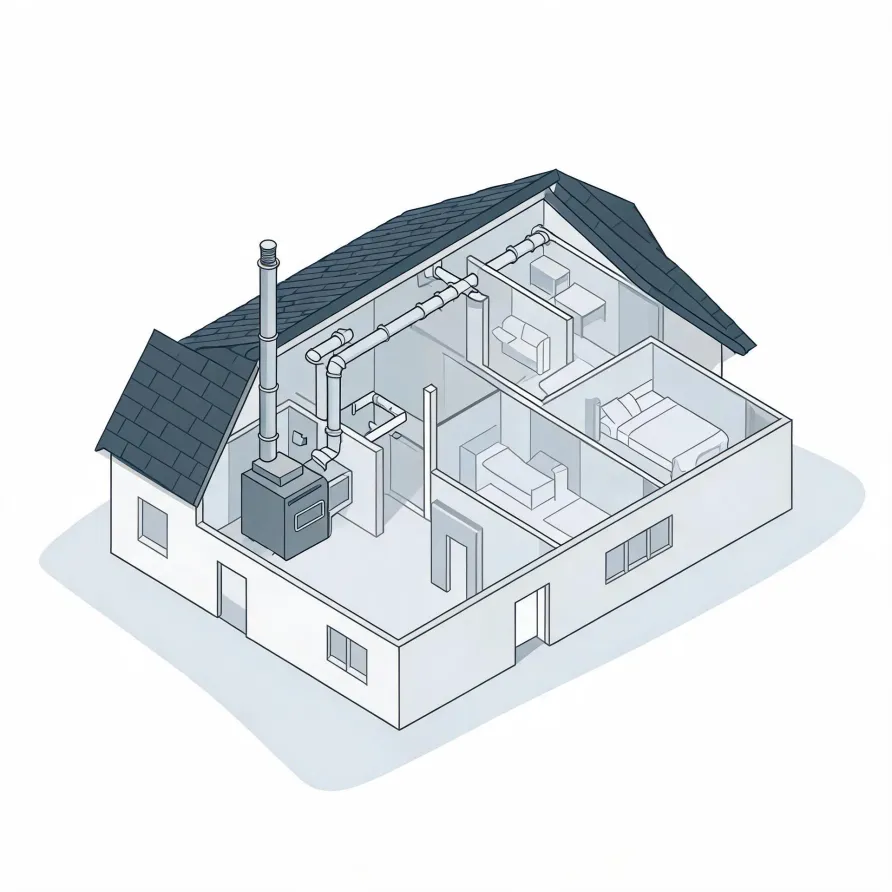
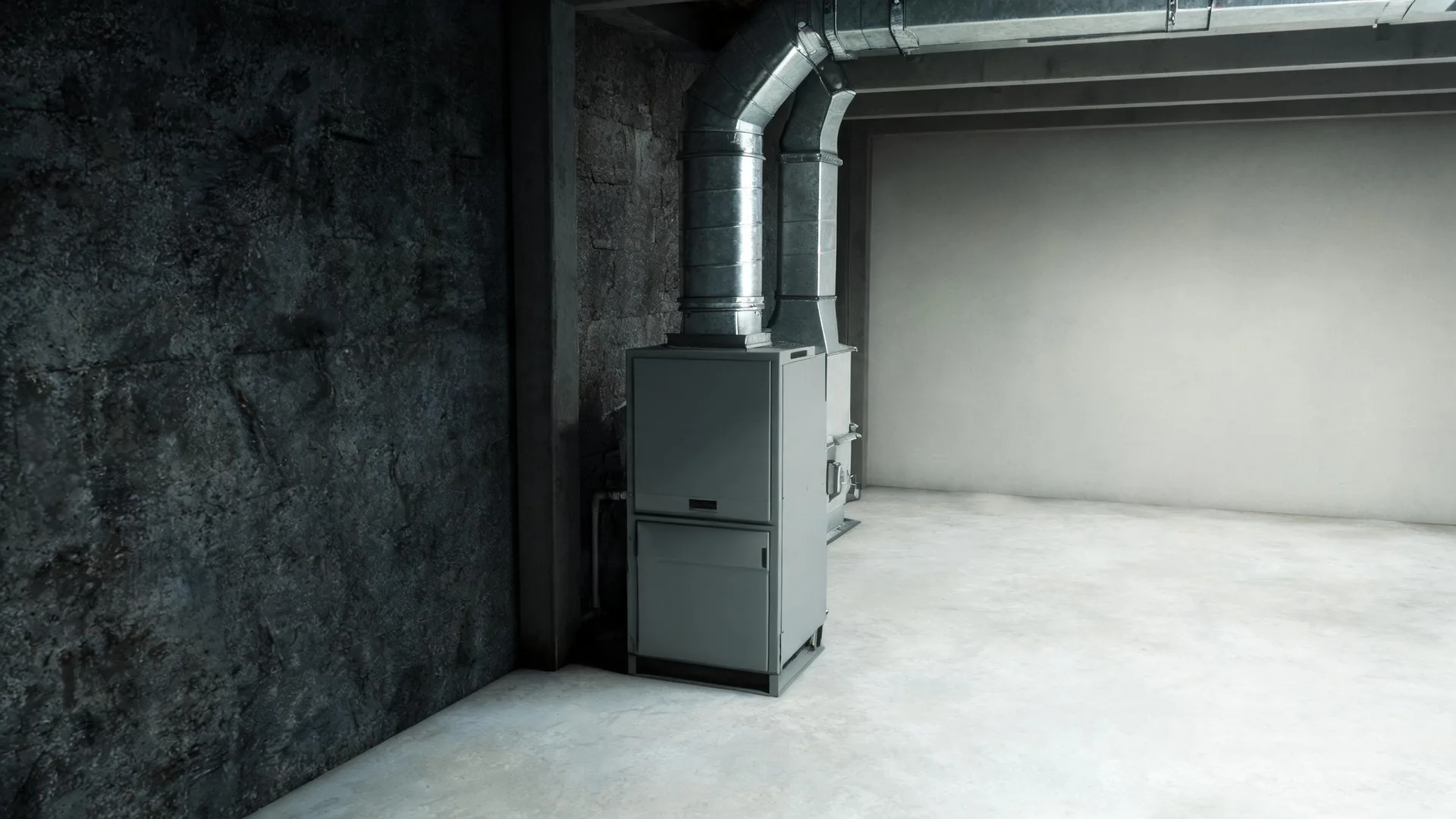
The furnace itself sits in a utility space, basement, or closet and is the heart of the system. Inside it, the heat exchanger, burners, and blower motor are the pieces a contractor goes to first when something has stopped working or is working poorly. A cracked heat exchanger, a failed igniter, or a seized blower motor each shows up differently but all live in that same cabinet.
The flue pipe runs from the furnace to the outside and carries combustion gases out of the house. The thermostat on the wall and the filter at the air return are also part of what a contractor looks at, because a bad thermostat signal or a blocked filter can cause symptoms that look like a deeper mechanical failure.
The drawing shows a typical furnace layout, and a licensed contractor determines which components apply and what condition they are in for your specific home.
Find a contractor in Washington CountyWashington County, Arkansas, by the numbers
250 severe weather events were recorded in Washington County, Arkansas between 2015 and 2024.
NOAA National Centers for Environmental Information, Storm Events Database, bulk CSV export, events 2015-01-01 through 2024-12-31.Half the homes in Washington County, Arkansas were built in 1995 or earlier (2020-2024 ACS 5-year).
U.S. Census Bureau, 2020-2024 American Community Survey 5-Year EstimatesWashington County, Arkansas holds 105,461 housing units (2020-2024 ACS 5-year).
U.S. Census Bureau, 2020-2024 American Community Survey 5-Year EstimatesOwners occupy 55.6% of the occupied homes in Washington County, Arkansas (2020-2024 ACS 5-year).
U.S. Census Bureau, 2020-2024 American Community Survey 5-Year EstimatesCodes & Standards for Furnace Repair in Washington County, Arkansas6 sourced rules and standards
What HVAC Repair Looks Like in Washington County
Non-weatherized gas furnaces manufactured on or after November 19, 2015 must reach 80.0 percent AFUE.
Non-weatherized oil-fired furnaces manufactured on or after November 19, 2015 must reach 83.0 percent AFUE.
Mobile home gas furnaces manufactured on or after November 19, 2015 must reach 80.0 percent AFUE.
Non-weatherized gas furnaces manufactured on or after December 18, 2028 must reach 95.0 percent AFUE, up from the 80.0 percent minimum that applies to units manufactured before that date.
What Washington County, Arkansas Requires for HVAC Repair Work
An Arkansas HVACR licence is good across the state: no city or county may require its own licence to do HVACR work, though local permits and inspections still apply.
Arkansas requires an HVACR licence or registration: it is unlawful to do HVACR work without the appropriate one unless the chapter exempts you.
Severe Weather Events in Washington County
Extreme weather puts real strain on heating equipment, forcing it to run harder and longer than average conditions would ever demand. How often that happens here shapes how quickly components wear and how often repairs come up.
250 severe weather events, 2015–2024. Source: NOAA National Centers for Environmental Information, Storm Events Database.