Tell us about the job
Takes about a minute. No obligation.
A furnace in Pike County is not sitting idle much of the year. Homes in Pike County, AR run heat about six months a year, from November through April. The burner, the heat exchanger, and the ignition system cycle through that entire stretch, and the wear those parts carry by the time something fails is real. A contractor quoting a repair here checks those components first, because a cracked heat exchanger or a degraded igniter on a system that has run that many seasons is a more likely finding than a freak fault on a part that rarely stresses.
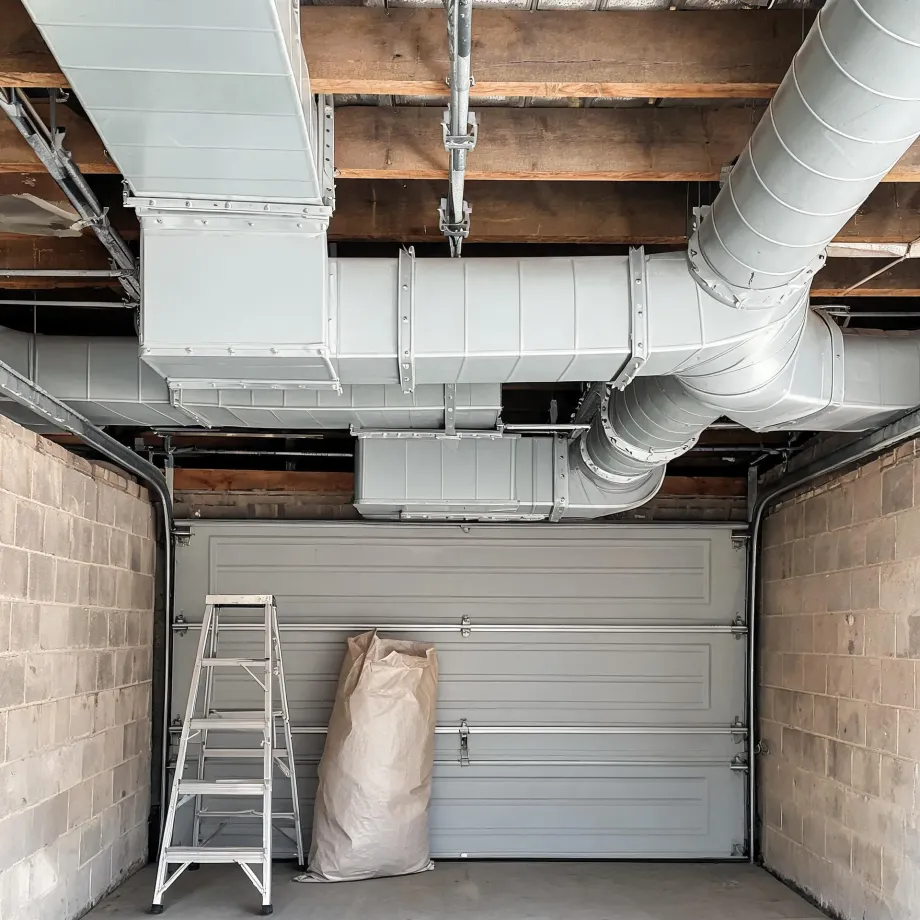
Older ductwork in a house carries whatever system was fitted into it last, and that system may have been running on parts that are increasingly hard to source. Half the homes in Pike County, Arkansas were built in 1984 or earlier (2020-2024 ACS 5-year). A furnace opened up in stock like this can turn a straightforward repair call into a parts search, because the heat exchanger, the control board, or the gas valve a unit of that vintage requires may be out of production. A contractor doing the repair quotes the job twice in that situation: once for labor, and once after they know whether the part exists and what it costs to get it here.
The Parts of a Furnace a Contractor Checks First
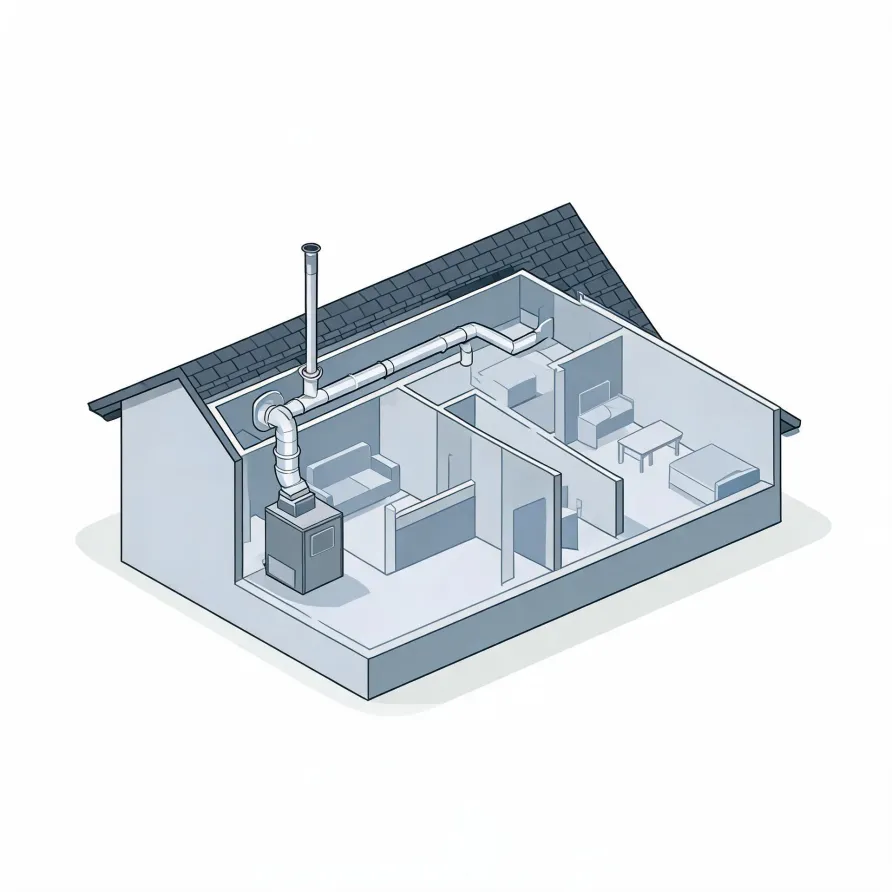
The furnace itself sits in a utility space, basement, or closet and is the piece a contractor opens first. Inside it, the heat exchanger and burner assembly are where most failures show up. A cracked heat exchanger, a dirty burner, or a failed igniter each produce symptoms that point back to that cabinet.
The blower motor sits inside the same cabinet and pushes conditioned air into the supply side of the house. The flue pipe runs from the furnace up and out through the roof or an exterior wall, carrying combustion gases out. The thermostat on the wall is the starting point for any call complaint, since a wiring fault or a failed sensor there can mimic a furnace problem.
The drawing shows a general layout of these components, and a licensed contractor determines what applies to the specific system and conditions in your house.
Find a contractor in Pike CountyPike County, Arkansas, by the numbers
42 severe weather events were recorded in Pike County, Arkansas between 2015 and 2024.
NOAA National Centers for Environmental Information, Storm Events Database, bulk CSV export, events 2015-01-01 through 2024-12-31.Half the homes in Pike County, Arkansas were built in 1984 or earlier (2020-2024 ACS 5-year).
U.S. Census Bureau, 2020-2024 American Community Survey 5-Year EstimatesPike County, Arkansas holds 5,324 housing units (2020-2024 ACS 5-year).
U.S. Census Bureau, 2020-2024 American Community Survey 5-Year EstimatesOwners occupy 75.0% of the occupied homes in Pike County, Arkansas (2020-2024 ACS 5-year).
U.S. Census Bureau, 2020-2024 American Community Survey 5-Year EstimatesCodes & Standards Covering Furnace Repair in Pike County, Arkansas6 sourced rules and standards
What the Repair Visit Looks Like
Non-weatherized gas furnaces manufactured on or after November 19, 2015 must reach 80.0 percent AFUE.
Non-weatherized oil-fired furnaces manufactured on or after November 19, 2015 must reach 83.0 percent AFUE.
Mobile home gas furnaces manufactured on or after November 19, 2015 must reach 80.0 percent AFUE.
Non-weatherized gas furnaces manufactured on or after December 18, 2028 must reach 95.0 percent AFUE, up from the 80.0 percent minimum that applies to units manufactured before that date.
What Pike County, Arkansas Requires for HVAC Repair
An Arkansas HVACR licence is good across the state: no city or county may require its own licence to do HVACR work, though local permits and inspections still apply.
Arkansas requires an HVACR licence or registration: it is unlawful to do HVACR work without the appropriate one unless the chapter exempts you.
Severe Weather Events in Pike County
Furnaces in Pike County work against the weather, and the weather here is not always gentle. Storms, hard freezes, and pressure swings put stress on heating equipment that quiet climates never produce, which is why local repair demand follows local conditions.
42 severe weather events, 2015–2024. Source: NOAA National Centers for Environmental Information, Storm Events Database.