





Is a high-efficiency furnace worth it in Little Rock, AR

Step 1 of 3: Equipment

A high-efficiency furnace is worth it in Little Rock if you plan to stay in the house for several years, because most of what it saves comes back to you slowly, through lower gas bills each winter. These furnaces use a second heat exchanger to pull more heat out of the same gas instead of sending it up the flue, so they burn less fuel to keep your house at the same temperature. Winters in Pulaski County are cold enough that a furnace runs for months at a time, and most homes here already heat with gas, so the savings have real months to add up in. Where it matters less is if you're moving soon or your current furnace is still young, since you won't be around long enough to collect the difference, or there isn't much difference left to collect. The install itself is more involved than a standard furnace, which is where getting it done right matters.

How cold does it actually get, and how long do you run the furnace?

  • Winter nights average 33°F

    Nights drop to 33°F on average across December, January and February, so the furnace is working hard most nights, not just during the odd cold snap.

  • Heat runs November through March

    Heat runs November through March here, about five months a year, which is enough time for a few points of efficiency to show up on the gas bill.

  • 50.2% of homes heat with gas

    Just over half of homes in Pulaski County heat with gas, same as yours likely does, so what a furnace costs to run is mostly about how it burns that gas.

NOAA nClimDiv 1991-2020 · ACS 2020-2024

How a High-Efficiency Furnace Works

  • A high-efficiency furnace has two heat exchangers instead of one, pulling heat from the exhaust before it leaves the house.
  • That second exchanger cools the exhaust enough that it has to drain as condensate, which is why these furnaces vent through PVC pipe instead of metal flue.
  • An inducer motor pulls air through both exchangers before ignition even starts, so the furnace runs a purge cycle you can hear before the burners light.
  • Standard 80 percent furnaces vent through metal flue and lose more heat straight out the exhaust, with one heat exchanger doing the work.
  • The condensate drain on a high-efficiency furnace needs a clear path and a working trap, or the furnace will shut itself down on a safety switch.
  • Because the exhaust runs cool enough for PVC, venting can run out a side wall instead of needing a chimney or metal flue up through the roof.

A standard furnace burns gas, pulls the heat through one exchanger, and sends what's left out a metal flue. A high-efficiency furnace adds a second exchanger in that path, so the exhaust gives up more of its heat before it leaves the house. That exhaust comes out cool enough that it condenses, which is why you'll see PVC pipe on these furnaces instead of metal flue. The condensate has to go somewhere, so there's a drain line and a trap built into the system. If that drain gets blocked or the trap dries out, the furnace reads it as a problem and shuts down rather than keep running. Before any of that heat gets made, an inducer motor pulls air through both exchangers first. That's the purge cycle, a few seconds of air moving before you hear the burners catch. It clears the exchangers of any leftover gas and confirms the venting is open before ignition starts. Because the exhaust runs cool, the venting doesn't need the rise that a metal flue depends on to carry exhaust up and out through the roof. It can run straight out a side wall instead. That's a real difference in how the furnace gets installed, not just how it runs once it's in. A furnace with a blocked condensate line or a venting setup that isn't angled right will shut itself off before it ever becomes a bigger problem, which is the system working as designed, not failing.

A gray-haired man in a dark long-sleeve shirt sits on a gray sofa in a living room, looking toward a sunlit window with sheer curtains.
A gray-haired man in a dark green sweatshirt sits on a sofa in a living room, looking toward a bright window, with a houseplant, lamp, fireplace and framed art behind him.
A gray-haired bearded man in a dark green collared sweater sits on a sofa in a living room with a window, houseplant, floor lamp and bookshelves, looking off to the side.
A gray-haired man in a dark green sweater sits on a sofa in a sunlit living room, looking off to the side, with a framed landscape painting, dining table and shelving behind him.

Swapping to a high-efficiency furnace touches more than the unit itself. The old metal flue goes away, and PVC pipe has to run somewhere new, through a wall or up through the roof. That second heat exchanger produces condensate, so there's a drain line to run, and a pump if gravity alone won't carry it to a drain. If your water heater has been sharing a flue with the furnace, pulling the furnace out changes how that flue drafts, and someone needs to check the water heater's venting before it's left on its own. The closet the old furnace sat in was built for that unit's size, and a high-efficiency cabinet can need more room or a different return setup to fit. None of this is a reason to skip it. It's the reason sizing and the install itself matter more than the furnace you pick. A unit sized to your house, not just matched to the old one's rating, is what actually delivers the lower bills in January and February.

What Changes In Your House

  • A standard 80 percent furnace vents through a metal flue, so swapping to high-efficiency usually means a new PVC vent run through a wall or the roof.
  • The condensate from the second heat exchanger needs a drain line and often a small pump if there's no gravity drain nearby, so expect that added to the install.
  • Gas bills show the difference mainly in January and February, when the furnace runs nearly every night, not in the shoulder months of November or March.
  • A furnace sized wrong for your house loses most of the efficiency gain, so the contractor should run a load calculation rather than just matching the old unit's size.
  • If the furnace shares a flue with your water heater, removing it changes how that flue drafts, and the water heater's venting needs a second look.
  • A furnace closet built for an 80 percent unit may need more room or a different return setup to fit the larger high-efficiency cabinet.
An older gas furnace with two white PVC vent pipes stands on a concrete basement floor beside galvanized sheet-metal ductwork, flexible conduit, and piping along a wall.
Before you get your furnace installation
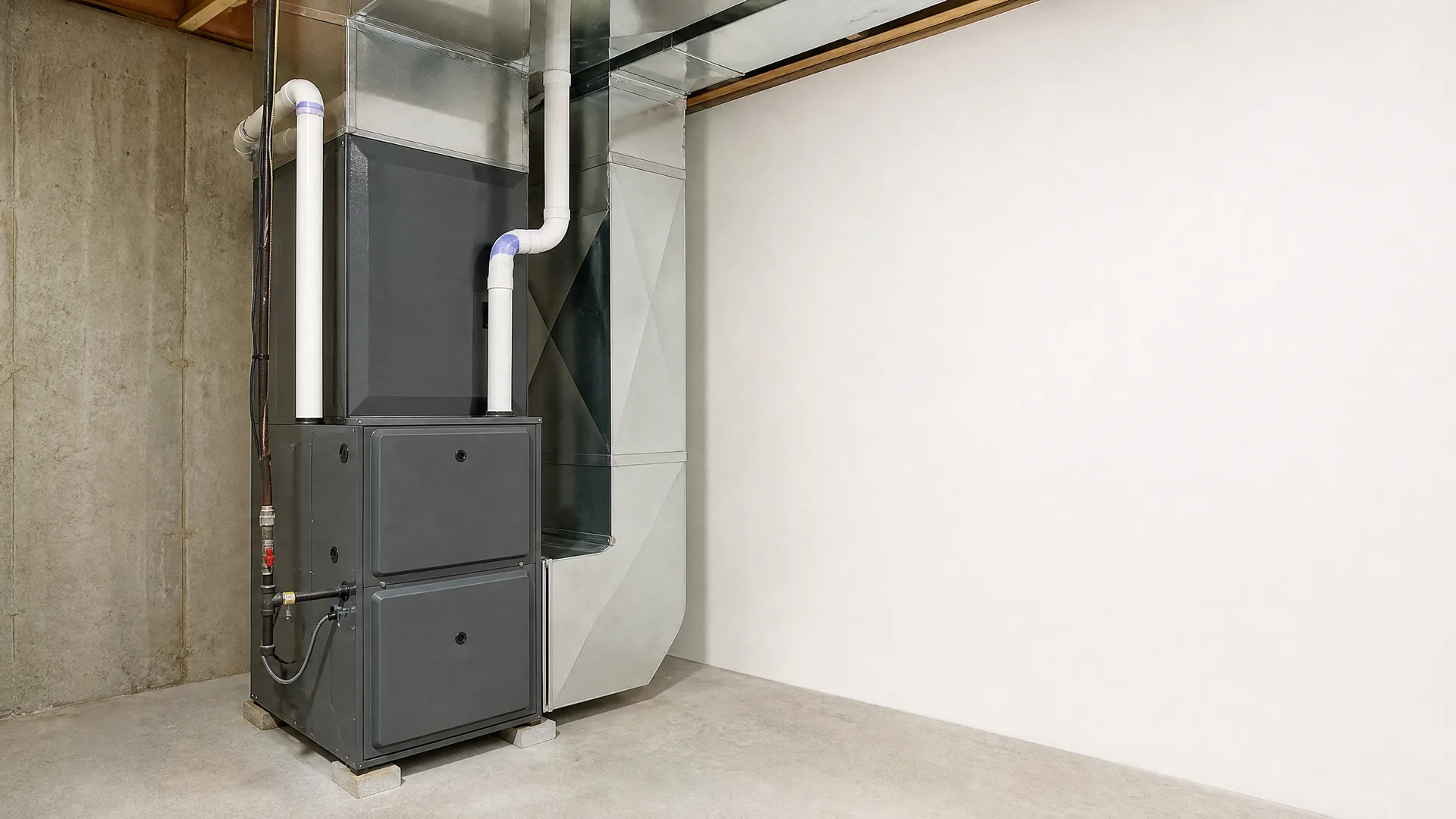
A gray high-efficiency furnace with white PVC venting pipes stands on blocks in a basement next to sheet-metal ductwork, with exposed wood framing on the left and a concrete wall and floor.
After you get your furnace installation

No calling every shop in Pulaski County

Getting here means a new vent run, a condensate line, maybe a pump, and someone who has actually sized a high-efficiency furnace for a Pulaski County house before, not just installed a box. That is not a job to hand to whoever answers the phone first. A local contractor who works on these furnaces every winter knows where the PVC vent needs to go on your type of house and what trips up the condensate drain when it gets cold enough to matter. Finding that contractor yourself means calling around, describing your furnace and your house to each one, then sitting with a stack of quotes trying to tell a fair price from a rushed one. Submitting your furnace installation here puts the job in front of one licensed local contractor instead, so you are not fielding five calls about the same project. You still have the decision to make about whether a high-efficiency furnace fits how long you plan to stay in your house. What you do not have to do is hunt down who can tell you that straight.

What the AFUE number means

An 80 percent furnace loses 20 cents of every gas dollar out the flue. A 95 percent furnace loses 5 cents. That gap is fixed, it does not shrink or grow with the weather. On a mild night in November the furnace barely runs and the difference is small. On a 20°F night in January it runs for hours, and that same percentage gap turns into real cubic feet of gas, winter after winter, for as long as you own the furnace.


Why Little Rock winters matter here

A furnace sized for a place with a short, mild winter spends most of its life idling, so the difference between 80 and 95 percent barely shows up on the bill. Pulaski County winters run cold enough, and long enough, that the furnace is doing real work most nights from November through March. The more hours it runs at full fire, the more that 15 point efficiency gap turns into gas you actually burned instead of gas you saved, which is the whole case for paying more up front.

A woman with shoulder-length dark brown hair in a cream knit cardigan sits in an upholstered armchair beside a window, looking off to the side, with a white bookshelf and potted plant blurred behind her.
A woman with her hair in a bun sits wrapped in a beige knitted blanket on a couch, holding a sleeping child against her chest in a warmly lit room with a lamp and houseplant in the background.
A beige high-efficiency furnace stands on a concrete basement floor beside sheet-metal ductwork, with white PVC vent pipes, flexible conduit and copper and steel piping running up a concrete wall to an electrical box.

A high-efficiency furnace doing its job

That's PVC pipe above the furnace, not metal, because the exhaust is cool enough to condense. The second heat exchanger already pulled the heat out of it. Gas line and shutoff sit right there on the wall, plain to see and easy for a contractor to check.

An older gas furnace with a louvered front panel stands on a concrete basement floor beside large sheet-metal ductwork, a metal flue pipe, copper piping and wood framing.

An older furnace on its way out

This one vents through a round metal flue, the mark of an 80 percent furnace giving up more heat than it has to. Dust built up around the base like this is often a sign nobody's serviced it in a while. Copper gas lines this old are worth a second look before anyone installs a new unit here.

Is your old furnace costing you more than it should

You notice it when the gas bill shows up in January and it's higher than it was the winter before, even though nothing in the house changed. You notice it in the room that never quite gets warm, or the furnace running long stretches on nights in the 30s instead of cycling on and off. Some older furnaces also show a yellow flame instead of blue, or leave a faint metallic smell near the unit, both worth having a contractor look at rather than ignoring. None of this means the furnace is unsafe. It usually means it's doing the job with a third or more of the gas going out the flue instead of into the house, which is money leaving every month the furnace runs.

A dark gray high-efficiency furnace with white PVC vent pipes stands against a concrete basement wall, connected to sheet-metal ductwork running along the ceiling joists.

Staying with your 80 percent furnace

It keeps working. You turn the thermostat up and heat comes out, same as it always has. But every winter it sends 20 cents of every gas dollar straight out the flue, and that number doesn't change whether the house needs a little heat or a lot. If the cabinet is old enough to worry you, or the gas bills have crept up for no reason you can point to, this is what you're carrying forward without knowing the size of it.

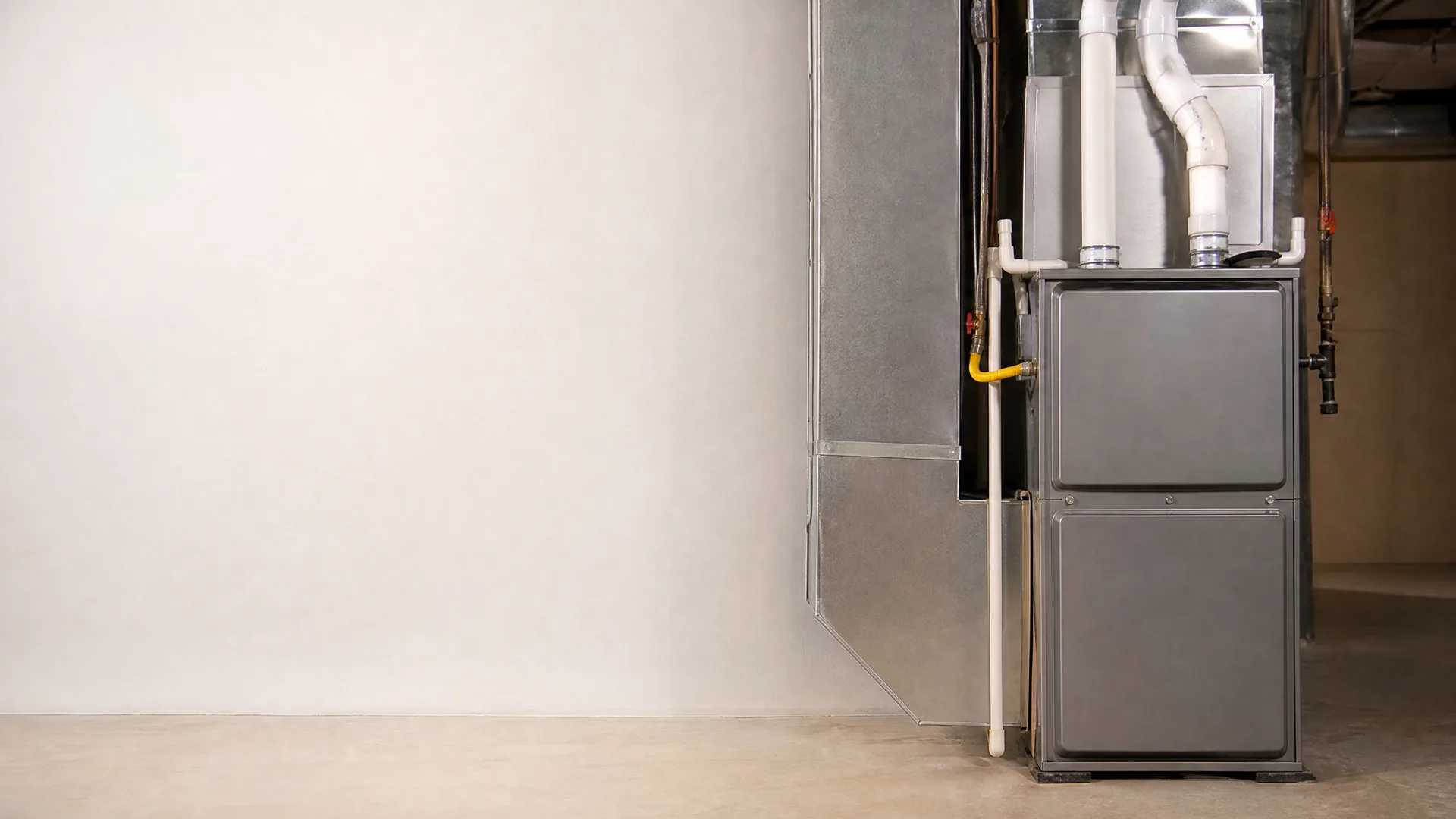
A gray high-efficiency furnace with white PVC vent pipes, a yellow gas line and metal ductwork stands against a plain light wall in a basement with a concrete floor.

Replacing it with a 95 percent unit

The new furnace needs PVC vent pipe instead of metal, a condensate drain, and someone who has run that work in a Pulaski County house before. That part takes planning. Once it's in, five cents of every gas dollar is lost instead of twenty, every night from November through March, for as long as you own the furnace. A local contractor who sizes these for homes like yours can tell you what your house actually needs before anything gets cut into a wall.

Winter nights average 33°F

At 33°F, your furnace isn't cycling on for an hour here and there. It's holding that temperature most nights for three straight months. A furnace that loses less heat out the flue earns its keep on nights like that, not on the mild ones.

NOAA nClimDiv 1991-2020

  1. Cold air returns through the ducts and across the filter.

  2. The inducer motor starts and purges the heat exchanger first.

  3. The igniter glows hot and the gas valve opens.

  4. Burners light and send heat into the primary heat exchanger.

A wooden table in the foreground holds a closed laptop and a ceramic mug of coffee, with a spindle-back wooden chair behind it, a beige wall with paneled wainscoting, a window at left, and a kitchen counter with a cutting board, bowl of fruit and greenery at right.

So is it worth it

If you're staying in the house for years and you're ready to deal with the vent and the condensate line, a high-efficiency furnace earns its cost back through the gas bill, winter after winter, in a place where nights sit at 33°F for three months straight. If you're moving soon, an 80 percent furnace installed correctly will still heat the house fine.

Either way, the install has to be sized and vented right for your house, not just dropped in where the old one sat. That part is worth getting right the first time, instead of pulling permits and tearing out PVC a year later because the first contractor guessed. Rather than calling around Pulaski County and explaining your furnace situation to three different companies and sorting through quotes that size things differently, you get matched with one local contractor who installs these furnaces every winter and knows what a Little Rock house needs to vent one properly.

A gray upholstered sofa with a beige cushion and knit blanket beside a curtained window, with a white mug and a book on a dark wooden table in the foreground and a lit lamp in the background.
A house roofline with a stone chimney rises above trees, with a tall pine, Spanish-moss-draped oak branches, and misty hills in the background.

No quotes to chase

Describe it once

No fee to send it, and nothing to sign.

A furnace that's quitting mid-winter won't wait for you to call around and compare quotes. Sending one request gets you a local contractor who sizes high-efficiency furnaces for Pulaski County houses regularly, knows what the vent and condensate line need, and handles it without you explaining the job twice.