

Signs of a cracked heat exchanger in Arkansas

Tell a local repair pro what your furnace is doing.

Connect with a pro

What are the signs of a cracked heat exchanger?

Most homes in Arkansas heat with electricity, but if a furnace is what's warming yours, a crack in the heat exchanger is the kind of problem you don't want to catch late. You've heard the term and you know it's serious. What you want to know is what it actually looks like day to day, so you can tell whether what you're noticing is nothing or something.

A smell like formaldehyde, soot around the furnace, or a flame that flickers yellow instead of steady blue

A cracked heat exchanger lets exhaust mix into the air your furnace blows through the house, so the signs show up in the flame and the air, not just in how the furnace runs. The burner flame may waver or turn yellow where it used to burn blue and even. You might notice a sharp, chemical smell, or soot building up near the furnace cabinet. Some people in the house get headaches or feel nauseated when the furnace has been running a while, then feel fine once they're outside or the furnace shuts off. The furnace itself might still heat the house fine, which is what makes this easy to miss. Any one of these is reason to have the furnace checked before it runs again.

A basement utility area with a gray furnace, sheet-metal ductwork, pipes, plastic-covered walls, a concrete floor, and a black shelving unit holding storage bins.

Furnace running clean

A furnace in good shape heats evenly, and the burner flame stays steady and blue. No odd smell, no soot around the cabinet, no cracking or ticking as it cycles on and off. The blower moves air without pushing any odd odor through the vents. This is what you want to see when you check on it.


A gray metal furnace with louvered vent panels stands on a concrete basement floor beside galvanized ductwork, gas and plastic pipes, and foil-faced insulation along the ceiling and wall.

Furnace showing a crack

A cracked heat exchanger can change the flame's shape or color, make it waver, or push a sooty smell through the ducts. You might notice a clicking sound right after the blower kicks on, or see rust and pitting on the cabinet itself. Any of this is reason enough to have a contractor look at it before you run the furnace again.

A man in a dark blue shirt stands in an open front doorway of a stucco and wood-clad house, facing a blond woman seen from behind in the foreground on a stone walkway.

What a cracked heat exchanger means for your house

Since your house most likely heats with electricity, a furnace running on gas or oil is probably not your main heat. That's exactly why a crack in the heat exchanger can go unnoticed. The furnace might only kick on for a handful of cold snaps a winter, and a problem that would show up fast in a house running its furnace daily can sit quiet in yours for a lot longer before anyone catches the smell, the soot, or the odd flame.

If you've noticed a furnace smell that doesn't clear, soot around the cabinet, or anyone in the house with headaches or nausea that ease up when they leave, that furnace needs a look before you run it again. Rather than calling around and explaining the same thing to a few different shops, you can get matched with a contractor who handles this and have them reach out to you directly.

Interior corner of a dining room with a round wooden table, a ceramic vase holding olive branches, a dark spindle-back chair near a curtained window, and a sideboard with a lamp against beige walls.
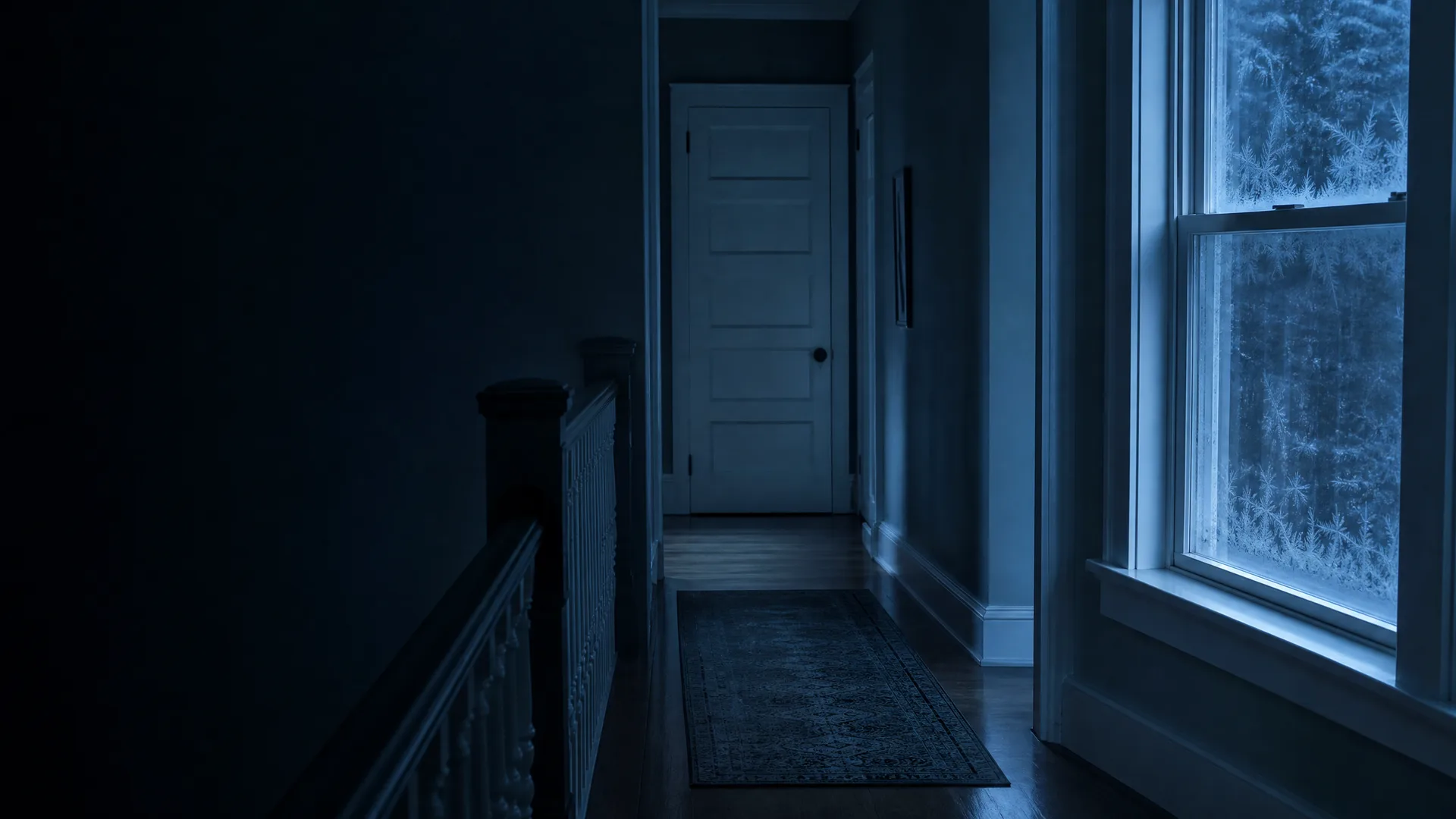
Dimly lit interior hallway at night with a closed white paneled door at the end, a long runner rug on a wood floor, a stair railing at left, and a frost-covered window admitting blue light at right.

You wake up a little past 2 a.m. and the house feels colder than it should. The hallway is dark except for that dim blue light coming through the window, frost built up thick along the edges of the glass. You stand there a second, listening. No air moving through the vents. No hum from downstairs. You crouch down and hold your hand over the vent in the floor and feel nothing coming out at all, not even cold air. Somewhere below you the furnace has stopped, or never caught, and the house is just sitting there going quiet and cold around you while you figure out what to do next.

A pro who works on furnaces

Describe what your furnace is doing once, in one form.

You only hire the pro if you want to.

How a Crack Actually Shows Itself

  • A heat exchanger cracks along the seams first, usually where metal has flexed through thousands of heating cycles.
  • Once a crack opens, flue gas can mix into the air the blower pushes through your ducts instead of venting outside.
  • A flame that waves, flickers, or changes color when the blower kicks on points to pressure escaping through a crack.
  • Some furnaces trip a limit switch and shut down mid-cycle because a cracked exchanger throws off the heat it was built to contain.
  • Soot stains near the burner compartment often show up before any smell does, since the crack lets exhaust drift the wrong way.
  • A clicking or ticking sound as metal expands and contracts is sometimes the only early clue the exchanger gives.

A heat exchanger does one job. It keeps the flame and the exhaust it produces separate from the air your blower sends through the ducts. That metal goes through a heat cycle every time your furnace runs, expanding as it warms and contracting as it cools. Do that enough times and it flexes at the seams until a crack opens. Once that happens, the furnace is still burning fuel correctly, but it's no longer containing what that fuel produces.

The flame is often the first place you'd catch it, if you know to look. A gas burner should sit steady and blue. If it leans, flutters, or shifts color when the blower turns on, air is moving through a gap that shouldn't be there. Some furnaces catch the problem for you. A limit switch senses the heat escaping where it shouldn't and shuts the unit down mid-cycle, which is the furnace protecting itself rather than failing outright. Soot around the burner compartment is another early flag, sometimes showing up before you'd notice any smell at all.

None of these signs are loud. A tick or click as the metal moves can be the only thing happening for a while before anything else changes. That's the nature of this particular failure. It doesn't announce itself the way a dead blower motor does.

A gray furnace with white PVC vent pipes stands beside sheet-metal ductwork in a basement with a smooth concrete floor, exposed wood framing, and plastic sheeting on the walls.
A furnace in good shape sits clean, with tight metal ductwork overhead and the gas and condensate lines running straight along the wall.
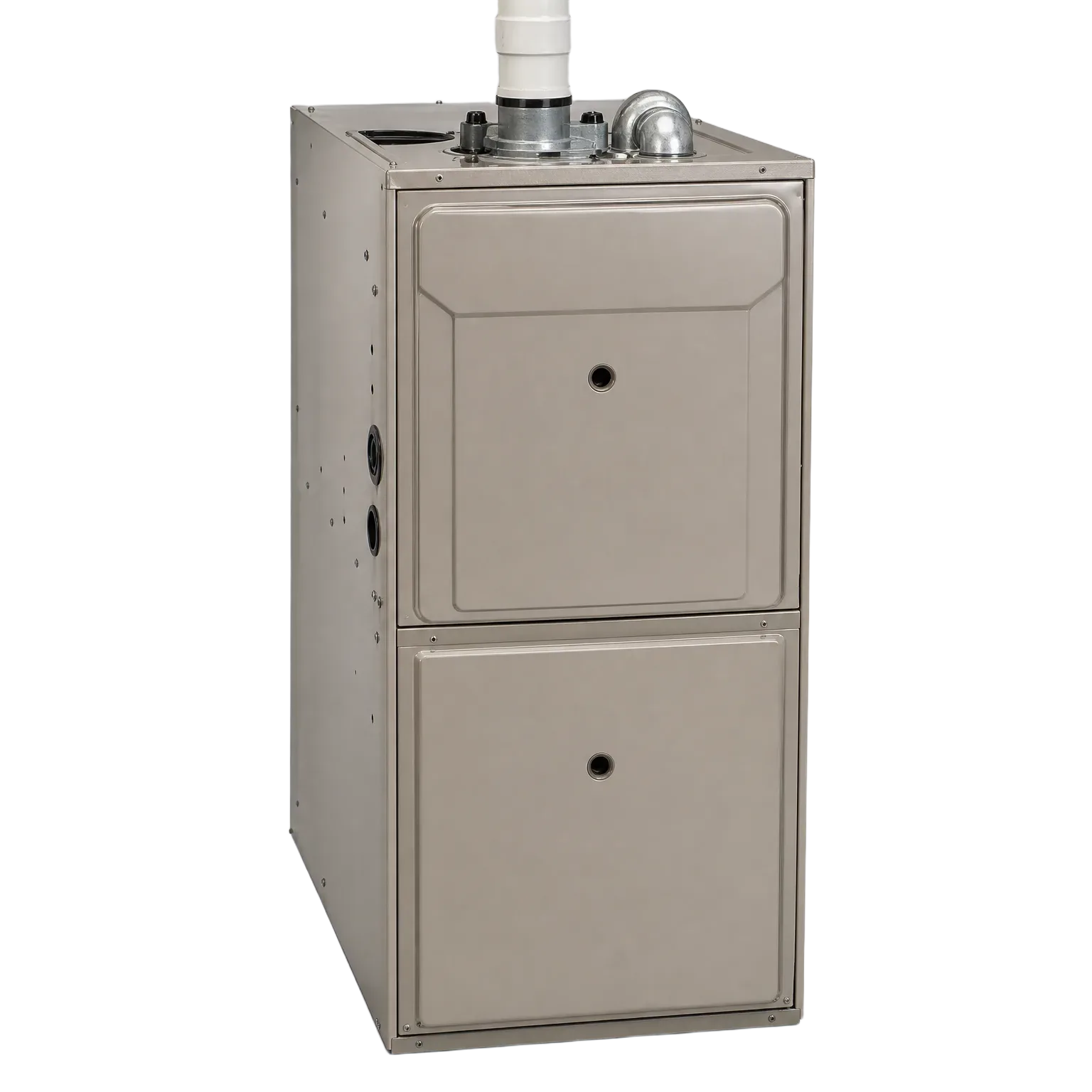
A beige furnace with two access panels stands against a concrete basement wall, with galvanized sheet-metal ductwork, a white PVC pipe, flexible conduit and insulated ducting around it.
Rust on the cabinet and a flue pipe working harder than it should are signs of a furnace past its best years.
A woman in a cream cowl-neck sweater sits by a window with snow outside, in a dimly lit living room with a sofa, lit lamp, mirror, candles and a fireplace.
A woman in a gray turtleneck sweater sits beside a large window looking out at snow-covered evergreen trees, in a dimly lit living room with a lit fireplace, lamps, couch and houseplant.
A woman in a cream turtleneck sweater stands beside a large window with snow-covered ground and bare trees outside, in a dimly lit living room with lamps, a sofa and framed art.
A woman in a grey cowl-neck sweater stands indoors near a window, looking out at falling snow, with a lamp, framed picture and couch in the warmly lit room behind her.

Is this what's going on with your furnace right now

Check what the flame looks like through the viewing window. It should burn steady and blue. If it's flickering, leaning to one side, or showing yellow at the tips, that's worth paying attention to. Listen for a clicking or popping sound once the furnace has been running a few minutes, metal expanding against a crack as it heats. A smell like formaldehyde, something sharp that wasn't there before, means air from inside the exchanger is getting into the air your furnace is pushing through the house. You might also notice soot building up around the cabinet, or the furnace short-cycling, shutting off faster than it used to. Left alone, a crack like this lets flue gas mix into the air your household is breathing.

A gas furnace with a louvered upper panel stands on a concrete pad in a basement, flanked by sheet-metal ductwork, white PVC and metal pipes, and insulated columns.
Before you get your furnace repair
A dark high-efficiency furnace on a concrete pad in a basement, connected to galvanized ductwork, white PVC vent pipes, and copper and black gas piping, with concrete walls and wood framing nearby.
After you get your furnace repair
A beige high-efficiency furnace with white PVC vent pipes stands beside galvanized sheet-metal ductwork in a basement with a concrete floor, exposed wood studs, and metal piping along the wall.

Furnace venting the way it should

That PVC pipe running to the outside is doing its job, carrying exhaust out of the house instead of into it. The cabinet stays clean, the ductwork overhead stays tight, and nothing around the unit smells like anything.

An older beige furnace with a louvered vent panel stands on a concrete basement floor beside galvanized sheet-metal ductwork, a metal flue pipe and vertical pipes along a concrete wall.

Furnace showing its age

That flexible metal flue pipe has more joints than a sealed PVC vent, and more joints means more places for exhaust to slip past where it shouldn't. An older cabinet like this one is worth a closer look if you haven't had it checked lately.

Winter nights average 32°F statewide

On a 32°F night, your furnace is cycling on and off for hours to keep the house even. A crack in the heat exchanger shows up most in those long runs, when flue gas has more chances to leak into the air your blower is pushing through the ducts.

NOAA nClimDiv 1991-2020 county normals weighted by homes

A bearded man in a plaid flannel shirt sits indoors looking out a window at snow-covered trees, with a steaming mug on the sill and wooden kitchen shelves behind him.
A bearded man in a navy T-shirt sits on a light-colored couch indoors, smiling while looking down at a laptop screen in the foreground, with a framed picture and a potted plant blurred behind him.

A cracked heat exchanger comes down to a few things you can actually check: the flame color, a smell you can't place, soot around the cabinet, a furnace that cycles longer than it used to. If any of that sounds like what's happening at your house, it's worth having someone look before the furnace runs again on a cold night. Finding that someone is the part that usually eats your evening, looking up local companies, calling a few, explaining the flame and the smell and the cycling all over again to each one, then trying to figure out which quote actually means the same thing as the others. None of that tells you anything about the furnace itself. Skip it, and a contractor who works on furnaces in your area gets in touch with you directly. You'll still need the inspection, and you'll still need to hear what they find. But you won't spend the week before that just trying to get someone on the phone.

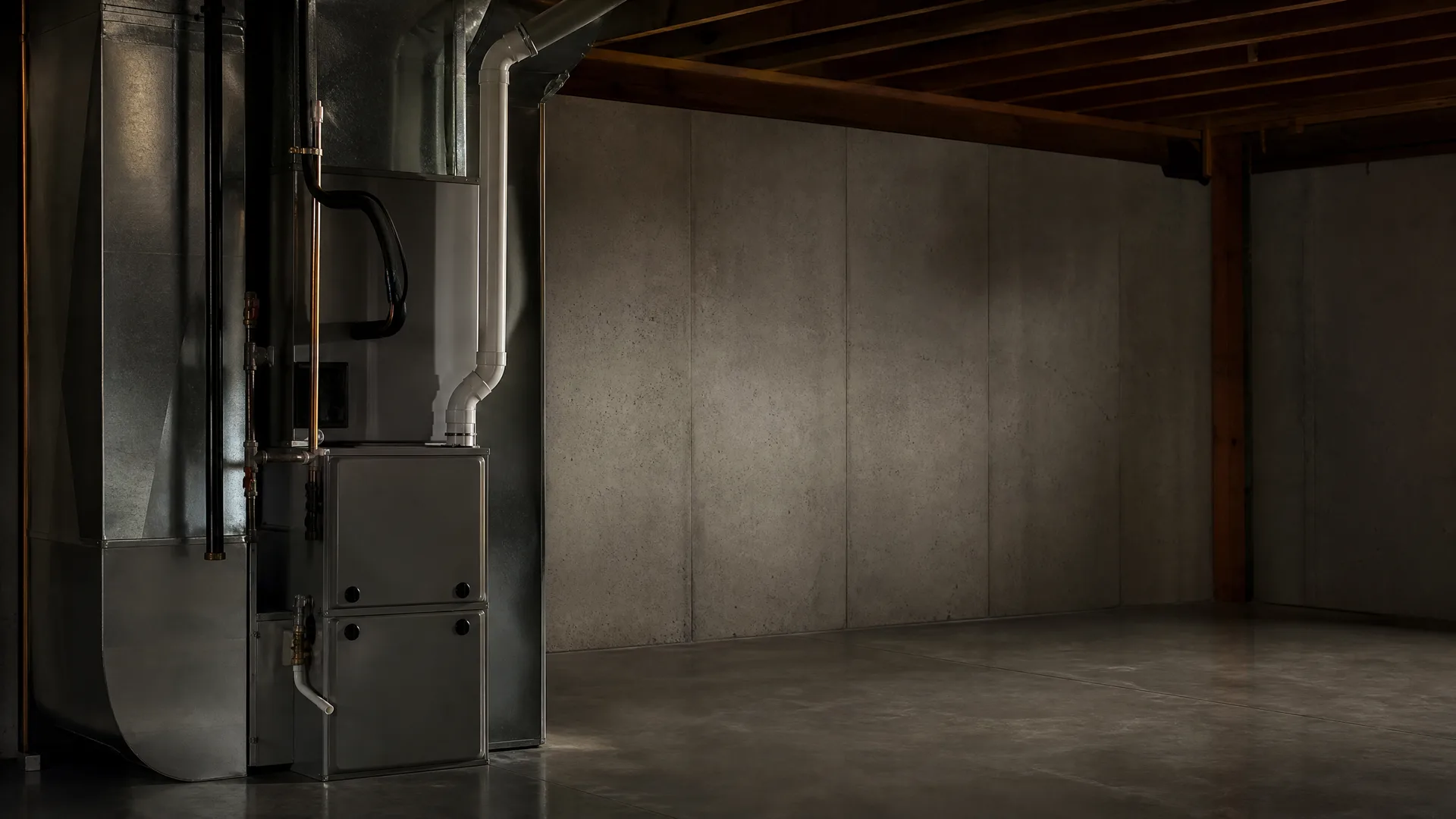
A dimly lit basement with concrete floor and walls, exposed wood joists, and a furnace with sheet-metal ductwork and copper piping on the left side.

Get your furnace to the right pro

Answer a few questions instead of calling shop after shop.

Step 1 of 3: Equipment