What a furnace tune-up covers before an Arkansas winter
Step 1 of 3: Equipment
What does a furnace tune-up actually check before winter?
You want to know your furnace will carry you through the cold stretch without quitting on the coldest night of the year, and a tune-up sounds like a vague thing to pay for. You want to know what a contractor actually looks at and touches, not just that someone "inspects" the system.
It checks the parts that cause no-heat calls: ignition, airflow, and the gas or electric heating element
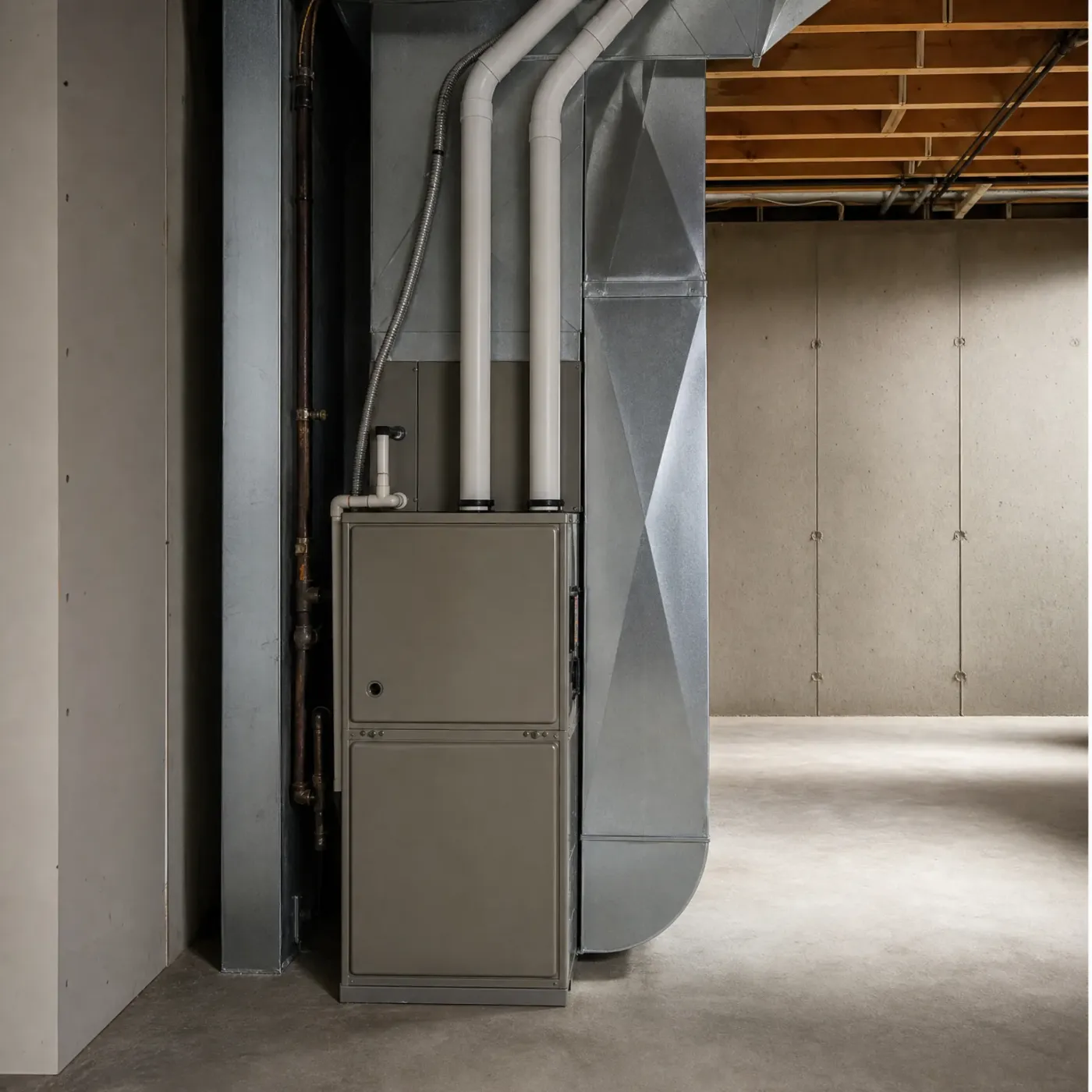
A tune-up starts with the igniter or pilot assembly, since a weak igniter is one of the most common reasons a furnace won't start on a cold morning. The contractor checks the flame sensor, the burners, and the heat exchanger for cracks, since a cracked exchanger can leak carbon monoxide into the house. They check the blower motor and the filter, since a clogged filter restricts airflow and makes the whole system work harder. If your furnace is electric, the technician checks the heating elements and the limit switches that protect them from overheating. Most homes in Arkansas heat with electricity, so the tune-up focuses less on gas lines and burners and more on the electric elements, the blower, and the thermostat wiring.
1
The filter comes out so air can move through the furnace freely.
2
The burners get pulled and cleaned of rust and dust.
3
The flame sensor gets scraped clean so it reads the flame correctly.
4
The igniter gets checked for cracks and weak spots.
Before you get your furnace maintenanceAfter you get your furnace maintenance
Most of what goes wrong with a furnace in January started small back in November. A flame sensor with a little buildup on it, a filter that's been in there too long, a connection that's gotten loose. None of that announces itself until the furnace is running every night and it finally gives out. Since most homes here heat with electricity, a furnace working harder than it needs to shows up on your bill before you ever hear a strange noise. And if it quits outright, you're not just cold for an evening. You're waiting on a repair slot in the same week everyone else with a dead furnace is calling around too. Finding someone who can actually get to your house that week is its own problem on top of the cold one. A tune-up now means one local contractor looks at the parts that tend to fail, the igniter, the sensor, the wiring, while there's still time to fix what's found before you need the furnace to run without stopping.
What a Skipped Tune-Up Costs You
A cracked igniter or a dirty flame sensor can leave you with cold air blowing from the vents on a January morning.
A furnace that short cycles or won't stay lit usually means a wait for a repair slot during the coldest week of the year.
A clogged filter makes the furnace work harder to push heat through the house, and that shows up on your electric bill.
If the burners are caked with rust or dust, the furnace can run unevenly and leave some rooms colder than others.
A furnace that quits outright means space heaters or a cold house until someone can get out to look at it.
Loose wiring or a weak capacitor caught now is one less thing that can fail when you're relying on the furnace every night.
A furnace running clean lights on the first try and keeps a steady flame through the night.
A furnace in trouble leans on a cracked igniter or a choked burner until it quits on the coldest morning.
Why does your furnace sound different lately
Listen to it the next time it kicks on. A knock or rattle when it starts, a burner smell that lingers past the first minute, a flame that looks more yellow than blue through the sight window. Maybe it clicks a few times before it catches, or it shuts off after a few minutes and starts right back up. Any of these means something inside isn't working the way it should. Left alone through a full Arkansas winter, a furnace running like this can quit outright on a night you need it most, and a cracked part that's ignored long enough can put carbon monoxide into the house instead of just heat.
Most homes in Arkansas heat with electricity, and plenty of furnaces run quiet for months at a time between cold snaps. That gap is exactly when a cracked igniter or a choked burner goes unnoticed, right up until the night it matters. Finding someone to look at it before then usually means searching around, calling a few places, explaining the same rattle or smell more than once, then sitting with a stack of quotes trying to guess which one is fair. Here it works differently. The request goes to one licensed contractor working near you, someone who services furnaces through these winters every year and knows what tends to fail first in this kind of cold. No pile of calls from competing companies, no repeating yourself. Just a straight path to someone who can look at your furnace before the coldest week shows you what you missed.
A furnace running the way it should
Ductwork tight, gas lines sound, the condensate line draining into the pump without a leak. A furnace set up like this lights the same way every time and moves heat through the house without making you think about it.
A furnace left to run on its own
Years of grime on the cabinet, a flue pipe carrying exhaust past panels nobody's opened in a while. Nothing on it has failed yet, but nothing on it has been checked either, and that's usually how the trouble starts.
What skipping it costs you this winter
Electricity is cheap here, but a furnace working harder than it should still shows up on the bill. A choked burner or a dirty flame sensor makes the furnace cycle on and off more than it needs to, running up minutes of runtime that don't need to happen. You won't see the cause. You'll just see the number.
Finding someone to look at it is its own chore. You end up searching for a contractor, calling a few, explaining the same rattle or smell three different times, then sitting with quotes trying to guess who actually knows furnaces and who just answered the phone. Requesting service here skips that. One licensed contractor local to Arkansas gets your furnace and your situation, someone who works on this equipment every winter and already knows what tends to fail first in a furnace that's sat quiet since spring.
One contractor, one visit
You explain the furnace once, to someone local who works on this equipment all season and already knows what usually goes wrong with it.
On a 32°F night your furnace runs most of the dark hours just to hold the house steady. A weak igniter or a choked burner that limps along at 50°F outside won't make it through a night that cold.
NOAA nClimDiv 1991-2020 county normals weighted by homes
A furnace tune-up checks the filter, the burners, the flame sensor, the igniter, the ductwork and the gas line, so you know before the cold snap hits whether your furnace will carry you through it or quit on you. That's the whole answer. Arkansas winters don't give a bad igniter much warning before they find it. You won't need to call around for this. One licensed contractor local to Arkansas takes the job, someone who works on furnaces all season and has seen what usually fails in them before the first hard freeze. You explain it once, to one person, and that person already knows what to look for. No comparing quotes, no repeating yourself to a second or third company. Your furnace either runs clean through the winter or it has a weak spot somewhere in those parts, and now you know where to look and who to ask.