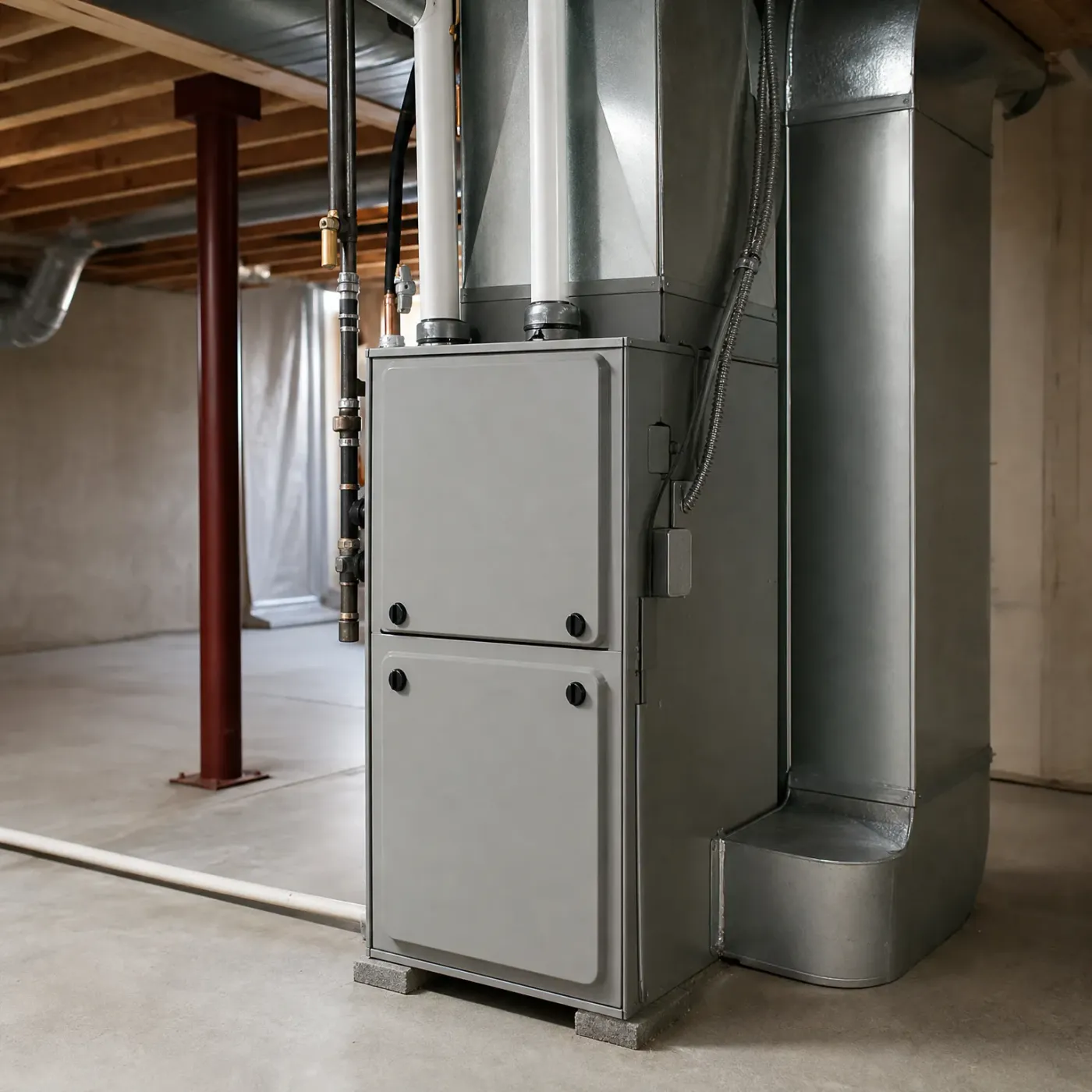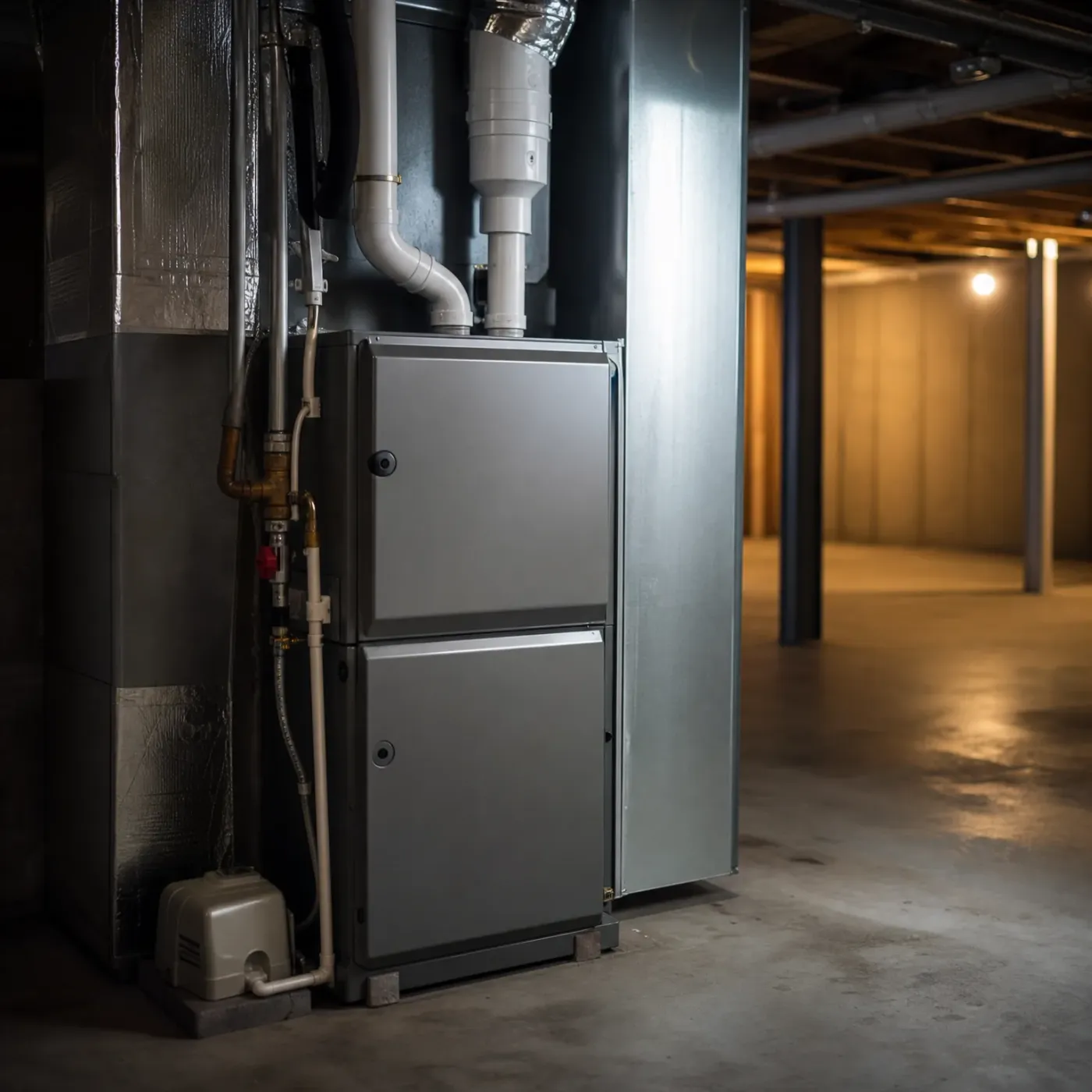

A gray high-efficiency furnace with PVC venting, copper and plastic piping, and a condensate pump sits beside sheet-metal ductwork in a concrete-floored basement.

Let someone else find the pro

What size furnace an Arkansas home needs

Furnace size comes down to the square footage you're heating and a few things about your house, not just the unit that's in there now. Get it wrong and you end up with a furnace that short cycles or one that can't keep up on a cold morning. This page walks through what actually sets the right size for an Arkansas home, and gets you to someone local who can look at your place and size it properly.

Hand off my installation

Most homes in Arkansas need somewhere between 30 and 60 BTUs per square foot of heating capacity, so a 2,000 square foot house typically lands in the 60,000 to 90,000 BTU range. Where you fall in that range depends on your insulation, your ceiling height, and how many of those walls face the weather. Winters here aren't as harsh as they are farther north, which is part of why most homes run on electric heat rather than gas, and it's also why an oversized furnace is the more common mistake than an undersized one. A furnace that's too big heats the house fast, shuts off, and kicks back on again before the air has really evened out room to room. That short cycling wears on the parts that start the heat each time, and it leaves you with cold spots even though the thermostat says the room hit temperature. The right size runs longer, steadier cycles, which is what actually keeps a house warm all the way through.

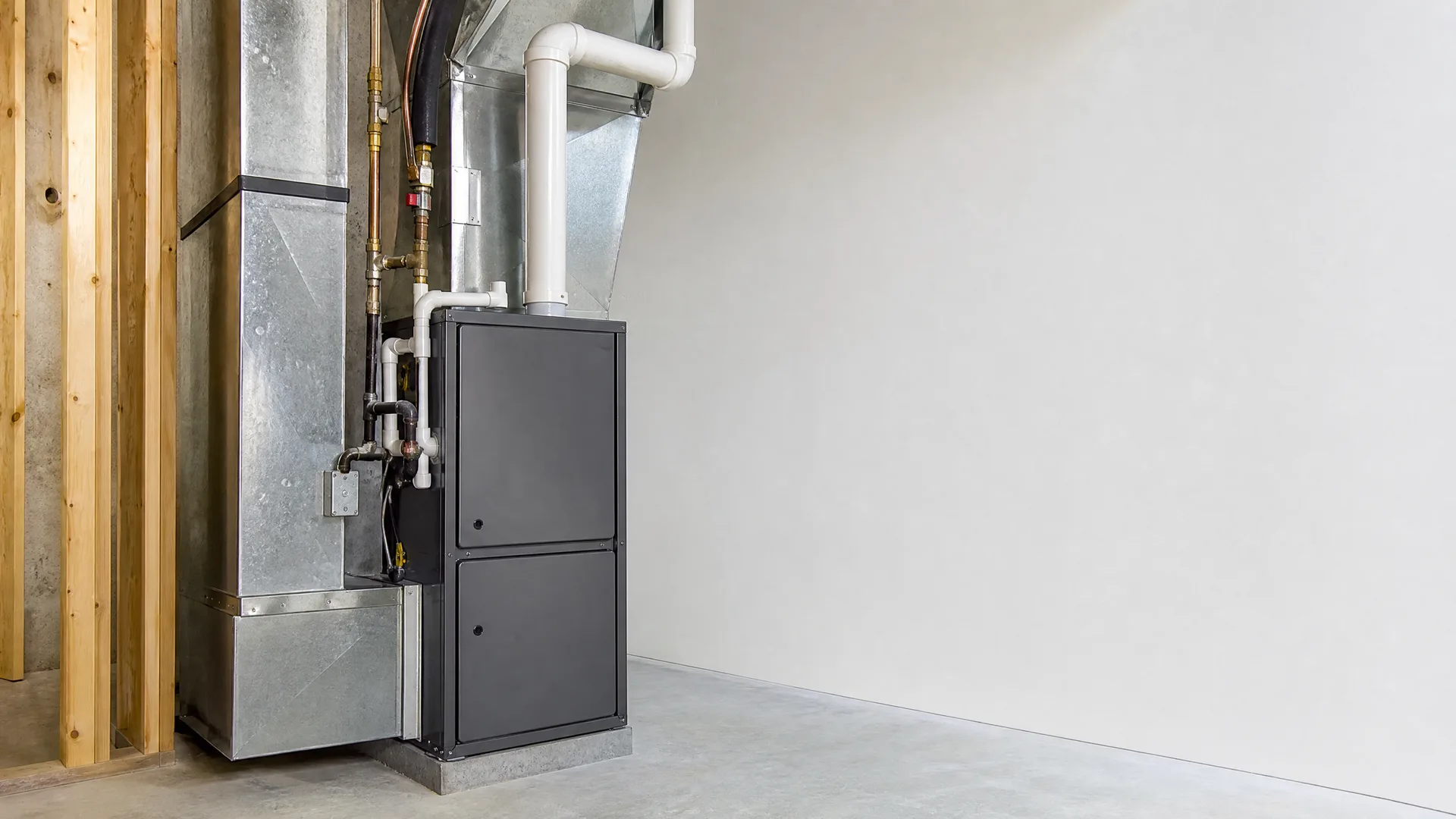
A dark gray furnace connected to galvanized sheet-metal ductwork, white PVC vent pipes and copper piping, standing against a plain light wall in a room with a bare concrete floor and exposed wood framing at left.

Why an oversized furnace costs you

A furnace that's too big heats your house fast, shuts off, and starts again in a few minutes. That's called short cycling, and it wears on the parts that start the burner and move the air. Most homes here run on electric heat, and a furnace that cycles that often never settles into a steady, efficient run. It also leaves rooms farther from the furnace cold while the thermostat's already satisfied near it.

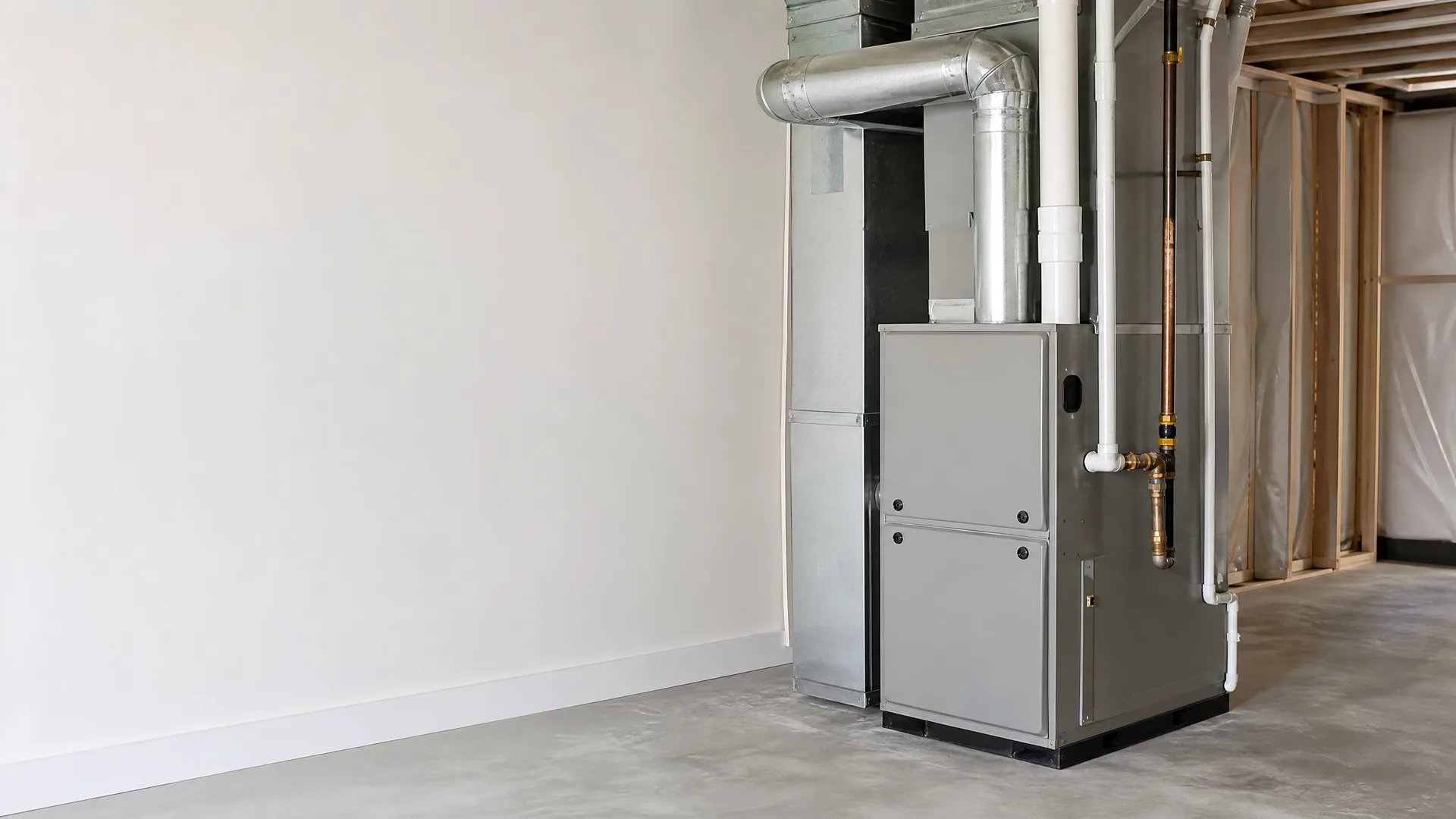
A gray high-efficiency furnace with sheet-metal ductwork, white PVC vent pipes and copper piping stands against a wall in an unfinished basement with a concrete floor and insulated wood stud framing at right.

What a sizing visit actually checks

A contractor sizing your furnace walks the house, not just the floor plan. They'll look at your ceiling height, how many windows you have and which way they face, how much insulation is in the attic, and whether the ductwork can even move the air a bigger unit would push out. Two houses at 2,000 square feet can need different units once someone accounts for that. A local contractor who installs furnaces in Arkansas homes every winter has a feel for which of those details tend to matter most here.

How does a contractor actually figure out what size furnace I need?

You've seen the BTU range for your square footage, but you know that's not the whole story. You want to know what a contractor actually does when they come out, what they look at, and why it takes more than measuring the floor plan to land on the right number.

A room by room load calculation, not just square footage

A contractor doing this right runs a Manual J load calculation. That means walking the house and recording what the square footage alone won't tell you: how many windows you have and which direction they face, how much insulation is in the attic, your ceiling height, and how much air leaks in around doors and the attic hatch. Each of those adds or subtracts BTUs from the baseline number. Two houses at 2,000 square feet can need furnaces 10,000 BTUs apart once you factor in a poorly insulated attic or a wall of west-facing windows. A contractor who skips this and quotes a size off square footage alone is guessing, and you're the one who lives with a furnace that's wrong for your house.

A gray high-efficiency furnace with white PVC vent pipes stands against a concrete basement wall beside sheet-metal ductwork, a small condensate pump on the floor, and exposed wood framing at left.

Sized right, running quiet

This is what a furnace doing its job looks like. It brings the house up to temp at a steady pace, shuts off, and sits until it's needed again. The flue pipes and ductwork are sized to move the air this unit actually puts out, so nothing strains.


A gray sheet-metal furnace with flue pipe and adjacent ductwork stands against a stone basement wall on a concrete floor, with white PVC and metal pipes running nearby.

Sized wrong, working against itself

An older furnace crammed into a tight mechanical room can still be the wrong size for the house it's in, no matter how long it's been there. One that's too big or too small for the space runs the burner and blower harder than they should have to, year after year.

A man in a blue sweatshirt reclines with closed eyes in a brown leather armchair in a living room with a bookshelf, houseplant, sofa, window, and a side table holding newspapers and a dark mug.
A bearded man in a gray pullover reclines with closed eyes on a brown leather sofa in a sunlit room with a window, framed picture, potted plant, and a wooden cabinet holding papers and a dark mug.
A man in a gray sweater leans back with closed eyes in a brown leather armchair beside a wooden side table holding a dark mug and a folded newspaper, with bookshelves and a window seat behind him.
A man in a green sweater reclines in an armchair with his eyes closed and a slight smile, beside a window with plants, a small table holding a mug and folded newspaper, and bookshelves behind him.
A gray high-efficiency furnace with two access panels stands on blocks in a basement, connected to sheet-metal ductwork, PVC vent pipes, flexible conduit, and gas and water piping, beside a red support column and exposed wood joists.

One request and it's handed off

One installer gets your project, so there's no bidding war over it.

Send the form and the search for an installer is over.

Reach a local pro

It costs nothing to send, and you don't have to hire anyone.

Does your furnace ever seem like it's fighting your house?

Some mornings it runs and runs and the house still feels cool by the time you leave for work. Other times it kicks on, warms the room fast, shuts off, then kicks on again a few minutes later, all afternoon. You might notice one room runs warm while another stays chilly no matter what the thermostat says. The electric bill creeps up some months for no clear reason. None of this means the furnace is broken. It usually means the unit and the house were never matched right to begin with, and a furnace working against its size wears out its parts sooner than it should.

  1. Contractor measures every room and adds up total square footage

  2. Checks insulation levels in the attic and walls

  3. Counts windows and doors and checks how well they seal

  4. Runs a load calculation to find your actual heat loss

A metal furnace with louvered panels stands against a concrete basement wall, connected to sheet-metal ductwork and a round flue pipe, with wooden framing posts and a pipe nearby.
Before you get your furnace installation
A gray gas furnace stands on a concrete basement floor, connected to sheet-metal ductwork, white PVC vent pipes, and a yellow gas line, with plastic sheeting covering the walls.
After you get your furnace installation

Same BTU as the one you have now

If it's heated the house fine winter after winter, matching it is often the safest bet. A contractor can confirm nothing's changed before installing the same size.

Find a licensed furnace pro

Resized to a new load calculation

Worth doing if you've added insulation, finished a room, or the old one never ran right. A contractor measures your house and sizes it to what it actually needs now.

Find a licensed furnace pro

Winter nights average 32°F statewide

A 32°F overnight low means your furnace is holding, not fighting a deep freeze most nights. It still has to recover fast on the mornings colder air moves through. Sizing it to your house, not just the average night, is what keeps it steady either way.

NOAA nClimDiv 1991-2020 county normals weighted by homes

A gray high-efficiency furnace in a basement with sheet-metal ductwork, white PVC vent pipes, metal plumbing lines, a condensate pump on the floor, and a window showing green trees outside.
A furnace sized to the load runs clean, with tight connections at the gas line and condensate pump and no strain on the ductwork above it.
An older metal furnace with PVC and metal pipes stands on a concrete basement floor beside galvanized ductwork, with wooden stairs and a water tank in the background.
An old furnace nearing the end of its life is also a chance to get the size wrong twice over, since the last one may never have been right.

The Right Size, Confirmed

  • A load calculation, not the square footage of your old unit, is what sets the right size.
  • Most Arkansas homes land between 30 and 60 BTUs per square foot once insulation and windows are factored in.
  • An oversized furnace short cycles and wears out its parts faster, even though power here is cheap.
  • An undersized furnace runs long and still leaves the house cold on the coldest mornings.
  • A furnace matched to your house heats at a steady pace and shuts off when the job is done.
  • A local contractor who sizes furnaces for homes like yours every winter knows which details change the number.

The square footage gets you close. A load calculation is what gets you right. Your insulation, your windows, your ceiling height, all of it changes how many BTUs your house actually needs, and that number can land anywhere in that 30 to 60 range depending on what a contractor finds when they measure your rooms and check your attic. Guess high and you get a furnace that blasts the house warm, shuts off, and starts again a few minutes later, putting more wear on the igniter and the blower than a furnace that runs a normal cycle. Guess low and you get one that runs long on the coldest mornings and still can't bring the house up to temp before you leave for work. Neither one is about the unit being bad. It's about the unit not matching the house it's in.

A furnace sized off an actual load calculation does neither of those things. It runs long enough to heat the house evenly, shuts off, and waits until it's needed again. That's true whether you're replacing a furnace that's run fine for years or dealing with one that's never kept up.

A local contractor who does this work in houses like yours every winter already knows which details tend to move that number, and can tell you where your house falls once they've actually looked at it.

A gray-haired man in a blue quarter-zip sweater sits in an armchair with his eyes closed, beside a large window with bare trees outside and a potted plant and lamp nearby.
A woman in a cream knit sweater sits in an armchair with her eyes closed and head tilted back, beside a window showing orange autumn foliage and a wooden side table with a mug.

Furnace Installation

It's off your list after this

Your request stays with one local pro.

A black smartphone standing upright against a plain light gray background, its screen filled with solid green.
Step 1 of 3: Equipment