Why one room stays cold in an Arkansas winter

Step 1 of 3: Equipment

Why is one room in my house always cold in the winter?

One room never seems to catch up, even with the furnace running most of the day. You've shut the door, swapped the filter, maybe put a towel under the gap, and it still runs cold while the rest of the house is fine. With electric heat already costing something every month, it's worth knowing whether this is a quick fix or a sign the furnace itself is struggling.

That room is getting less heated air than the rest of the house

A room that stays cold usually isn't getting its fair share of airflow from the furnace. The duct feeding it may be crimped, disconnected somewhere in the attic or crawlspace, or just too narrow for how far it has to run. A register that's partly closed or blocked by furniture cuts the flow too. Sometimes it's not the duct at all but the room itself: a window or exterior wall that loses heat faster than the furnace can replace it. If every other room is warm and this one lags no matter how long the furnace runs, the air isn't reaching it the way it should. A contractor who checks the ductwork and the airflow at that register can tell you which of these it is.

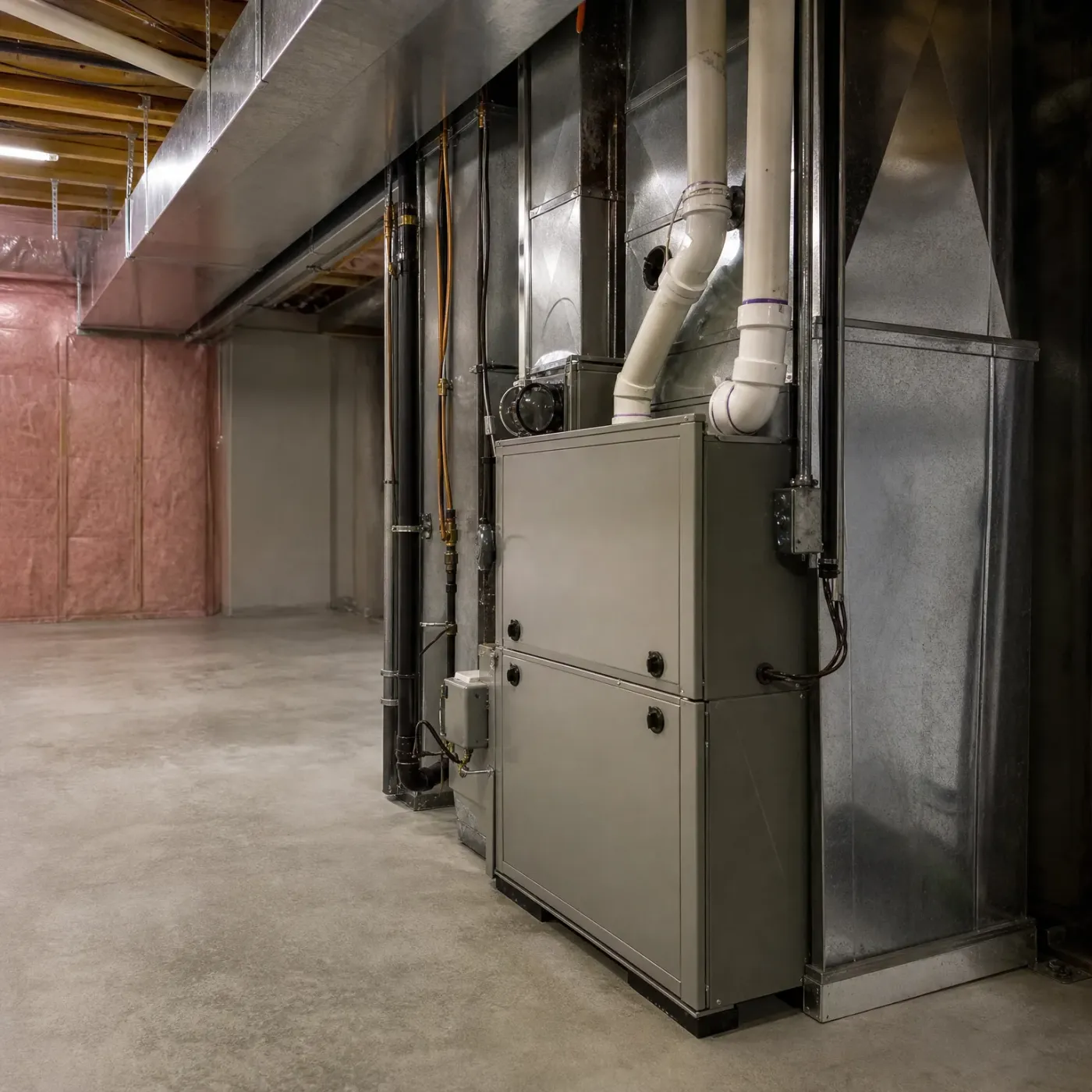
A gray high-efficiency furnace stands on a concrete basement floor beside galvanized sheet-metal ductwork, white PVC vent pipes, copper and black piping, and unfinished wood stud framing.

Furnace Running Fine

Air comes out warm at every other register. The furnace cycles on, runs for a while, shuts off, and the rooms around it hold their heat. If one room still lags behind while this is happening, the furnace isn't the problem. Something between the furnace and that room is.

A gray furnace with two access panels stands on a concrete basement floor beside sheet-metal ductwork, with pipes, flexible conduit and an electrical box on the concrete wall to the left.

Furnace Struggling

Weak airflow at most registers, not just one. Longer run times, a furnace that won't shut off, or warm air that never gets very warm. That points to the furnace itself, maybe a clogged filter, a failing blower motor, or an igniter that's starting to go.

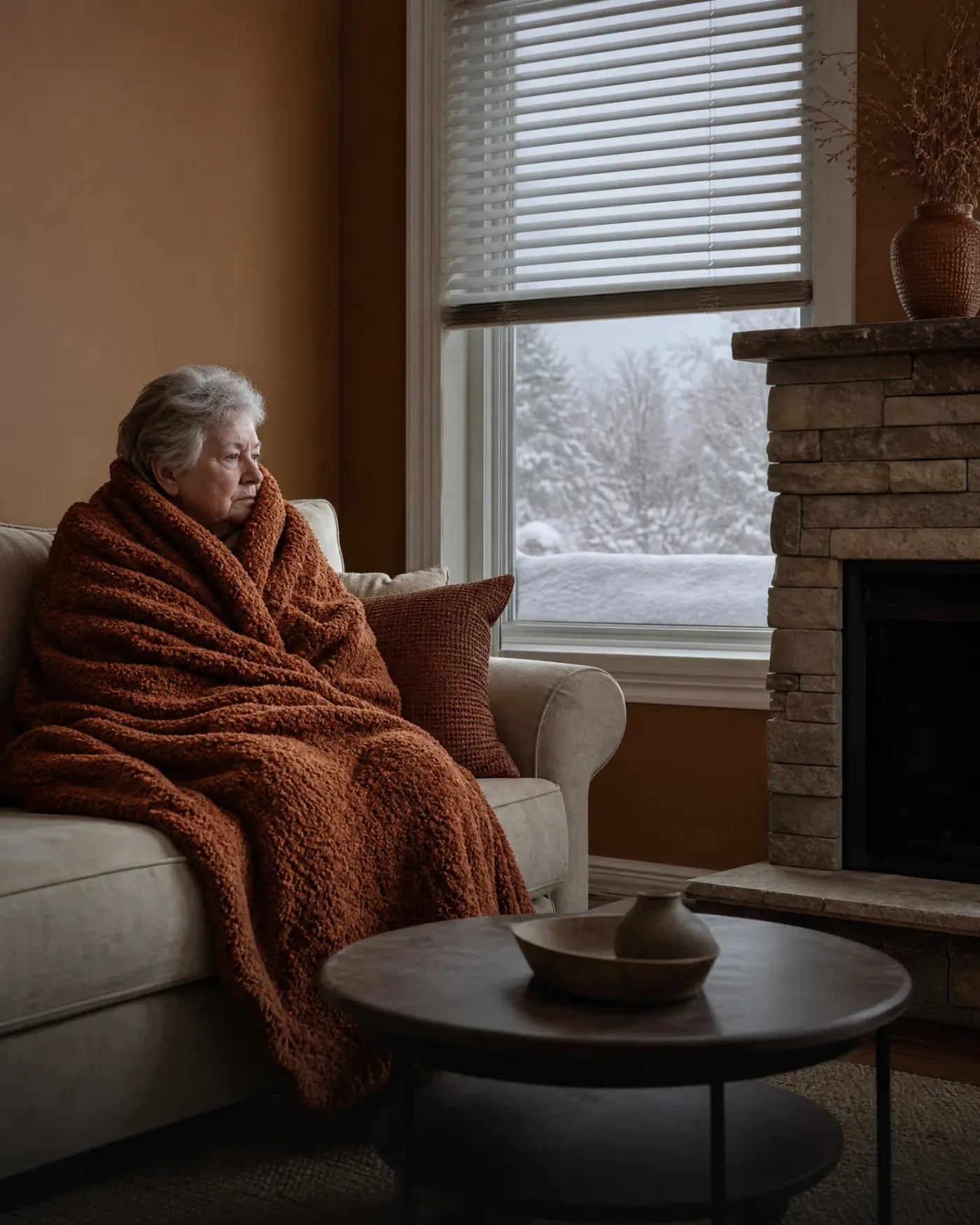
A woman in a gray turtleneck sweater stands by a window looking outside at snowy ground, with a dimly lit living room containing a sofa, shelves, lamp and a lit candle behind her.
A woman in a cream cable-knit turtleneck sweater stands in a warmly lit living room with a fireplace and shelves behind her, looking out a window toward snow-covered trees and a railed deck.
A woman in a cream knit turtleneck sweater stands by a window looking out at snow, with a lit fireplace, sofa and lamp in the room behind her.
A woman in a gray knit sweater sits by a window looking out at falling snow, with a dimly lit living room containing a sectional sofa, pillows, a lamp and houseplants behind her.

What's Actually Blocking the Heat

Most electric furnaces push warm air through a duct system sized for the whole house, and that balance depends on every run being clear and every damper set right. A duct that got crushed when someone stored boxes in the crawlspace, or a boot that pulled loose behind a wall, sends less air to that one room no matter how hard the furnace works. Registers can be the culprit too. A vent partly closed from last summer, or furniture pushed in front of one since you rearranged, cuts the flow to that room alone. None of this shows up at the thermostat, because the air reaching every other room is doing fine.

Why It Shows Up More In Winter

A duct leak or a closed damper doesn't change between seasons, but the gap it creates is easier to feel once the temperature outside drops and the furnace has to work harder to hold a setpoint. In July, a few degrees of difference in one room barely registers. In January, with electric heat running most of the day to keep up, that same gap in airflow means the room never closes the distance. The duct problem was there all along. Winter just makes it loud enough to notice, which is why it's worth having a contractor trace the run before the cold makes it worse.

A beige gas furnace with a metal flue pipe stands in a basement against concrete block walls, beside sheet-metal ductwork, copper and white plastic pipes, and a water heater at right.
Before you get your furnace repair
A gray high-efficiency furnace with white PVC vent pipes stands beside sheet-metal ductwork and a water heater in an unfinished basement with concrete walls and wood framing.
After you get your furnace repair
An unfinished basement with a concrete floor, pink insulation on one wall, exposed joists, galvanized sheet-metal ductwork, PVC vent pipes, and a tall gray furnace with attached gas and electrical lines.

A local pro for your furnace repair

Your request goes to one pro, not a list of companies.

Say what's going on with your furnace, and a pro who works on them reaches out.

Find a furnace pro

You only hire the pro if you want to.

Is This the Room You're Thinking Of

You know the room. The vent blows, but what comes out barely feels warm by the time it reaches you. You've started closing the door to keep what little heat gets in from leaking back out. Maybe you've noticed the register itself is cooler to the touch than the one in the hallway. If it's a bedroom, the cold shows up at night, when the house is quiet enough to notice a draft along the floor. If it's over a garage or at the end of a long duct run, it's probably been the cold room since you moved in. Left alone, that room stays a few degrees behind all winter, and the furnace keeps running longer trying to make up a difference it can't fix on its own.

A dim unfinished basement with concrete walls, exposed floor joists, a small window, and a furnace connected to metal ductwork and PVC venting.

You go down to check the furnace after dinner, because that back bedroom still hasn't warmed up. It's dark in the basement except for the bulb over the stairs. The furnace sits there quiet, no hum, no blower, nothing. A thin layer of dust hangs in the light near the cabinet, stirred up when you walked over. You put your hand near the vent on the unit and feel no warmth at all. Outside it's a cold November night, the kind where the house usually runs the furnace most of the evening. Tonight it isn't running at all, and that one room is about to get a lot colder than it already was.

A man seen from behind raises his hand to wave at a woman standing in the open front doorway of a single-story house with gray shingle siding, white columns and a gabled porch entry.

How the Blower Decides Where the Heat Goes

A furnace blower pushes a fixed amount of air into the duct system every time it runs. That air follows whichever path offers the least resistance, which is why a duct run with a kink, a mostly shut damper, or a few extra feet of travel ends up starved even though the blower never slows down. The register in that one room can be wide open and still lose the contest to every shorter, straighter run in the house.

This is also why swapping the filter or sealing the door never fixes it. Those steps don't change how the air splits once it leaves the furnace. Finding the actual split, and which run is losing, takes someone crawling the duct system with a flow meter, not a guess from the thermostat. A licensed contractor working furnaces in Arkansas homes all winter can trace that path and tell you which run is choked and why. Getting matched with one means a single contractor looking at your ducts, not several companies working off a description over the phone.

A living room corner with a beige upholstered armchair holding navy and striped cushions, a small round wooden side table with a carved bowl and a potted green plant, a framed landscape picture on a pale wall, built-in shelving, and a curtained window.
  1. The blower pushes a set volume of air into the main trunk line.

  2. Air splits off into branch ducts leading to each room.

  3. Air takes the path with the least resistance first.

  4. A kinked duct or shut damper starves that branch of air.

A beige high-efficiency furnace in an unfinished basement, with white PVC vent pipes, a yellow gas line, metal ductwork, and exposed wood framing on a concrete floor.
Here the ducts are clear, the dampers are open, and warm air reaches every register the same way, including the one in that cold room.
An older beige furnace with two louvered vent panels stands on a concrete basement floor, connected to galvanized ductwork and a metal flue pipe, with gas piping and flexible conduit on the wall behind.
Here the flue pipe and gas line feed an aging furnace straining to heat the house evenly, and the room farthest from it loses out first.
A bearded man in a plaid flannel shirt stands in a kitchen looking out a window toward snow-covered shrubs, with a steaming mug on the windowsill and potted plants on a shelf behind him.
A smiling man with dark curly hair in a navy t-shirt sits on a gray couch indoors, with a large-leafed plant and a window in the background.

You could keep doing what you've been doing: shutting the door, running a space heater, telling yourself it's just that one room. That costs you nothing to try and nothing changes.

A contractor local to you who works on furnaces like yours all winter can look at the duct run feeding that room and tell you what's actually blocking it. One call, one visit, an answer instead of a guess.

Winter nights average 32°F statewide

Overnight lows average 32°F across Arkansas in December, January and February, so your furnace runs for hours at a stretch most nights. That long a run exposes any duct run that's blocked or any damper that's barely open, which is why the cold room shows up at night first.

NOAA nClimDiv 1991-2020 county normals weighted by homes

One cold room almost always comes down to something specific: a crushed duct, a shut damper, a blower that's not moving enough air to reach the far end of the line. Not a furnace that needs replacing, and not something you have to live with every winter. A contractor who works on furnaces like yours all season knows where to look first, because the usual suspects don't change much from house to house. Getting matched means one licensed contractor local to you reaches out, someone who already knows what tends to fail in houses heated the way yours is, not a handful of companies competing for your callback. You've already done the part that mattered, the filter, the towel under the door, ruling out the easy stuff. What's left is the part a furnace itself won't show you from upstairs. The room that stays cold is telling you something true about the duct run or the damper feeding it, and that's worth running down before another winter goes by with the door shut and a space heater doing a furnace's job.

Interior room corner with sunlight from a window, showing peeling paint and damaged plaster on the wall above a white baseboard, a wooden cabinet with a pale bowl on top, hardwood floor and a patterned rug.
Interior corner of a room with tan walls, white profiled baseboard and window trim, a wood-plank floor in sunlight, and green foliage visible through the window.
An empty room corner with cream walls, white baseboard, two windows with deep sills showing green foliage outside, and a wood plank floor lit by sunlight.
Empty room corner with beige walls, white beadboard wainscoting, chair rail and baseboard, a window with green foliage outside, and sunlight casting leaf shadows on the wall above a wood floor.
Sunlit room corner with a multi-pane window, beige walls, white baseboard, wood floor with a woven rug, and a dark wooden cabinet holding a ceramic table lamp below a framed picture.

Get the right pro for your furnace

The pro who reaches out is licensed in Arkansas.

Get a local pro

Asking costs nothing, and the choice to hire stays yours.