Tell us about the job
Takes about a minute. No obligation.
Sizing a furnace for a Clark County home is not a calculation a contractor can borrow from a neighboring county and carry over unchanged. The burner, the heat exchanger, and the ignition system all accumulate wear in proportion to how much the unit cycles, and an undersized or poorly sealed install leaves no slack for that. Homes in Clark County, AR run heat about five months a year, from November through March. A contractor quoting a replacement has to work out the actual load this house puts on the equipment before they can specify equipment that will hold up through that cycling without running at its limit every cold night.
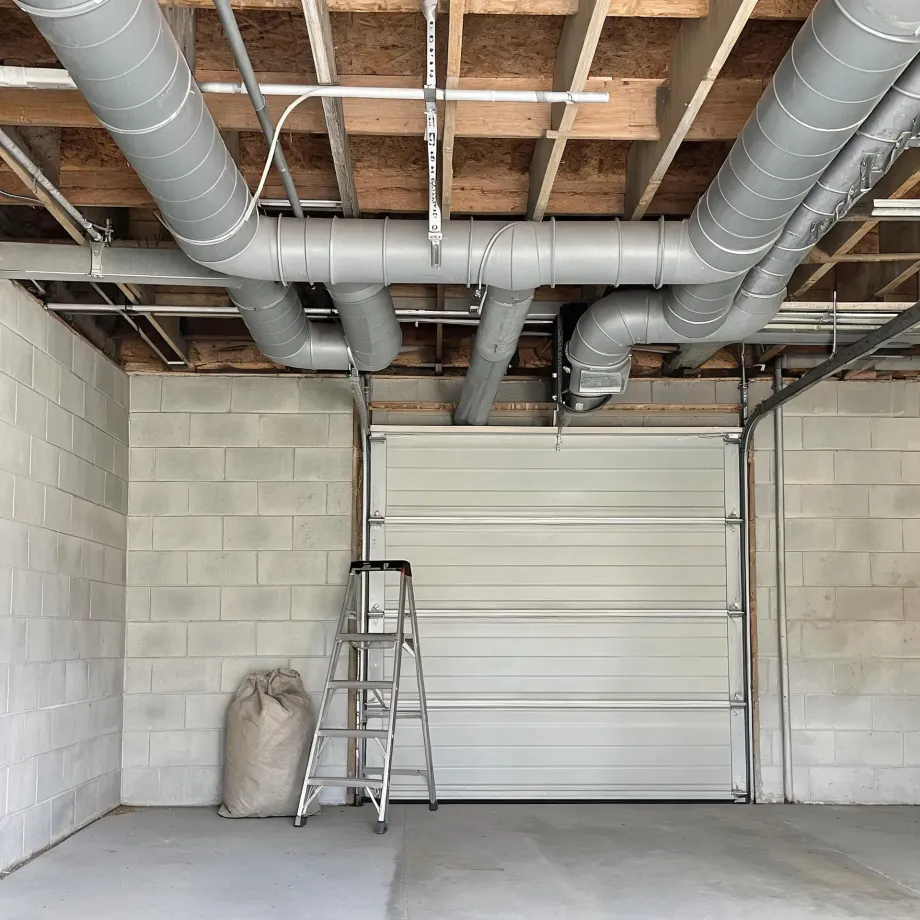
Ductwork laid down for an older heating system carries its own geometry: the trunk sizes, branch runs, and register placements that made sense then may restrict airflow for a furnace built to different specifications. Half the homes in Clark County, Arkansas were built in 1985 or earlier (2020-2024 ACS 5-year). A contractor installing a new furnace here measures what that existing ductwork will actually pass before pricing the job, because a system that cannot move enough air will underperform regardless of its rated output. The electrical side is usually straightforward for a gas furnace, but the duct layout is where the job either holds or requires remediation.
What a Furnace Installation Covers
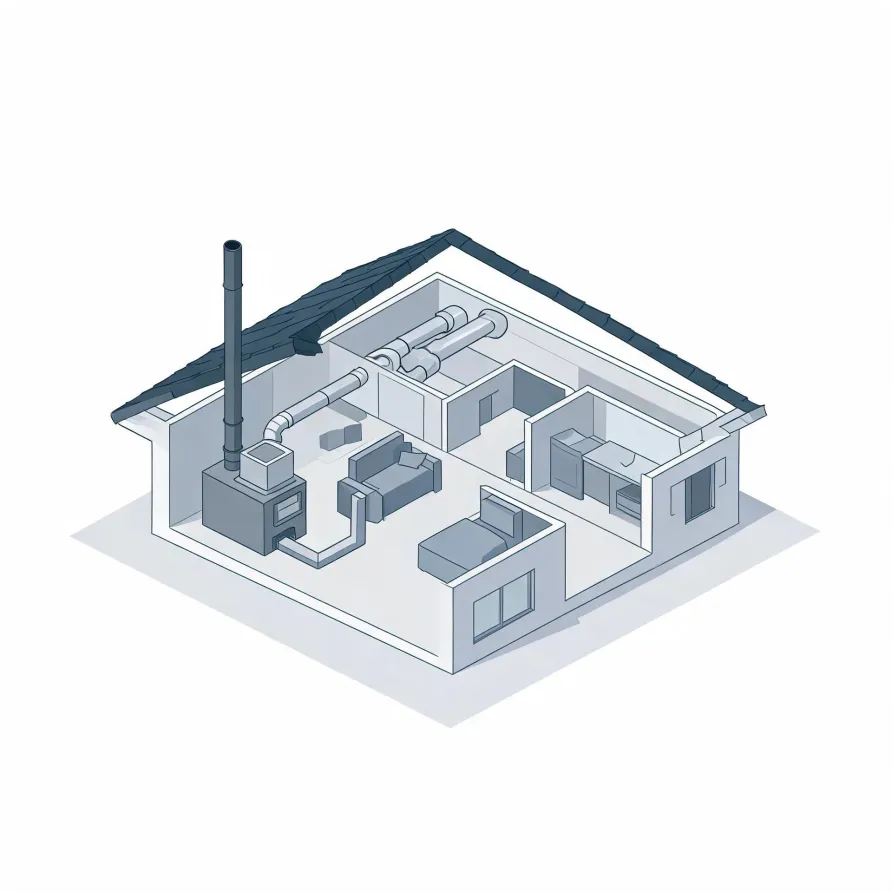
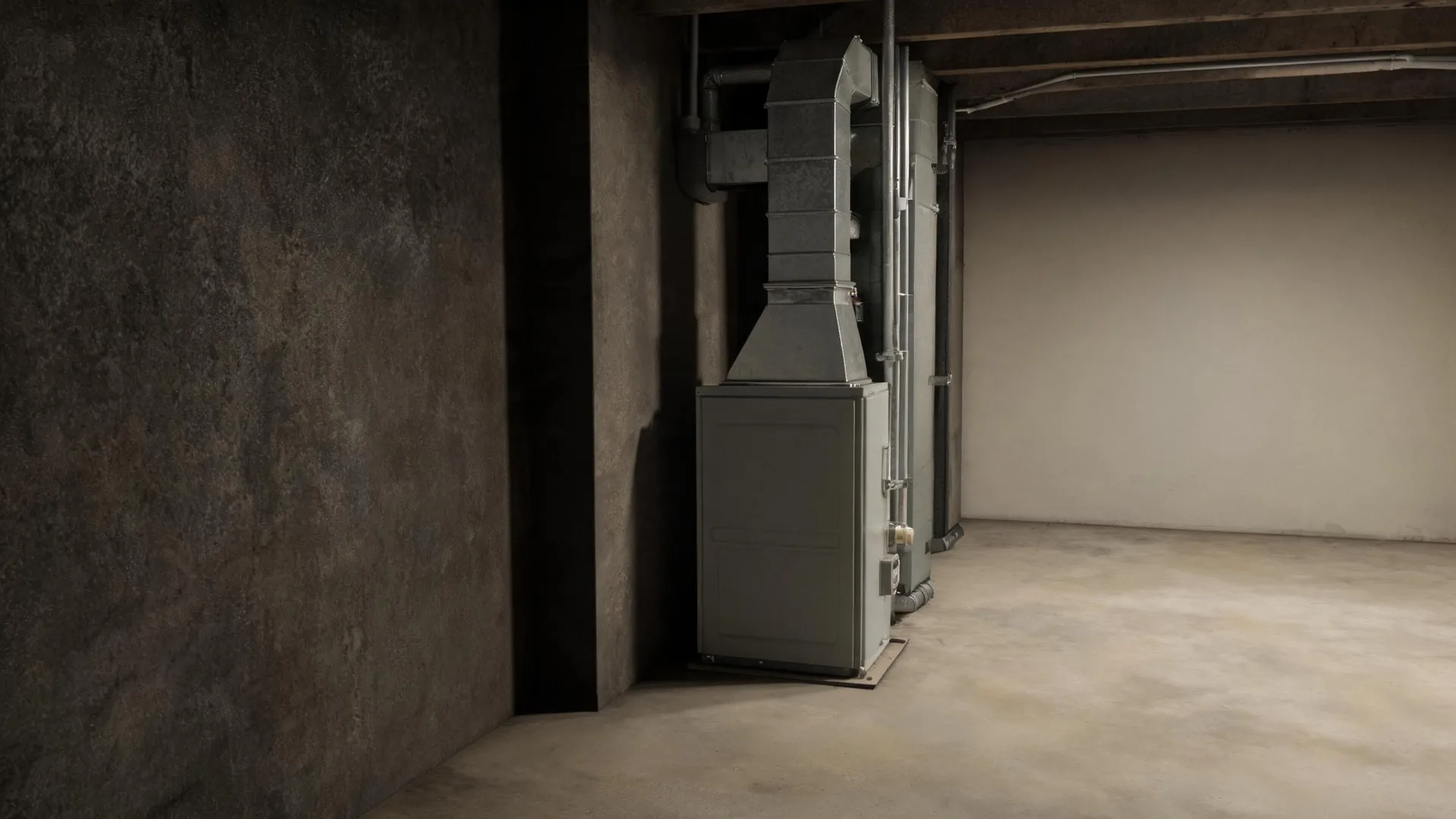
The furnace itself sits inside the house, most often in a basement, utility room, or closet. It is the unit that produces heat, drawing in air, warming it, and pushing it back out through the supply side of the duct system. The flue pipe runs from the furnace to an exterior wall or roofline and carries combustion exhaust out of the house.
The thermostat mounts on an interior wall where it reads the air temperature and tells the furnace when to fire and when to stop. Alongside the furnace, a filter housing holds the air filter that screens particulates before air moves through the heat exchanger. Where a home also has central air conditioning, the furnace cabinet houses the air handler components that serve both systems.
The drawing shows a typical layout, and a licensed contractor determines exactly what applies to your house.
Find a contractor in Clark CountyClark County, Arkansas, by the numbers
65 severe weather events were recorded in Clark County, Arkansas between 2015 and 2024.
NOAA National Centers for Environmental Information, Storm Events Database, bulk CSV export, events 2015-01-01 through 2024-12-31.Half the homes in Clark County, Arkansas were built in 1985 or earlier (2020-2024 ACS 5-year).
U.S. Census Bureau, 2020-2024 American Community Survey 5-Year EstimatesClark County, Arkansas holds 10,029 housing units (2020-2024 ACS 5-year).
U.S. Census Bureau, 2020-2024 American Community Survey 5-Year EstimatesOwners occupy 65.0% of the occupied homes in Clark County, Arkansas (2020-2024 ACS 5-year).
U.S. Census Bureau, 2020-2024 American Community Survey 5-Year EstimatesFurnace Installation Rules on the Books for Clark County, Arkansas6 codes, standards & statutes
What the Installation Actually Looks Like
Non-weatherized gas furnaces manufactured on or after November 19, 2015 must reach 80.0 percent AFUE.
Non-weatherized oil-fired furnaces manufactured on or after November 19, 2015 must reach 83.0 percent AFUE.
Mobile home gas furnaces manufactured on or after November 19, 2015 must reach 80.0 percent AFUE.
Non-weatherized gas furnaces manufactured on or after December 18, 2028 must reach 95.0 percent AFUE, up from the 80.0 percent minimum that applies to units manufactured before that date.
What Clark County, Arkansas Requires for HVAC Installation
An Arkansas HVACR licence is good across the state: no city or county may require its own licence to do HVACR work, though local permits and inspections still apply.
Arkansas requires an HVACR licence or registration: it is unlawful to do HVACR work without the appropriate one unless the chapter exempts you.
Severe Weather Events in Clark County
Clark County's weather puts real stress on heating equipment over time. How hard a furnace works, and how long it lasts, depends in part on what the local climate demands of it.
65 severe weather events, 2015–2024. Source: NOAA National Centers for Environmental Information, Storm Events Database.