Tell us about the job
Takes about a minute. No obligation.
Sizing a furnace for this county starts with knowing exactly how hard the heating season actually runs the equipment. Homes in Hot Spring County, AR run heat about five months a year, from November through March. A burner and heat exchanger that cycle through a full season of that length accumulate wear on the ignition system and heat exchanger faster when the unit is undersized, because the system runs longer per call to reach setpoint. A contractor doing the load calculation before the install is the difference between equipment that holds up through its expected service life and equipment that shows stress on those parts early.
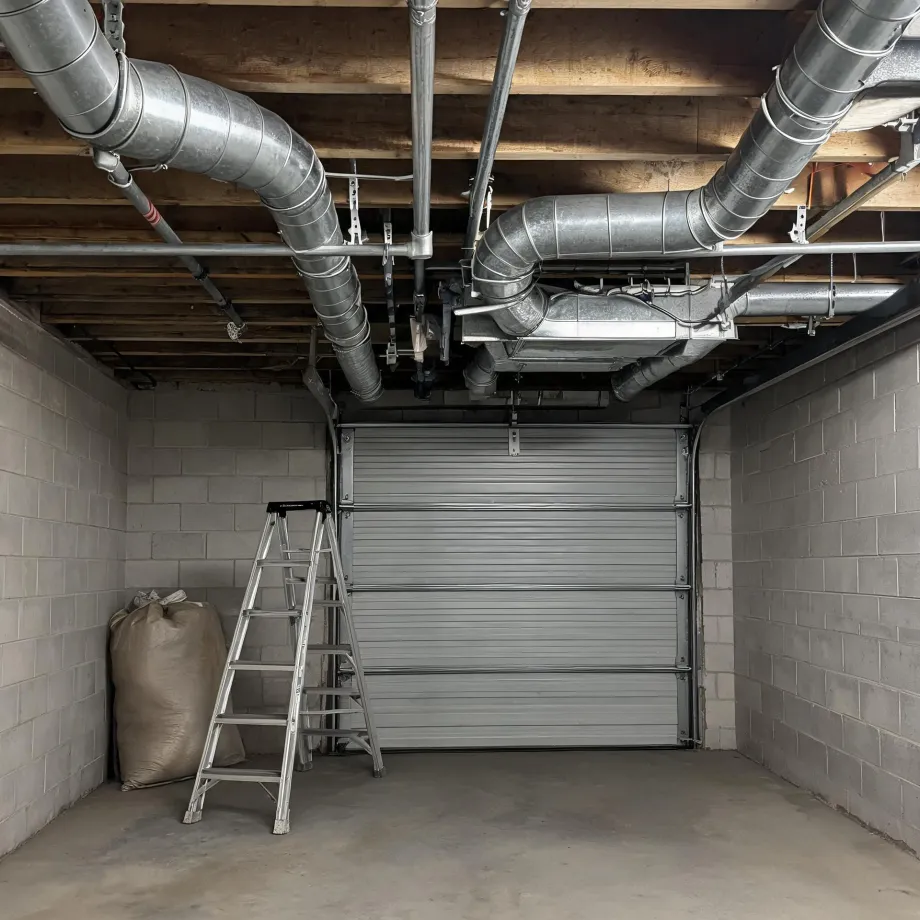
Ductwork laid out for an older heating system carries assumptions about airflow, return placement, and trunk sizing that a modern furnace does not share. Half the homes in Hot Spring County, Arkansas were built in 1979 or earlier (2020-2024 ACS 5-year). A contractor quoting a furnace replacement here has to assess whether those runs will move air the way the new unit expects, because if they will not, the duct work becomes part of the job before the equipment is even priced. The electrical side matters too, though duct configuration is where most surprises land.
What a Furnace Installation Covers
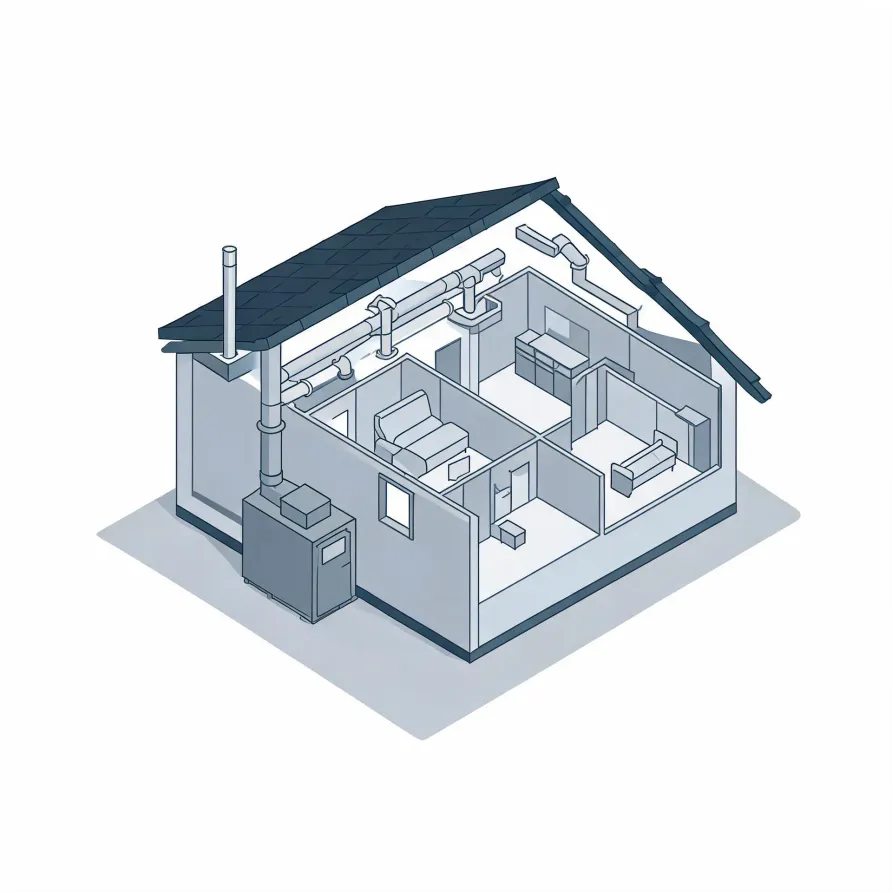
The furnace itself sits inside the house, most often in a basement, utility room, or closet. It is the unit that produces heated air and pushes it into the distribution system. The flue pipe runs from the furnace to an exterior wall or up through the roof, carrying combustion gases out of the house.
The thermostat mounts on an interior wall and is the control point the homeowner interacts with every day. The air handler, where it is a separate piece rather than built into the furnace cabinet, sits nearby and works alongside the furnace to move conditioned air. A condensate drain line runs from the system to a floor drain or pump when the equipment produces moisture as part of its operation.
The drawing shows a typical layout, and a licensed contractor determines exactly what applies to this house.
Find a contractor in Hot Spring CountyHot Spring County, Arkansas, by the numbers
83 severe weather events were recorded in Hot Spring County, Arkansas between 2015 and 2024.
NOAA National Centers for Environmental Information, Storm Events Database, bulk CSV export, events 2015-01-01 through 2024-12-31.Half the homes in Hot Spring County, Arkansas were built in 1979 or earlier (2020-2024 ACS 5-year).
U.S. Census Bureau, 2020-2024 American Community Survey 5-Year EstimatesHot Spring County, Arkansas holds 14,302 housing units (2020-2024 ACS 5-year).
U.S. Census Bureau, 2020-2024 American Community Survey 5-Year EstimatesOwners occupy 76.5% of the occupied homes in Hot Spring County, Arkansas (2020-2024 ACS 5-year).
U.S. Census Bureau, 2020-2024 American Community Survey 5-Year EstimatesFurnace Installation Rules on the Books for Hot Spring County, Arkansas6 codes & standards
What HVAC Installation Looks Like in Hot Spring County
Non-weatherized gas furnaces manufactured on or after November 19, 2015 must reach 80.0 percent AFUE.
Non-weatherized oil-fired furnaces manufactured on or after November 19, 2015 must reach 83.0 percent AFUE.
Mobile home gas furnaces manufactured on or after November 19, 2015 must reach 80.0 percent AFUE.
Non-weatherized gas furnaces manufactured on or after December 18, 2028 must reach 95.0 percent AFUE, up from the 80.0 percent minimum that applies to units manufactured before that date.
Licensing Rules for HVAC Work in Hot Spring County, Arkansas
An Arkansas HVACR licence is good across the state: no city or county may require its own licence to do HVACR work, though local permits and inspections still apply.
Arkansas requires an HVACR licence or registration: it is unlawful to do HVACR work without the appropriate one unless the chapter exempts you.
Severe Weather Events in Hot Spring County
Weather places real demands on heating and cooling equipment, and those demands vary by location. What the climate does in Hot Spring County shapes how hard a furnace has to work and how long it lasts, which makes local weather data a practical part of any installation conversation.
83 severe weather events, 2015–2024. Source: NOAA National Centers for Environmental Information, Storm Events Database.