Tell us about the job
Takes about a minute. No obligation.
A furnace repair in Hot Spring County starts with the burner assembly and the ignition system, because those are the parts that cycle every time the heat runs. Homes in Hot Spring County, AR run heat about five months a year, from November through March. That much cycling wears the igniter, stresses the heat exchanger, and puts the flame sensor through repeated thermal expansion and contraction. A contractor quoting a repair here checks those components first, because deferred wear on them tends to surface as a hard failure rather than a gradual decline.
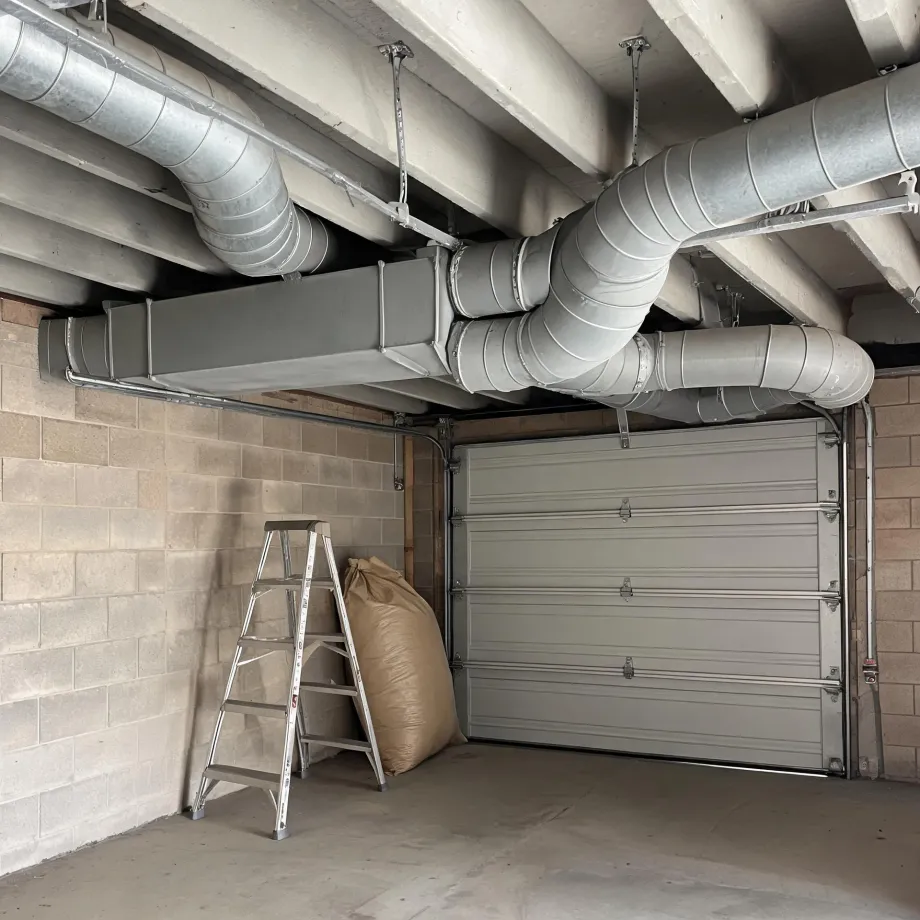
Half the homes in Hot Spring County, Arkansas were built in 1979 or earlier (2020-2024 ACS 5-year). A furnace that has been running in a house this old has almost certainly had components swapped over the years, and those repairs do not always land on matching parts. When a contractor opens the heat exchanger or pulls the burner assembly, what they find shapes the job from that point forward. A cracked cell or a corroded igniter in a system assembled from parts across different product lines means sourcing becomes its own problem before the repair itself can close.
The Parts of a Furnace a Contractor Checks First
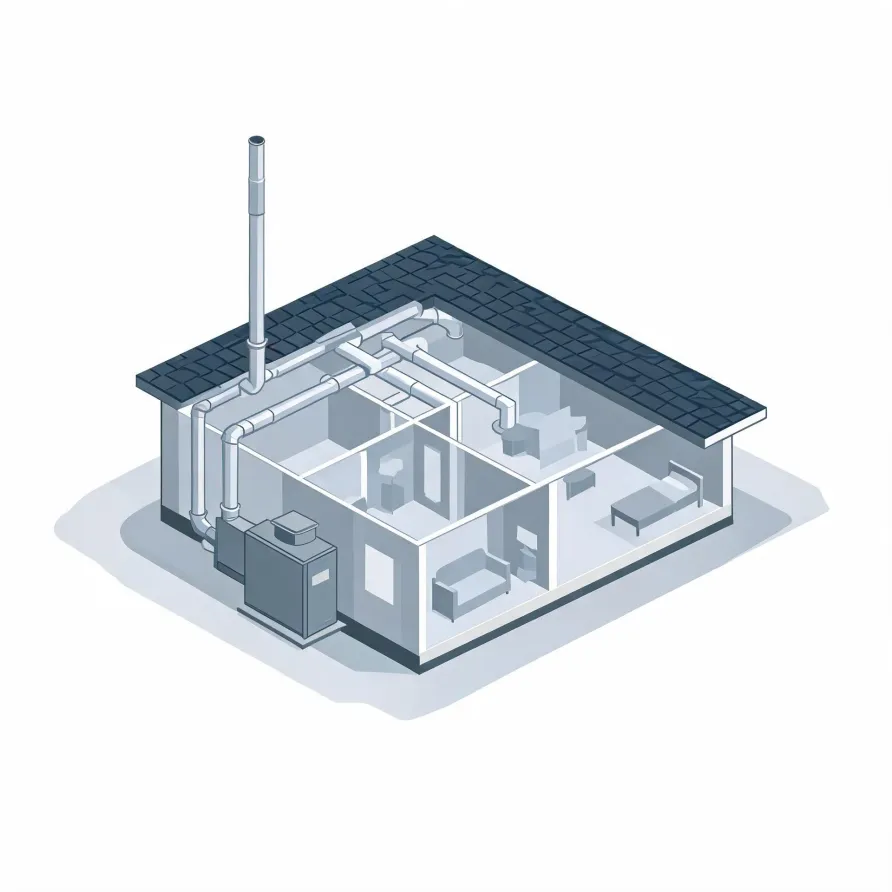
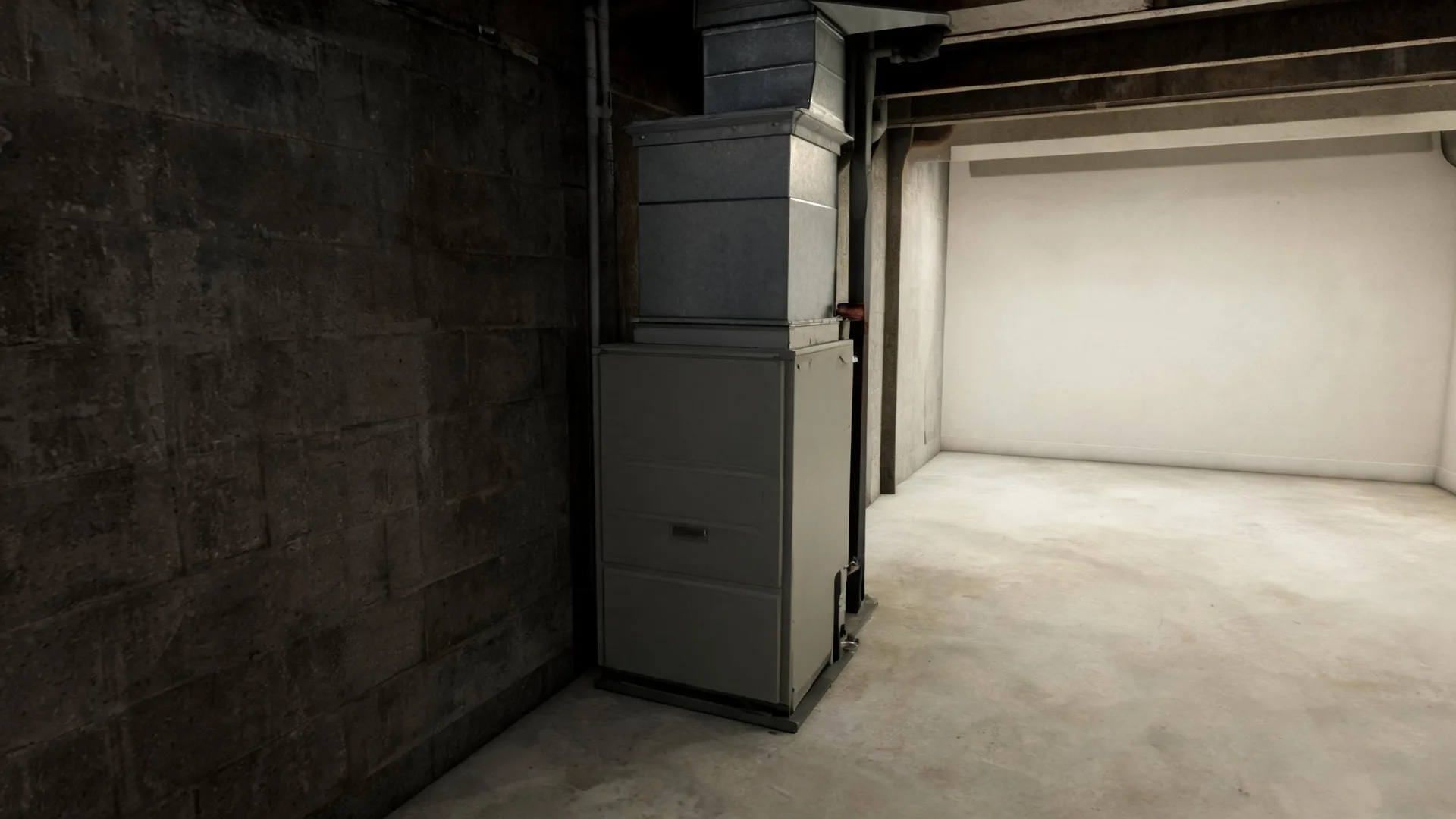
The furnace itself sits in the basement, utility room, or a dedicated mechanical closet and is the piece a contractor goes to first. Inside it, the heat exchanger is the part most worth understanding: cracks or holes in it are what let combustion gases reach living air. The burners, which fire inside the heat exchanger, and the igniter, which lights them, are the other components that draw early attention when a furnace stops producing heat.
The blower motor and fan assembly sit at the base of the furnace cabinet and push conditioned air out through the supply side of the duct system. The flue pipe runs from the top of the furnace up and out of the house, carrying exhaust gases away. Alongside those, the control board and the various sensors tied to it coordinate every stage of a heating cycle, and faults in any one of them can stop the furnace mid-sequence.
The drawing shows a typical furnace layout, and a licensed contractor determines which components apply and what condition they are in for your specific house.
Find a contractor in Hot Spring CountyHot Spring County, Arkansas, by the numbers
83 severe weather events were recorded in Hot Spring County, Arkansas between 2015 and 2024.
NOAA National Centers for Environmental Information, Storm Events Database, bulk CSV export, events 2015-01-01 through 2024-12-31.Half the homes in Hot Spring County, Arkansas were built in 1979 or earlier (2020-2024 ACS 5-year).
U.S. Census Bureau, 2020-2024 American Community Survey 5-Year EstimatesHot Spring County, Arkansas holds 14,302 housing units (2020-2024 ACS 5-year).
U.S. Census Bureau, 2020-2024 American Community Survey 5-Year EstimatesOwners occupy 76.5% of the occupied homes in Hot Spring County, Arkansas (2020-2024 ACS 5-year).
U.S. Census Bureau, 2020-2024 American Community Survey 5-Year EstimatesCodes & Standards Behind Furnace Repair in Hot Spring County, Arkansas6 sourced rules & standards
What the Repair Visit Looks Like
Non-weatherized gas furnaces manufactured on or after November 19, 2015 must reach 80.0 percent AFUE.
Non-weatherized oil-fired furnaces manufactured on or after November 19, 2015 must reach 83.0 percent AFUE.
Mobile home gas furnaces manufactured on or after November 19, 2015 must reach 80.0 percent AFUE.
Non-weatherized gas furnaces manufactured on or after December 18, 2028 must reach 95.0 percent AFUE, up from the 80.0 percent minimum that applies to units manufactured before that date.
Licensing Rules for HVAC Repair in Hot Spring County, Arkansas
An Arkansas HVACR licence is good across the state: no city or county may require its own licence to do HVACR work, though local permits and inspections still apply.
Arkansas requires an HVACR licence or registration: it is unlawful to do HVACR work without the appropriate one unless the chapter exempts you.
Severe Weather Events in Hot Spring County
Extreme weather puts real stress on heating equipment, and Hot Spring County has its own weather profile that shapes how hard a furnace has to work and how often it needs attention. Repair needs here are tied to local conditions, which is why that history belongs on this page.
83 severe weather events, 2015–2024. Source: NOAA National Centers for Environmental Information, Storm Events Database.