Tell us about the job
Takes about a minute. No obligation.
Sizing a furnace for Cleburne County means accounting for how much the burner and heat exchanger actually cycle before the contractor commits to a unit. Homes in Cleburne County, AR run heat about seven months a year, from October through April. A heat exchanger that fires up and shuts down repeatedly across that span accumulates fatigue at the joints and seals, and an undersized unit runs longer cycles, which pushes that wear faster. The ignition system takes the same load. A contractor who skips a proper load calculation here is quoting for a different county.
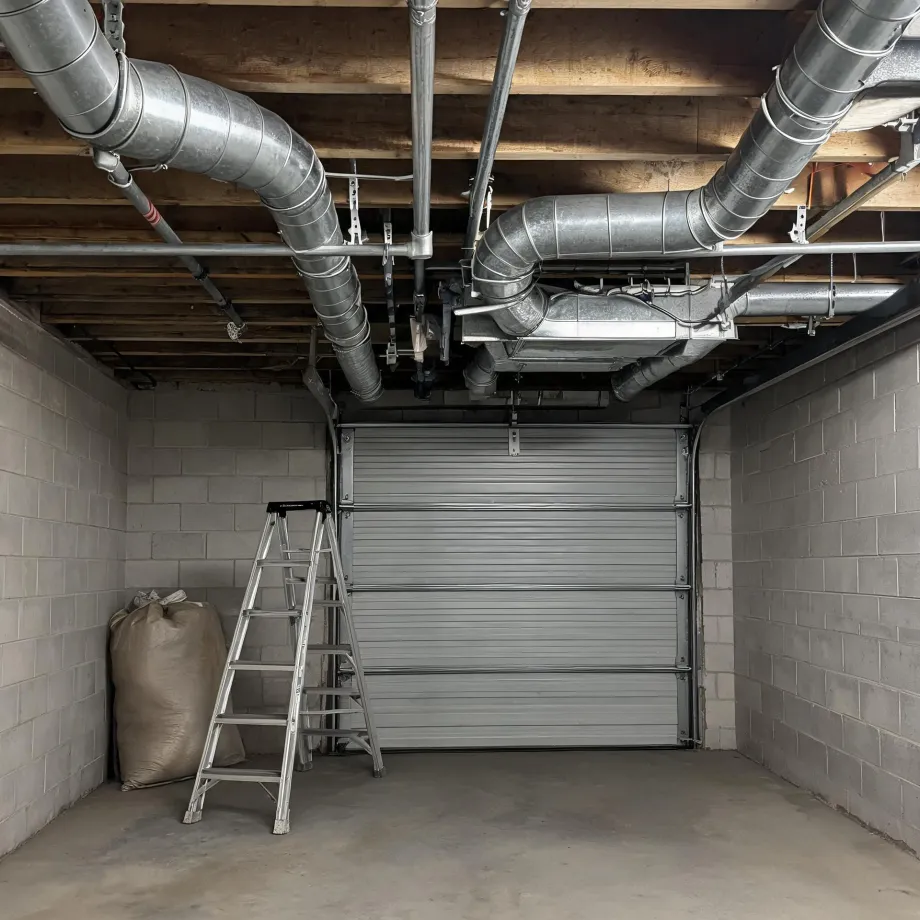
Existing ductwork is what a furnace installation turns on in Cleburne County. Half the homes in Cleburne County, Arkansas were built in 1989 or earlier (2020-2024 ACS 5-year). Duct systems laid out for the equipment those houses originally held were sized around different static pressures and airflow rates than what a modern furnace pushes. A contractor replacing a furnace here opens the question of whether that ductwork can carry the new load before the equipment choice is final. If it cannot, the duct work becomes part of the job, and the quote changes accordingly.
What a Furnace Installation Covers
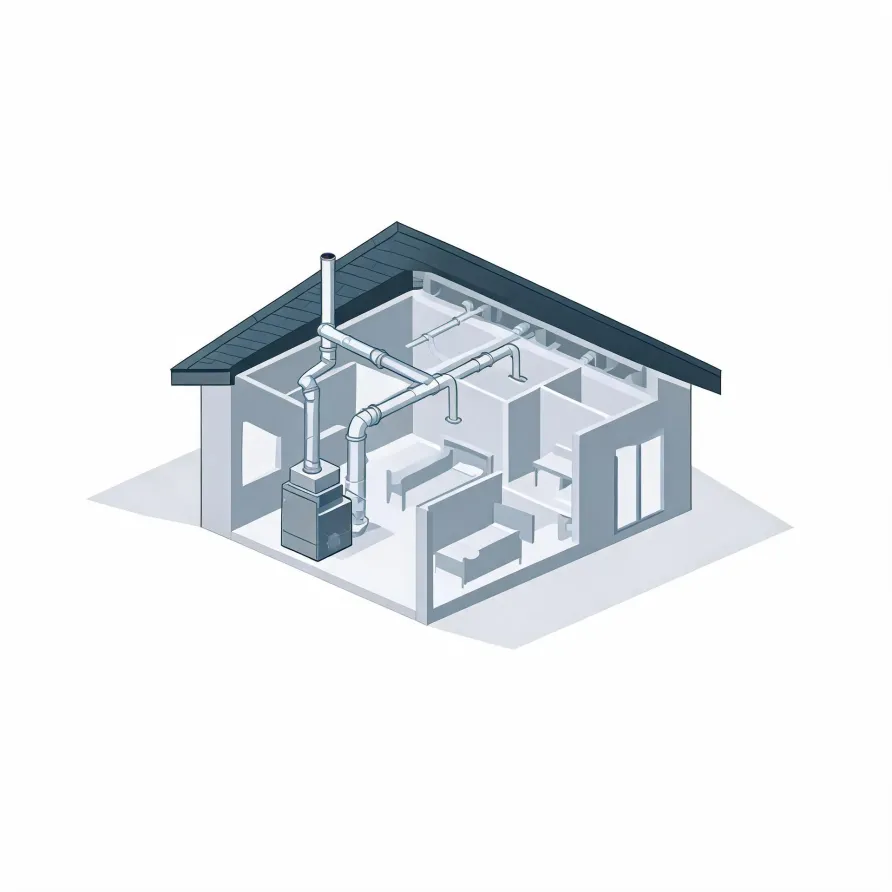
The furnace itself sits inside the house, most often in a basement, utility closet, or dedicated mechanical room. It holds the burner assembly, the heat exchanger, and the blower, which together produce and distribute conditioned air. The flue pipe runs from the furnace to an exterior wall or roof and carries combustion gases out of the house.
The thermostat mounts on an interior wall and is the control point the homeowner touches directly. Near the furnace, a contractor also installs the air handler components where the system meets the duct openings, and connects the gas line and condensate drain where the equipment requires them.
The drawing shows a general layout of these components, and a licensed contractor determines exactly what applies to this house.
Find a contractor in Cleburne CountyCleburne County, by the numbers
47 severe weather events were recorded in Cleburne County, Arkansas between 2015 and 2024.
NOAA National Centers for Environmental Information, Storm Events Database, bulk CSV export, events 2015-01-01 through 2024-12-31.Half the homes in Cleburne County, Arkansas were built in 1989 or earlier (2020-2024 ACS 5-year).
U.S. Census Bureau, 2020-2024 American Community Survey 5-Year EstimatesCleburne County, Arkansas holds 15,667 housing units (2020-2024 ACS 5-year).
U.S. Census Bureau, 2020-2024 American Community Survey 5-Year EstimatesOwners occupy 80.6% of the occupied homes in Cleburne County, Arkansas (2020-2024 ACS 5-year).
U.S. Census Bureau, 2020-2024 American Community Survey 5-Year EstimatesFurnace Installation Rules for Cleburne County, Arkansas6 codes, standards, and laws
What the Installation Actually Looks Like
Non-weatherized gas furnaces manufactured on or after November 19, 2015 must reach 80.0 percent AFUE.
Non-weatherized oil-fired furnaces manufactured on or after November 19, 2015 must reach 83.0 percent AFUE.
Mobile home gas furnaces manufactured on or after November 19, 2015 must reach 80.0 percent AFUE.
Non-weatherized gas furnaces manufactured on or after December 18, 2028 must reach 95.0 percent AFUE, up from the 80.0 percent minimum that applies to units manufactured before that date.
Licensing and Legal Requirements in Cleburne County, Arkansas
An Arkansas HVACR licence is good across the state: no city or county may require its own licence to do HVACR work, though local permits and inspections still apply.
Arkansas requires an HVACR licence or registration: it is unlawful to do HVACR work without the appropriate one unless the chapter exempts you.
Severe Weather Events in Cleburne County
Cleburne County weather puts real demand on heating equipment. How hard a furnace works over its life is largely a function of what the climate throws at it, which is why local weather history belongs on a page about installation.
47 severe weather events, 2015–2024. Source: NOAA National Centers for Environmental Information, Storm Events Database.