Tell us about the job
Takes about a minute. No obligation.
Homes in Cleburne County, AR run heat about seven months a year, from October through April. A furnace running that long each year puts its burner, heat exchanger, and ignition components through repeated heating and cooling cycles, and those cycles are where the wear lands. Cracks in the heat exchanger and igniter failures are the faults a contractor looks at first here, because the cycling load on those parts outpaces what accumulates on the blower or the controls. A contractor pricing a repair in Cleburne County checks the combustion side before quoting anything downstream of it.
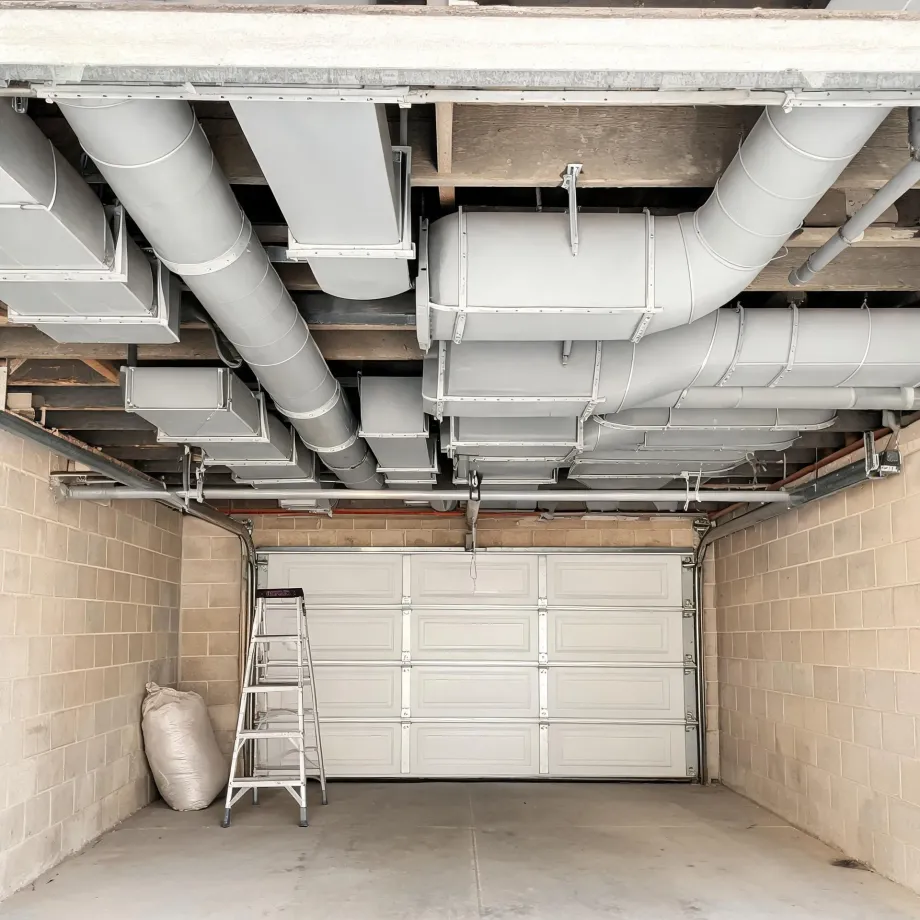
Older ductwork sealed and insulated for a previous generation of furnaces holds particulate and residue in ways that shape what a repair uncovers. Half the homes in Cleburne County, Arkansas were built in 1989 or earlier (2020-2024 ACS 5-year). A contractor who opens a furnace in this county is as likely to find a heat exchanger or burner assembly carrying years of incomplete combustion residue as they are to find a straightforward mechanical fault. That distinction produces a different parts list and a different scope, and stock built for lower-efficiency heating runs at combustion tolerances that leave specific deposits behind.
The Parts of a Furnace a Contractor Checks First
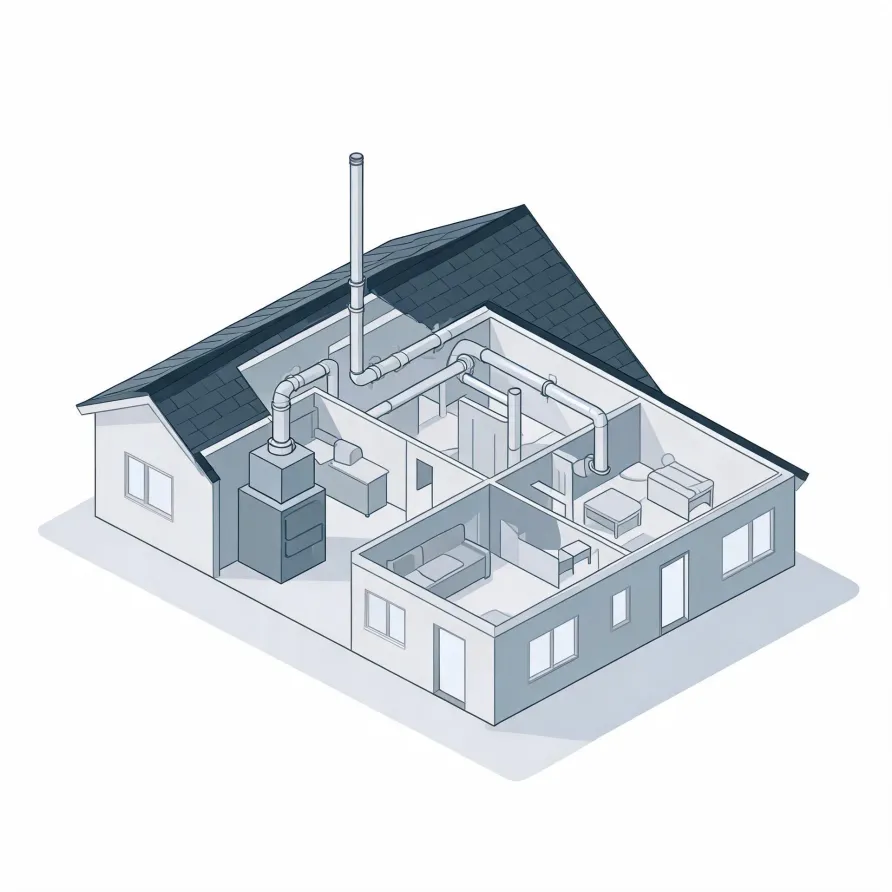
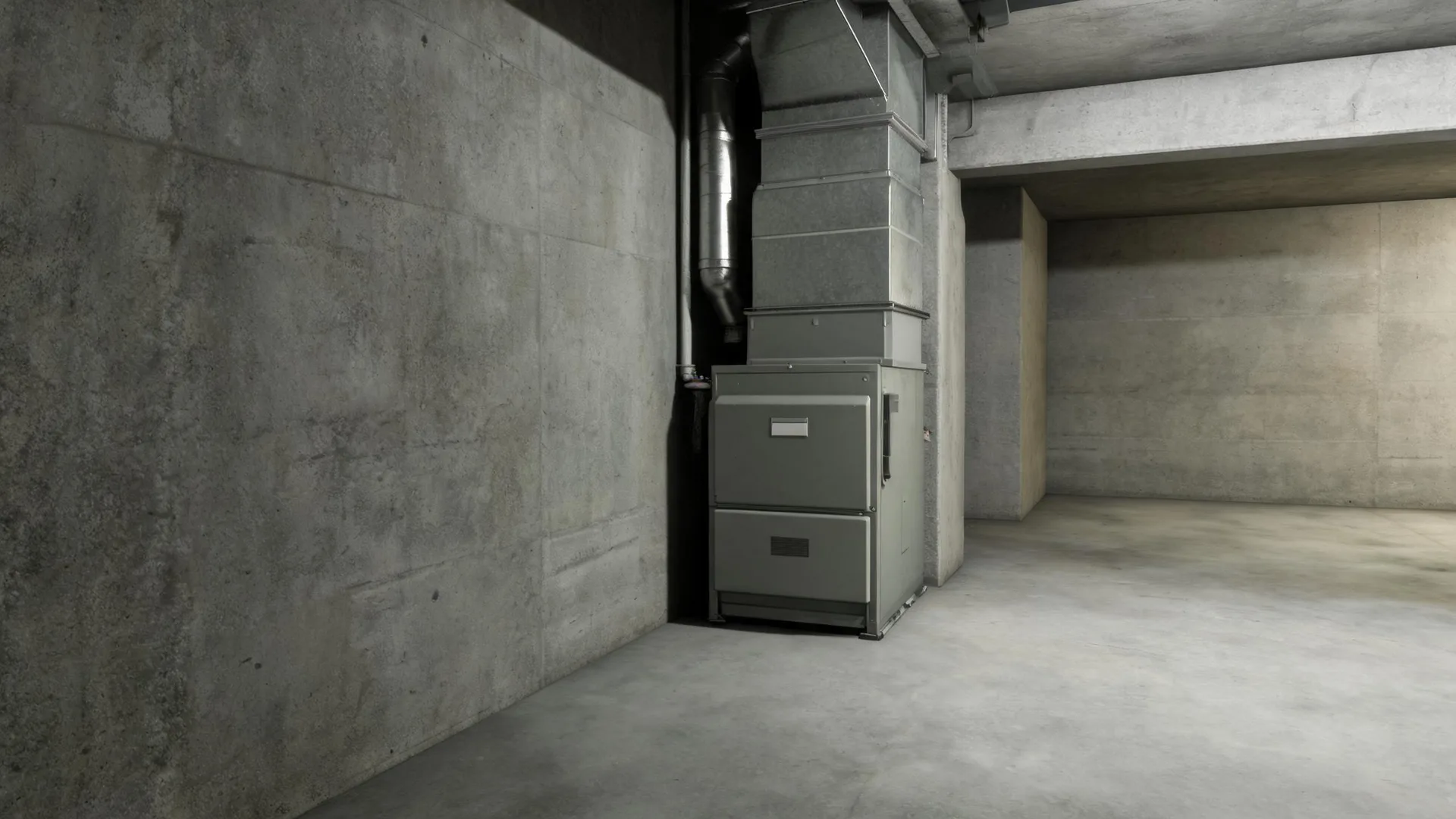
The furnace itself sits in a utility space, basement, or closet and is the heart of the system. Inside it, the heat exchanger, burners, and blower motor are where most problems originate. A cracked heat exchanger, a dirty or failed burner, or a blower motor that has stopped moving air will each kill the system in a different way, and a contractor works through these components first.
The flue pipe runs from the furnace up and out of the house, carrying combustion gases away. Alongside it, the control board and the igniter sit inside the furnace cabinet and handle the startup sequence every time the system calls for heat. When a furnace short-cycles, fails to light, or throws an error code, these are the pieces a contractor traces the fault back to.
The drawing shows a general layout of the system, and a licensed contractor determines what applies to your particular house.
Find a contractor in Cleburne CountyCleburne County, by the numbers
47 severe weather events were recorded in Cleburne County, Arkansas between 2015 and 2024.
NOAA National Centers for Environmental Information, Storm Events Database, bulk CSV export, events 2015-01-01 through 2024-12-31.Half the homes in Cleburne County, Arkansas were built in 1989 or earlier (2020-2024 ACS 5-year).
U.S. Census Bureau, 2020-2024 American Community Survey 5-Year EstimatesCleburne County, Arkansas holds 15,667 housing units (2020-2024 ACS 5-year).
U.S. Census Bureau, 2020-2024 American Community Survey 5-Year EstimatesOwners occupy 80.6% of the occupied homes in Cleburne County, Arkansas (2020-2024 ACS 5-year).
U.S. Census Bureau, 2020-2024 American Community Survey 5-Year EstimatesFurnace Repair Rules & Standards for Cleburne County, Arkansas6 sourced regulations and codes
What the repair visit looks like
Non-weatherized gas furnaces manufactured on or after November 19, 2015 must reach 80.0 percent AFUE.
Non-weatherized oil-fired furnaces manufactured on or after November 19, 2015 must reach 83.0 percent AFUE.
Mobile home gas furnaces manufactured on or after November 19, 2015 must reach 80.0 percent AFUE.
Non-weatherized gas furnaces manufactured on or after December 18, 2028 must reach 95.0 percent AFUE, up from the 80.0 percent minimum that applies to units manufactured before that date.
Licensing and Legal Requirements in Cleburne County, Arkansas
An Arkansas HVACR licence is good across the state: no city or county may require its own licence to do HVACR work, though local permits and inspections still apply.
Arkansas requires an HVACR licence or registration: it is unlawful to do HVACR work without the appropriate one unless the chapter exempts you.
Severe Weather Events in Cleburne County
Weather puts load on heating equipment: hard cold snaps, rapid swings between warm and cold, and storm-driven power fluctuations all force a furnace to work harder and wear faster. Repair demand in Cleburne County follows the local climate, which is why the data below is relevant to this service.
47 severe weather events, 2015–2024. Source: NOAA National Centers for Environmental Information, Storm Events Database.