Tell us about the job
Takes about a minute. No obligation.
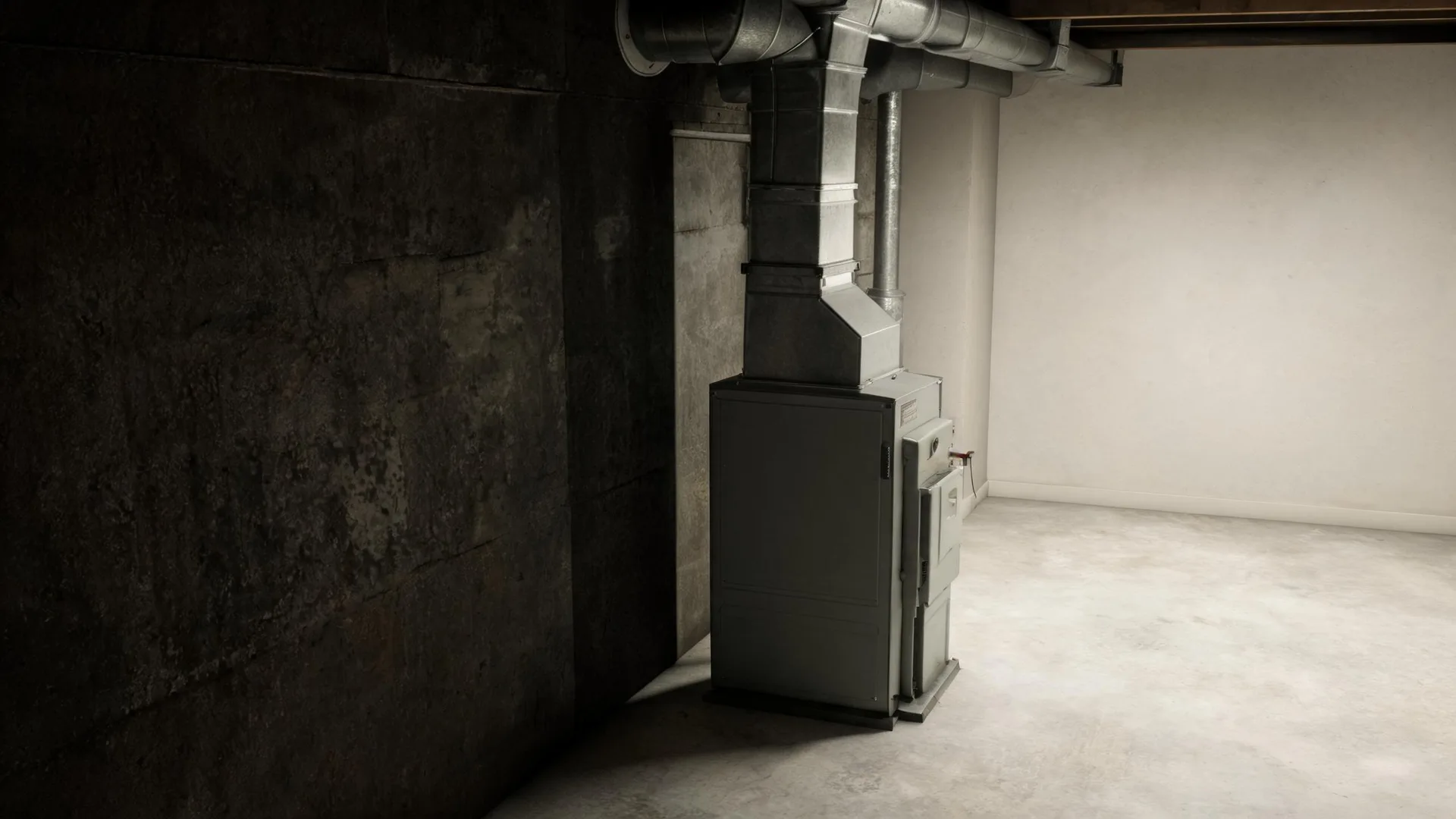
A furnace in Faulkner County works hard for a long stretch of the year, and that load lands on specific parts. Homes in Faulkner County, AR run heat about six months a year, from November through April. The burner cycles through that entire period, and so does the ignition system. By the time a homeowner calls for a repair, both have accumulated the kind of use that shows up as cracked heat exchangers, worn igniters, and dirty flame sensors. A contractor working a repair here goes straight to the combustion side first, because that is where the hours accumulate and where the failures concentrate.
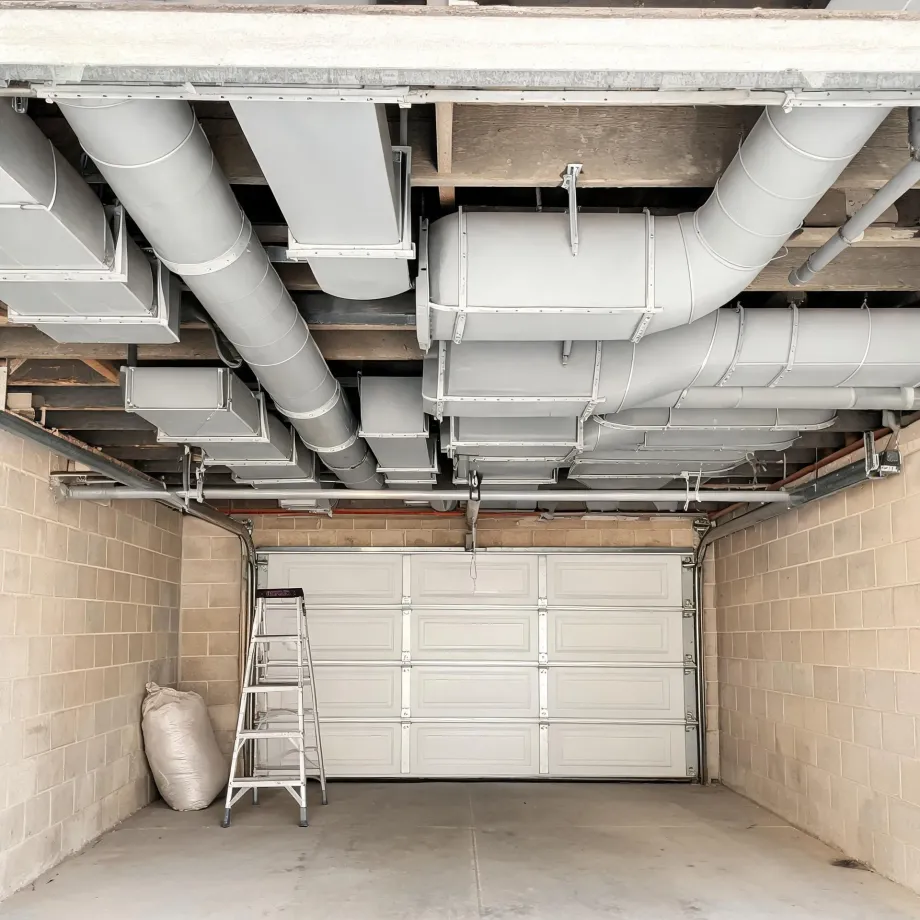
Furnace repair in housing of this vintage lives or dies on what the opened unit actually contains. Half the homes in Faulkner County, Arkansas were built in 1998 or earlier (2020-2024 ACS 5-year). A system that has run through that many heating seasons may carry a heat exchanger, a control board, or a gas valve that the original manufacturer no longer supports in its current form, which means a contractor has to confirm part availability before a repair scope means anything. If a direct replacement exists, the job moves. If it does not, the contractor is pricing a workaround, and the homeowner is making a different decision than they walked in expecting.
The Parts of a Furnace a Contractor Checks First
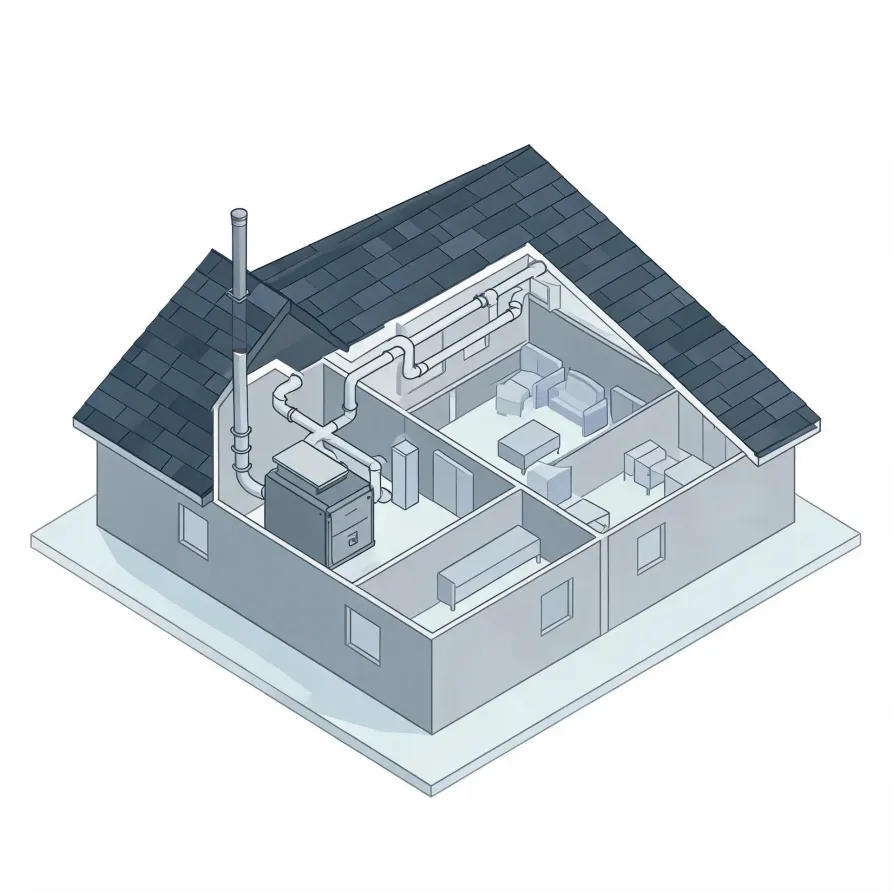
The furnace itself sits in a utility space, basement, or closet and is the piece a contractor goes to first. Inside it, the heat exchanger, burners, and blower motor each have a specific job, and a fault in any one of them shows up differently. A cracked heat exchanger, a failed igniter, or a seized blower motor each stops the system in its own way.
The flue pipe carries combustion gases out of the house and connects directly to the furnace cabinet. The thermostat on the wall and the condensate drain nearby are smaller pieces, but both are common sources of failure that a contractor checks before pulling the cabinet apart.
The drawing shows a typical layout, and a licensed contractor determines which parts and conditions apply to your specific home.
Find a contractor in Faulkner CountyFaulkner County, by the numbers
174 severe weather events were recorded in Faulkner County, Arkansas between 2015 and 2024.
NOAA National Centers for Environmental Information, Storm Events Database, bulk CSV export, events 2015-01-01 through 2024-12-31.Half the homes in Faulkner County, Arkansas were built in 1998 or earlier (2020-2024 ACS 5-year).
U.S. Census Bureau, 2020-2024 American Community Survey 5-Year EstimatesFaulkner County, Arkansas holds 53,650 housing units (2020-2024 ACS 5-year).
U.S. Census Bureau, 2020-2024 American Community Survey 5-Year EstimatesOwners occupy 62.3% of the occupied homes in Faulkner County, Arkansas (2020-2024 ACS 5-year).
U.S. Census Bureau, 2020-2024 American Community Survey 5-Year EstimatesCodes & Standards Governing Furnace Repair in Faulkner County, Arkansas6 sourced rules and standards
What the repair visit looks like
Non-weatherized gas furnaces manufactured on or after November 19, 2015 must reach 80.0 percent AFUE.
Non-weatherized oil-fired furnaces manufactured on or after November 19, 2015 must reach 83.0 percent AFUE.
Mobile home gas furnaces manufactured on or after November 19, 2015 must reach 80.0 percent AFUE.
Non-weatherized gas furnaces manufactured on or after December 18, 2028 must reach 95.0 percent AFUE, up from the 80.0 percent minimum that applies to units manufactured before that date.
Licensing and Legal Requirements in Faulkner County, Arkansas
An Arkansas HVACR licence is good across the state: no city or county may require its own licence to do HVACR work, though local permits and inspections still apply.
Arkansas requires an HVACR licence or registration: it is unlawful to do HVACR work without the appropriate one unless the chapter exempts you.
Severe Weather Events in Faulkner County
Extreme weather puts real stress on furnace systems, cycling them hard and shortening the intervals between service calls. How much of that pressure Faulkner County equipment absorbs is a local question, and the chart below pulls from recorded county-level data to answer it.
174 severe weather events, 2015–2024. Source: NOAA National Centers for Environmental Information, Storm Events Database.