Tell us about the job
Takes about a minute. No obligation.
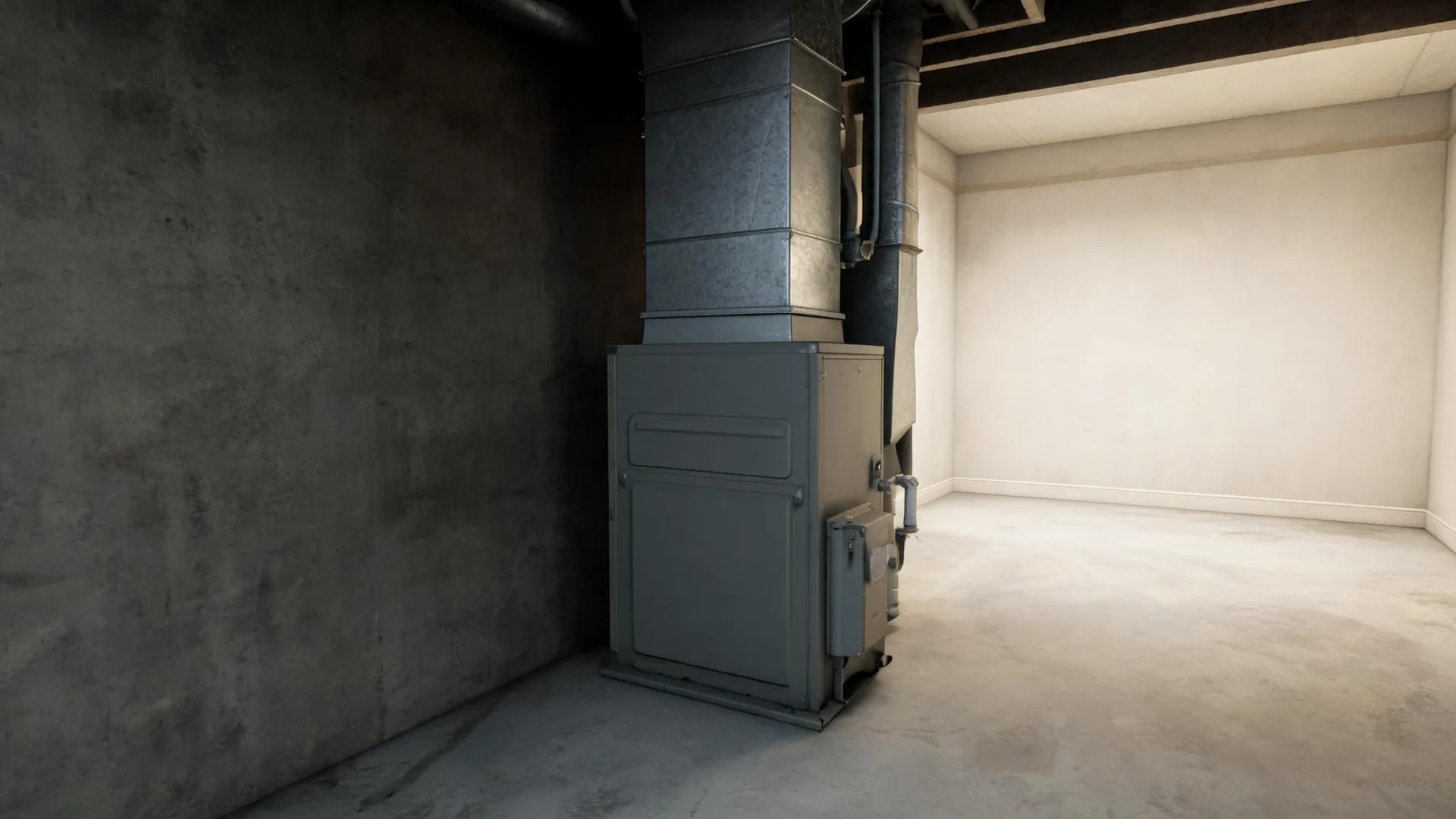
A contractor diagnosing a furnace repair in Independence County starts at the burner assembly and the heat exchanger before anywhere else. Homes in Independence County, AR run heat about seven months a year, from October through April. That sustained load cycles the ignition system repeatedly, stresses the heat exchanger through expansion and contraction, and leaves the blower motor running long enough that bearings show wear earlier than in places with shorter heating demands. When a furnace faults here, the ignition components and the exchanger are where the evidence turns up.
Ductwork and wiring aside, what a furnace repair job turns on in this county is what the opened unit actually contains and whether the parts it takes are still in production. Half the homes in Independence County, Arkansas were built in 1988 or earlier (2020-2024 ACS 5-year). A heat exchanger, a draft inducer, or an ignition assembly that has run through that many heating seasons stands a real chance of being on a discontinued parts list, which changes the repair from a straightforward swap to a sourcing problem. That outcome is not knowable from the outside of the cabinet, so a contractor opens the unit before quoting anything.
The Parts of a Furnace a Contractor Checks First
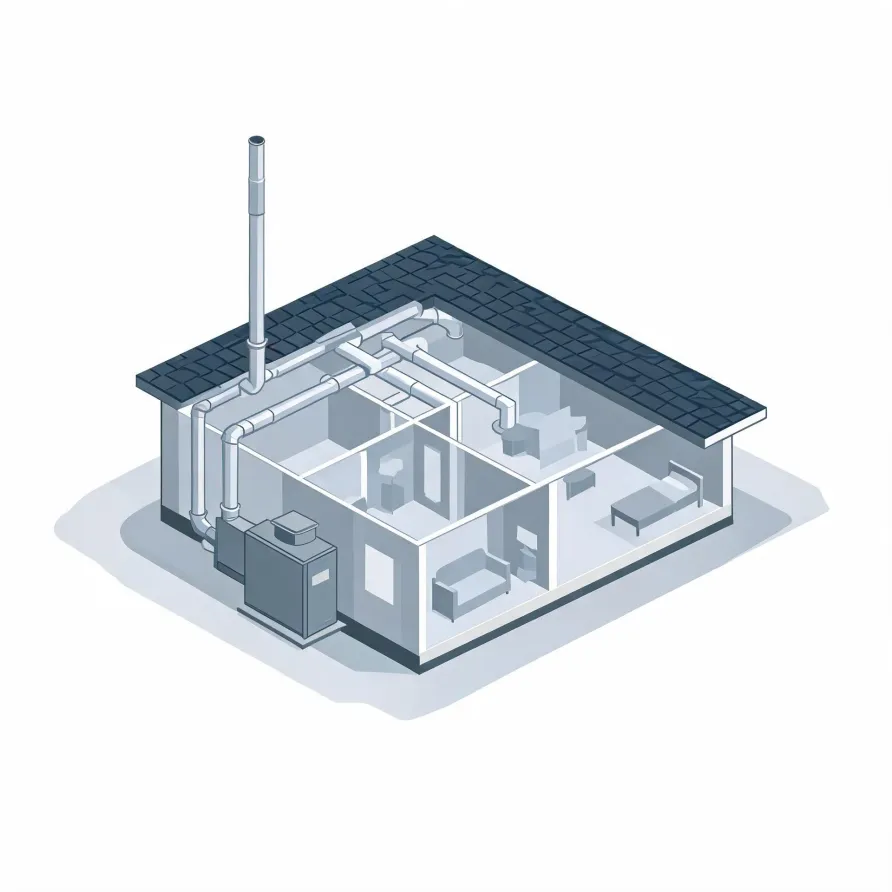
The furnace itself sits in a utility space, basement, or closet and is the piece a contractor goes to first. Inside it, the heat exchanger and burner assembly are the usual suspects when something has failed. A cracked heat exchanger or a burner that won't ignite accounts for a large share of no-heat calls.
The blower motor moves conditioned air out of the furnace and into the supply side of the system. Near the furnace you will also find the flue or exhaust vent, which carries combustion gases out of the house, and the gas valve, which controls fuel to the burners. A contractor checks all of these when tracing a problem back to its source.
The drawing shows a typical furnace layout, and a licensed contractor will determine which components apply to your specific system and what work those components actually need.
Find a contractor in Independence CountyIndependence County, Arkansas, by the numbers
66 severe weather events were recorded in Independence County, Arkansas between 2015 and 2024.
NOAA National Centers for Environmental Information, Storm Events Database, bulk CSV export, events 2015-01-01 through 2024-12-31.Half the homes in Independence County, Arkansas were built in 1988 or earlier (2020-2024 ACS 5-year).
U.S. Census Bureau, 2020-2024 American Community Survey 5-Year EstimatesIndependence County, Arkansas holds 16,786 housing units (2020-2024 ACS 5-year).
U.S. Census Bureau, 2020-2024 American Community Survey 5-Year EstimatesOwners occupy 69.2% of the occupied homes in Independence County, Arkansas (2020-2024 ACS 5-year).
U.S. Census Bureau, 2020-2024 American Community Survey 5-Year EstimatesCodes & Standards Behind Furnace Repair in Independence County, Arkansas6 sourced rules and standards
What HVAC Repair Looks Like in Independence County
Non-weatherized gas furnaces manufactured on or after November 19, 2015 must reach 80.0 percent AFUE.
Non-weatherized oil-fired furnaces manufactured on or after November 19, 2015 must reach 83.0 percent AFUE.
Mobile home gas furnaces manufactured on or after November 19, 2015 must reach 80.0 percent AFUE.
Non-weatherized gas furnaces manufactured on or after December 18, 2028 must reach 95.0 percent AFUE, up from the 80.0 percent minimum that applies to units manufactured before that date.
Licensing Rules in Independence County, Arkansas
An Arkansas HVACR licence is good across the state: no city or county may require its own licence to do HVACR work, though local permits and inspections still apply.
Arkansas requires an HVACR licence or registration: it is unlawful to do HVACR work without the appropriate one unless the chapter exempts you.
Severe Weather Events in Independence County
Hard weather puts real hours on a furnace. Repair demand in Independence County tracks directly with what the sky does here, so the record below is part of understanding what local equipment is up against.
66 severe weather events, 2015–2024. Source: NOAA National Centers for Environmental Information, Storm Events Database.