Tell us about the job
Takes about a minute. No obligation.
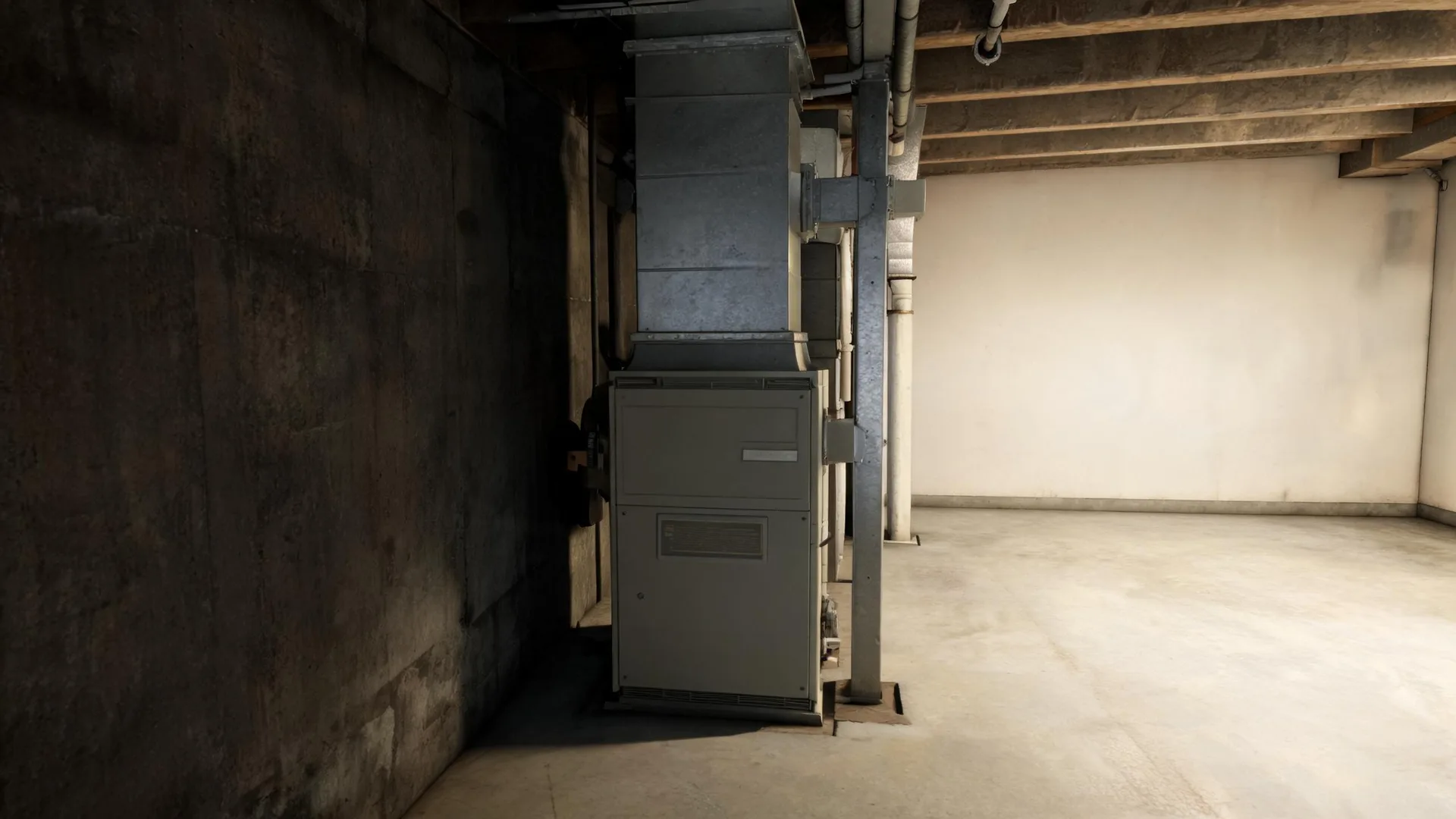
When a furnace breaks down here, a contractor starts with the heat exchanger and burner, not because those parts are fragile, but because they carry the load this climate lays on them. Homes in Jackson County, AR run heat about seven months a year, from October through April. A heat exchanger that has cycled through that many months of continuous use can develop cracks a homeowner will not see and a visual check from the outside will miss. The ignition system wears at the same pace. A contractor pulling a furnace apart in Jackson County is finding what that accumulated runtime has actually done to those components, and the repair scope follows from that.
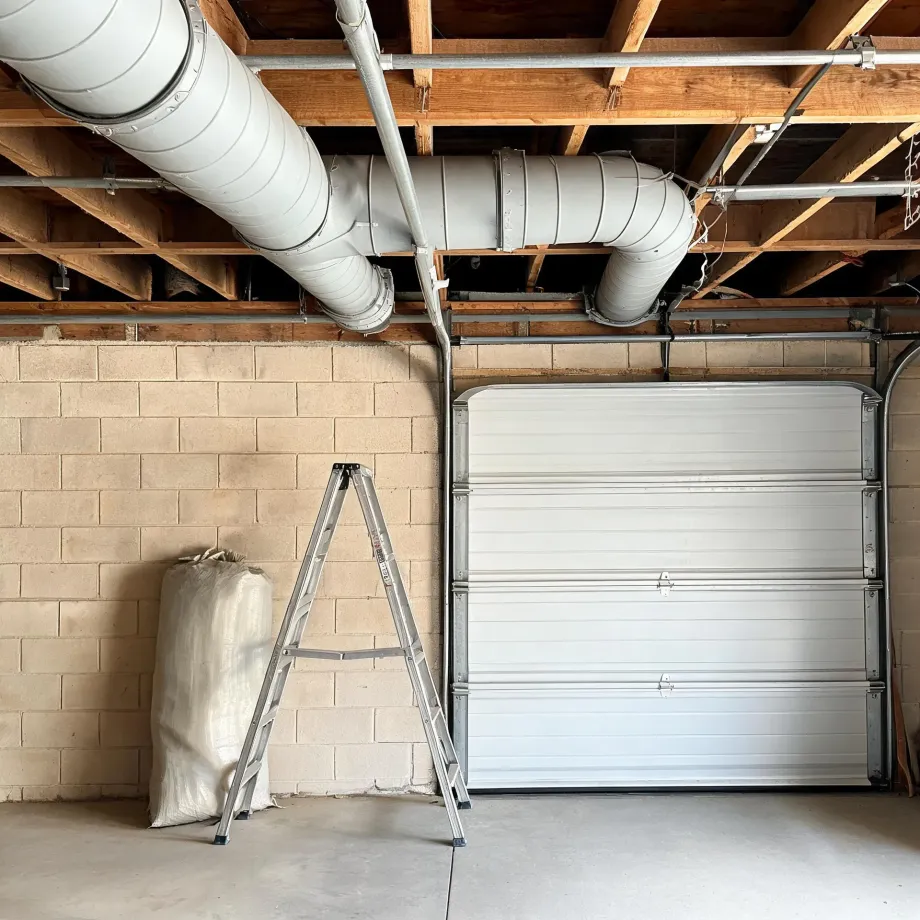
Furnace repair in stock this old turns on what a contractor finds once the unit is open. Cracked heat exchangers, worn burner assemblies, and failed limit switches each point to a different repair scope, and a system built for equipment no longer manufactured may require parts that are backordered, discontinued, or substituted. Half the homes in Jackson County, Arkansas were built in 1974 or earlier (2020-2024 ACS 5-year). A contractor working in that housing stock has to confirm parts availability before quoting a repair, because a straightforward diagnosis can stall on sourcing. The opened unit decides the job.
The Parts of a Furnace a Contractor Checks First
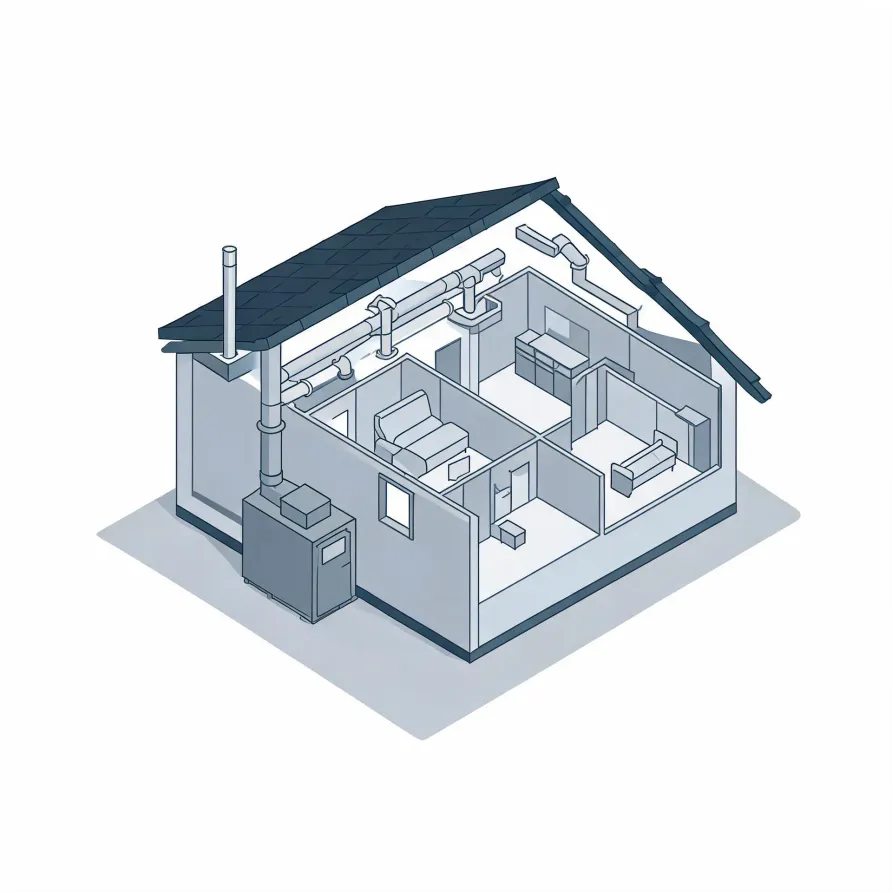
The furnace itself sits in a utility space, basement, or closet and is the piece a contractor goes to first. Inside it, the heat exchanger, burners, and blower motor each have a specific job, and a fault in any one of them shows up differently. A cracked heat exchanger, a burner that won't light, and a blower that runs but moves little air all point a contractor in different directions.
The flue pipe runs from the furnace to an exterior vent and carries combustion gases out of the house. Alongside it, the limit switch, igniter, and gas valve are smaller components that control when the burner fires and when the blower kicks on. These are the parts a contractor checks when the furnace runs short cycles, won't start, or starts and stops without completing a full heating cycle.
The drawing shows a typical furnace layout, and a licensed contractor determines which components apply to your specific system.
Find a contractor in Jackson CountyJackson County, Arkansas, by the numbers
69 severe weather events were recorded in Jackson County, Arkansas between 2015 and 2024.
NOAA National Centers for Environmental Information, Storm Events Database, bulk CSV export, events 2015-01-01 through 2024-12-31.Half the homes in Jackson County, Arkansas were built in 1974 or earlier (2020-2024 ACS 5-year).
U.S. Census Bureau, 2020-2024 American Community Survey 5-Year EstimatesJackson County, Arkansas holds 7,095 housing units (2020-2024 ACS 5-year).
U.S. Census Bureau, 2020-2024 American Community Survey 5-Year EstimatesOwners occupy 65.5% of the occupied homes in Jackson County, Arkansas (2020-2024 ACS 5-year).
U.S. Census Bureau, 2020-2024 American Community Survey 5-Year EstimatesCodes & Standards Governing Furnace Repair in Jackson County, Arkansas6 sourced rules & standards
What happens when the contractor comes out
Non-weatherized gas furnaces manufactured on or after November 19, 2015 must reach 80.0 percent AFUE.
Non-weatherized oil-fired furnaces manufactured on or after November 19, 2015 must reach 83.0 percent AFUE.
Mobile home gas furnaces manufactured on or after November 19, 2015 must reach 80.0 percent AFUE.
Non-weatherized gas furnaces manufactured on or after December 18, 2028 must reach 95.0 percent AFUE, up from the 80.0 percent minimum that applies to units manufactured before that date.
Licensing Rules That Apply in Jackson County, Arkansas
An Arkansas HVACR licence is good across the state: no city or county may require its own licence to do HVACR work, though local permits and inspections still apply.
Arkansas requires an HVACR licence or registration: it is unlawful to do HVACR work without the appropriate one unless the chapter exempts you.
Severe Weather Events in Jackson County
Furnaces in Jackson County work against whatever the weather demands, and Arkansas weather can push equipment hard. Repair frequency, part wear, and service timing all track local conditions, which is why the weather record here belongs on a page about furnace work.
69 severe weather events, 2015–2024. Source: NOAA National Centers for Environmental Information, Storm Events Database.