Tell us about the job
Takes about a minute. No obligation.
A furnace repair call in Newton County almost always starts at the burner and ignition system, because those are the parts that have been cycling the longest. Homes in Newton County, AR run heat about seven months a year, from October through April. The heat exchanger takes that same load, and a contractor inspecting one here runs a closer check on it than the visible signs might suggest, since fatigue in the metal shows up slowly and often only under operation. Cracks that look minor on a cold unit can open further once the burner fires and the metal expands.
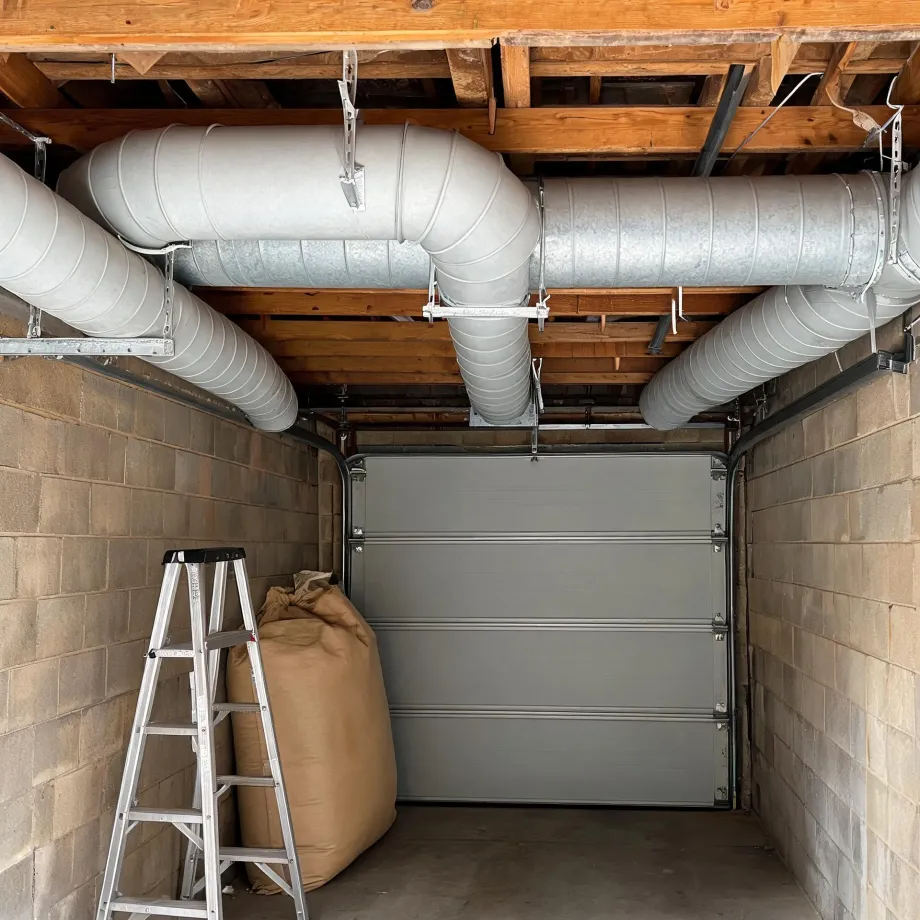
Furnaces in stock this old carry a repair history that shows up inside the unit: cracked heat exchangers, burner assemblies running on parts that require hunting, flue connections that have been resealed more than once. Half the homes in Newton County, Arkansas were built in 1983 or earlier (2020-2024 ACS 5-year). A contractor opening a furnace here works out what that service life has actually done to the components, and whether the parts the unit takes are still in production, before any repair scope makes sense.
The Parts of a Furnace a Contractor Checks First
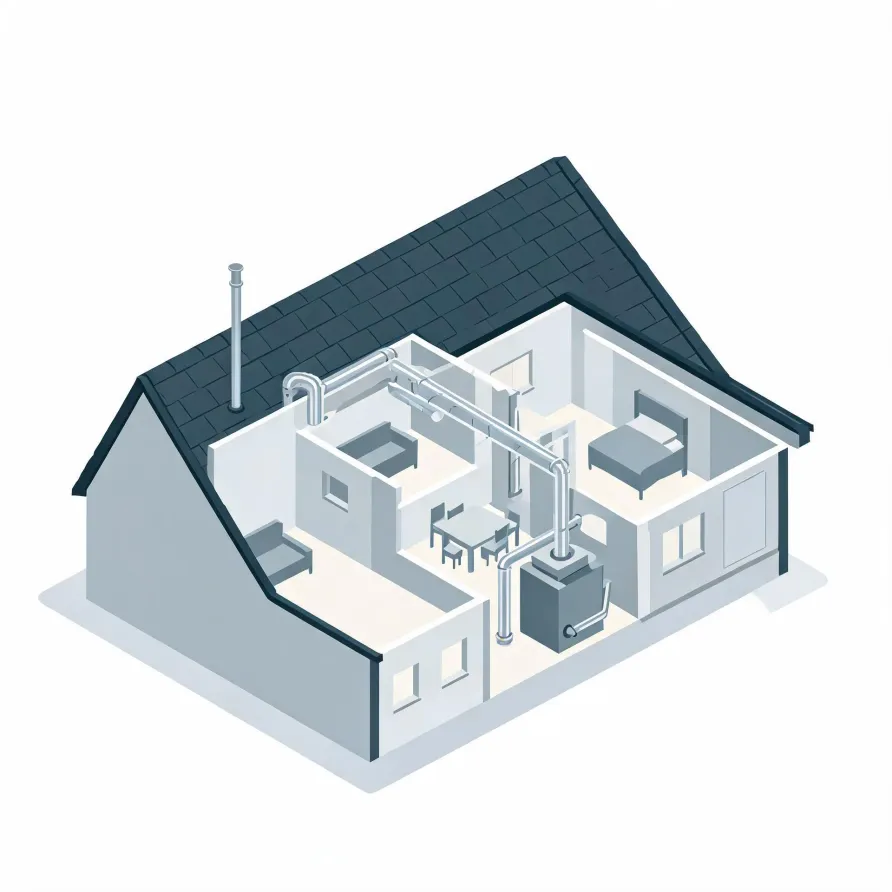
The furnace cabinet sits in a basement, utility closet, or mechanical room and is the piece a homeowner is least likely to see until something goes wrong. Inside it, the heat exchanger does the core work, and a cracked or corroded exchanger is one of the first things a contractor looks at when heat output drops or the unit cycles oddly. The blower motor, also inside the cabinet, moves air across that exchanger and through the house, so a failing motor shows up fast.
The burner assembly and the igniter sit at the base of the heat exchanger and are where a contractor looks when the furnace fails to light or runs briefly and shuts off. The flue pipe runs from the cabinet to an exterior wall or chimney and carries combustion gases out. The control board ties the system together, and when sensors or relays on it fail, the symptoms can look like almost anything else.
The drawing shows a typical layout, and a licensed contractor will determine which parts apply and what condition they are in for your specific system.
Find a contractor in Newton CountyNewton County, Arkansas, by the numbers
57 severe weather events were recorded in Newton County, Arkansas between 2015 and 2024.
NOAA National Centers for Environmental Information, Storm Events Database, bulk CSV export, events 2015-01-01 through 2024-12-31.Half the homes in Newton County, Arkansas were built in 1983 or earlier (2020-2024 ACS 5-year).
U.S. Census Bureau, 2020-2024 American Community Survey 5-Year EstimatesNewton County, Arkansas holds 4,099 housing units (2020-2024 ACS 5-year).
U.S. Census Bureau, 2020-2024 American Community Survey 5-Year EstimatesOwners occupy 76.5% of the occupied homes in Newton County, Arkansas (2020-2024 ACS 5-year).
U.S. Census Bureau, 2020-2024 American Community Survey 5-Year EstimatesCodes & Standards Governing Furnace Repair in Newton County, Arkansas6 sourced rules and standards
What the Repair Visit Looks Like
Non-weatherized gas furnaces manufactured on or after November 19, 2015 must reach 80.0 percent AFUE.
Non-weatherized oil-fired furnaces manufactured on or after November 19, 2015 must reach 83.0 percent AFUE.
Mobile home gas furnaces manufactured on or after November 19, 2015 must reach 80.0 percent AFUE.
Non-weatherized gas furnaces manufactured on or after December 18, 2028 must reach 95.0 percent AFUE, up from the 80.0 percent minimum that applies to units manufactured before that date.
Licensing Rules for HVAC Repair in Newton County, Arkansas
An Arkansas HVACR licence is good across the state: no city or county may require its own licence to do HVACR work, though local permits and inspections still apply.
Arkansas requires an HVACR licence or registration: it is unlawful to do HVACR work without the appropriate one unless the chapter exempts you.
Severe Weather Events in Newton County
Furnaces in Newton County work against whatever the climate throws at them, and that workload shapes how equipment wears. Knowing the local weather record gives a clearer picture of why repair needs here look the way they do.
57 severe weather events, 2016–2024. Source: NOAA National Centers for Environmental Information, Storm Events Database.