Tell us about the job
Takes about a minute. No obligation.
A contractor quoting furnace repair in Union County starts with the burner and ignition system, because those are the parts that cycle every time the heat runs. Homes in Union County, AR run heat about five months a year, from November through March. By late winter, an igniter that was marginal in November has been firing for months, and a heat exchanger under that kind of repeated thermal stress shows cracks a summer inspection would never catch. Deferred repairs surface fast here because the furnace rarely sits long enough for a problem to stay quiet.
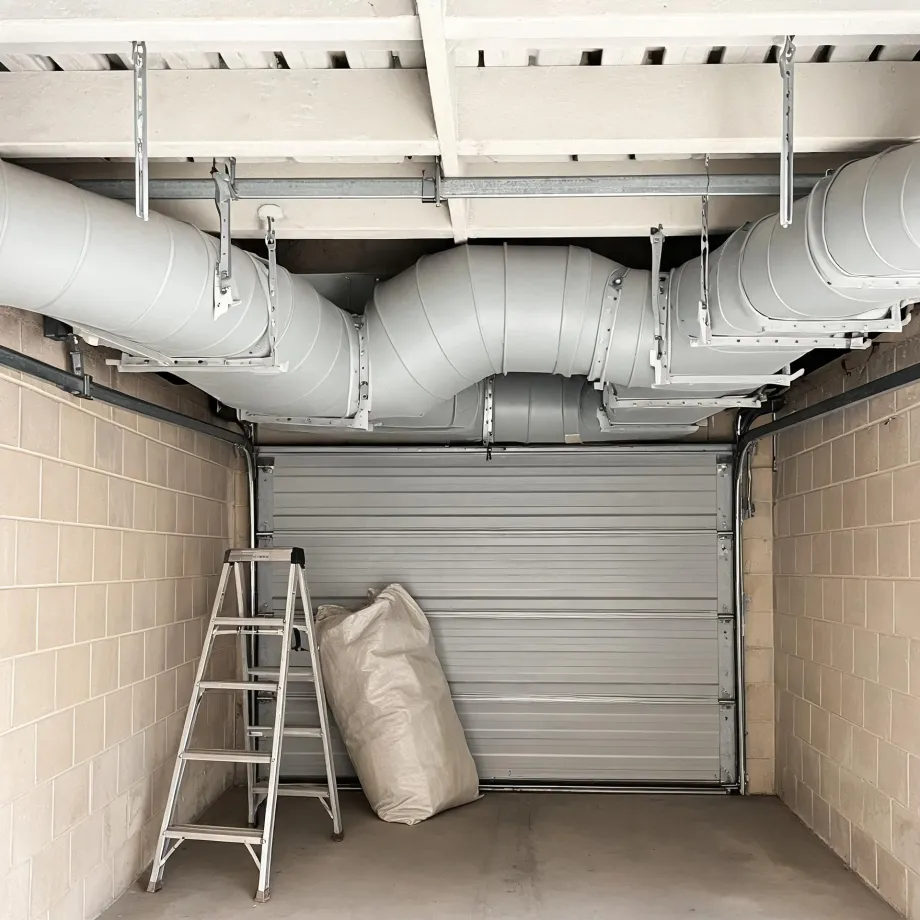
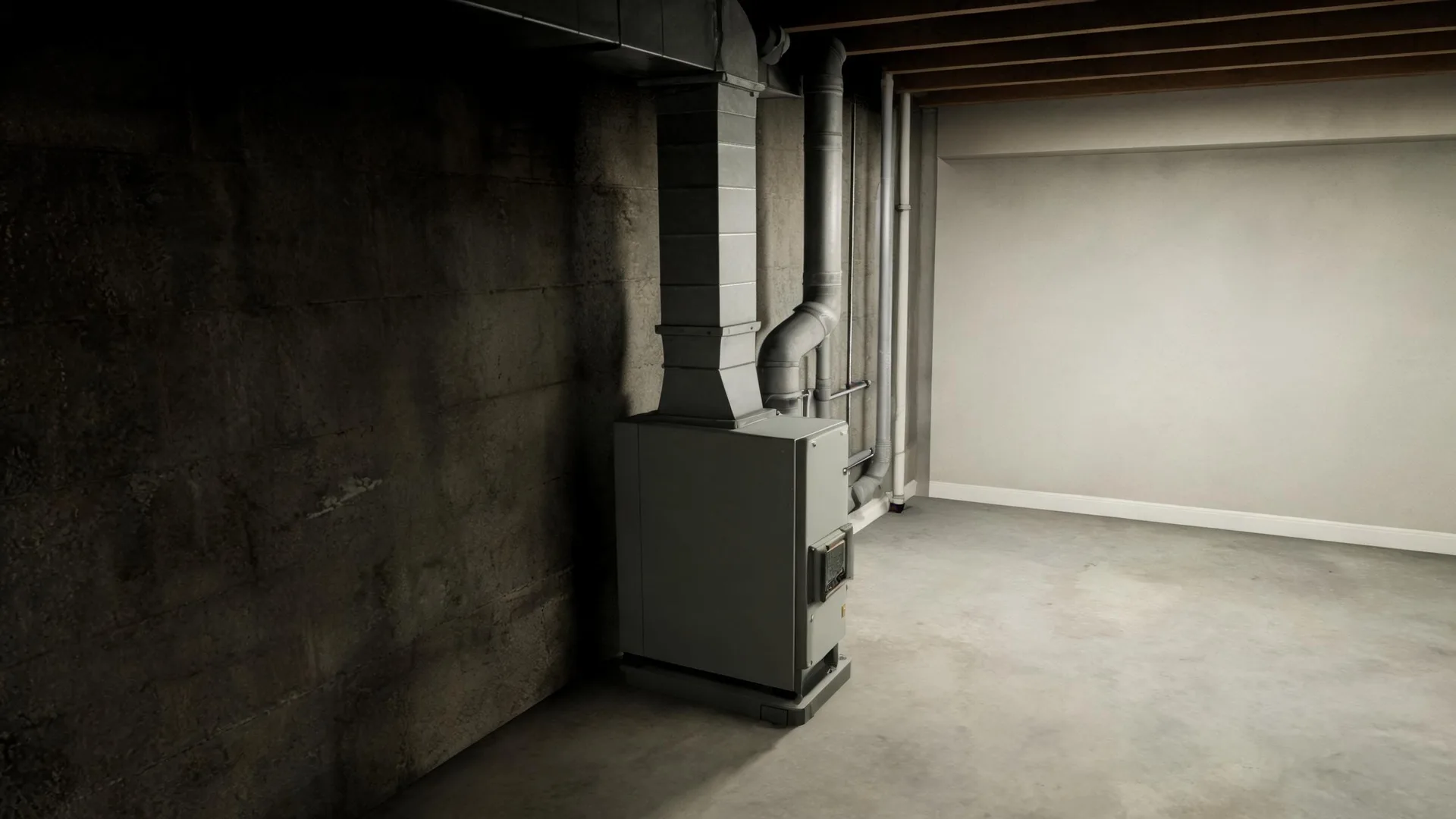
Furnaces in housing this old carry a repair history, and what a technician finds when the cabinet comes open reflects that. Half the homes in Union County, Arkansas were built in 1979 or earlier (2020-2024 ACS 5-year). A unit that has cycled through multiple owners and multiple service calls may hold parts that were substituted when the original ran out, or components that were never quite matched to what surrounds them. That layered history is what sets the scope of a repair here: the technician has to account for what is actually inside the unit before any estimate holds.
The Parts of a Furnace a Contractor Checks First
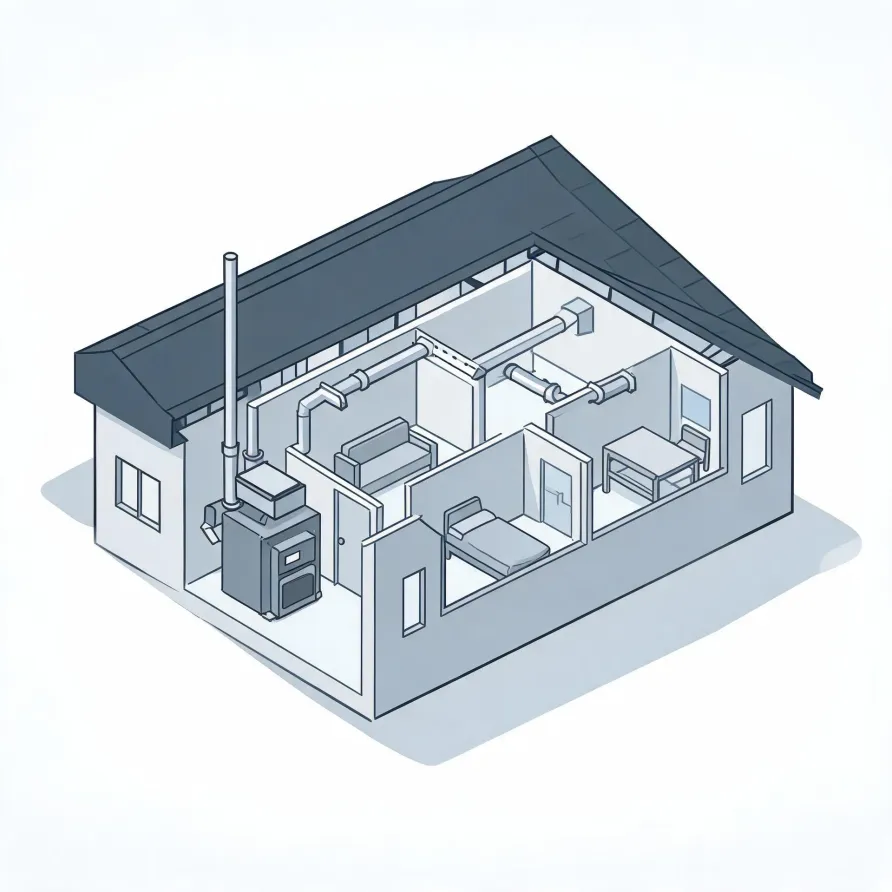
The furnace cabinet sits in a utility room, basement, or closet and is the heart of the system. Inside it, the heat exchanger is the piece a contractor looks at closely during a repair visit, because cracks or corrosion there are a common source of heating failure and carbon monoxide risk. The burners, which sit just below it, are another early stop.
The blower motor pushes conditioned air out through the supply ducts and sits inside the lower half of the cabinet. The igniter and flame sensor work together to start and confirm combustion. Both are small, relatively accessible parts, and both are frequent culprits when a furnace runs briefly and then shuts off.
The drawing shows a typical furnace layout, and a licensed contractor determines which components apply to the specific system and setup in your home.
Find a contractor in Union CountyUnion County by the Numbers
113 severe weather events were recorded in Union County, Arkansas between 2015 and 2024.
NOAA National Centers for Environmental Information, Storm Events Database, bulk CSV export, events 2015-01-01 through 2024-12-31.Half the homes in Union County, Arkansas were built in 1979 or earlier (2020-2024 ACS 5-year).
U.S. Census Bureau, 2020-2024 American Community Survey 5-Year EstimatesUnion County, Arkansas holds 18,649 housing units (2020-2024 ACS 5-year).
U.S. Census Bureau, 2020-2024 American Community Survey 5-Year EstimatesOwners occupy 72.7% of the occupied homes in Union County, Arkansas (2020-2024 ACS 5-year).
U.S. Census Bureau, 2020-2024 American Community Survey 5-Year EstimatesCodes & Standards Covering Furnace Repair in Union County, Arkansas6 sourced rules and standards
What the repair visit looks like
Non-weatherized gas furnaces manufactured on or after November 19, 2015 must reach 80.0 percent AFUE.
Non-weatherized oil-fired furnaces manufactured on or after November 19, 2015 must reach 83.0 percent AFUE.
Mobile home gas furnaces manufactured on or after November 19, 2015 must reach 80.0 percent AFUE.
Non-weatherized gas furnaces manufactured on or after December 18, 2028 must reach 95.0 percent AFUE, up from the 80.0 percent minimum that applies to units manufactured before that date.
Licensing Rules for HVAC Repair in Union County, Arkansas
An Arkansas HVACR licence is good across the state: no city or county may require its own licence to do HVACR work, though local permits and inspections still apply.
Arkansas requires an HVACR licence or registration: it is unlawful to do HVACR work without the appropriate one unless the chapter exempts you.
Severe Weather Events in Union County
Harsh weather puts real strain on heating equipment, cycling it hard through temperature swings it was not sized to ignore. How much of that strain a furnace carries depends on where it runs, and Union County has its own weather history.
113 severe weather events, 2015–2024. Source: NOAA National Centers for Environmental Information, Storm Events Database.